


























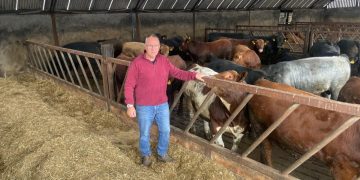














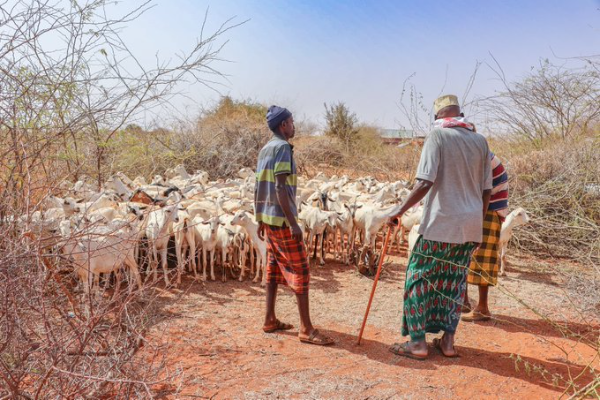
Kenya will establish national animal feed reserves to protect livestock and pastoralist livelihoods from recurring droughts that have previously wiped out more than 2.5 million animals and caused losses exceeding Sh50 billion.
Cabinet Secretary for Agriculture and Livestock Development Sen. Mutahi Kagwe announced the move on Tuesday in Embu County, saying the country must shift from reactive crisis management to permanent preparedness as drought becomes a recurring reality.
“Drought is no longer an occasional emergency; it is now a recurring reality. Kenya must prepare permanently,” Kagwe said. “The establishment of national animal feed reserves will ensure that livestock owners are protected before losses occur.”
The reserves will comprise hay, silage and other forms of drought-tolerant fodder, which will be stocked during periods of surplus and released early during dry spells. Kagwe said deployment will be guided by early warning systems to ensure timely intervention before livestock conditions deteriorate.
Under the new approach, county governments will take the lead in feed planning and distribution, with support from the national government. Farmer cooperatives will act as last-mile delivery agents to ensure feed reaches livestock owners in time, preventing animal deaths and distress sales that often devastate pastoralist incomes during prolonged droughts.
“Counties understand their local needs best, while cooperatives provide an efficient channel to reach farmers on the ground,” Kagwe said. “This partnership will help us save animals and livelihoods.”
In addition to feed reserves, the government will tighten controls on livestock movement to curb the spread of Foot and Mouth Disease and other transboundary animal diseases. Kagwe said vaccination campaigns will be intensified, while biosecurity measures at livestock checkpoints will be strengthened to reduce outbreaks that often worsen during drought-induced migrations.
At the same event, the Cabinet Secretary urged dairy farmers to focus on productivity gains through improved feeding and better herd management rather than increasing herd sizes. He noted that Embu County produces about 101.3 million litres of milk annually, but average productivity remains low at about eight litres per cow per day.
“With proper feeding and good management, there is no reason productivity cannot improve significantly,” Kagwe said. “If we invest in nutrition and strengthen cooperative coordination, output could more than triple without increasing herd sizes.”
To support dairy farmers, Kagwe announced that additional funding has been approved for the installation of more milk coolers in Embu County. The investment aims to reduce post-harvest losses, improve milk quality and support quality-based payment systems that reward farmers for better production standards.
He said the broader strategy — anchored on feed reserves, disease control, cooperative-led subsidies and expansion of cold-chain infrastructure — is designed to end reactive drought responses, safeguard pastoralist incomes and strengthen national food security.
“This is about building resilience across the livestock value chain,” Kagwe said. “By preparing in advance, controlling diseases and empowering cooperatives, Kenya can protect its farmers, stabilize production and secure food supplies even in the face of climate shocks.”
Source : Access Review Africa

