









































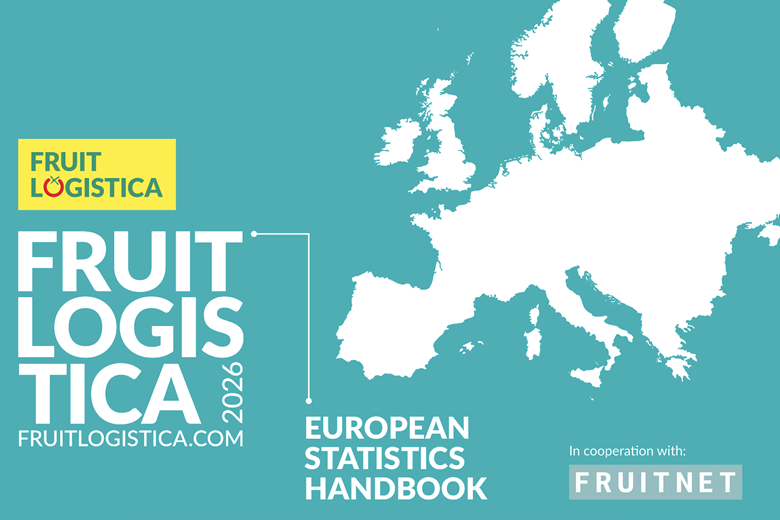
Fruit Logistica, the world’s leading trade show for the global fresh produce business, opened today in Berlin and runs from 4–6 February 2026, bringing together key stakeholders from across the international fruit and vegetable value chain. A major highlight of the event is the presentation of the European Statistics Handbook 2026, which offers a comprehensive analysis of the state of Europe’s fruit and vegetable sector.
According to the Handbook, the sector continues to face increasing pressure from climate change, market volatility, and structural shifts, yet it has demonstrated notable resilience and adaptability. The year 2025 was shaped by extreme weather events, evolving consumer behaviour, and changes in regional production. Despite these challenges, overall supply remained relatively stable, supported by strong domestic markets, flexible trade structures, and an efficient industry.
Climate Extremes Drive Structural Adjustments
Extreme weather once again had a significant impact on fruit and vegetable production across Europe in 2025. Severe spring frosts led to widespread crop losses, particularly in south-eastern Europe, followed by heatwaves, droughts, and flooding later in the year. These conditions underscore agriculture’s growing vulnerability to climate change.
The Handbook highlights the importance of flexible market responses, diversified supply chains, and rapid sourcing alternatives to close supply gaps and reduce price volatility. Transparent communication with consumers is also critical in managing expectations around availability and pricing.
Rising Living Costs Shape Consumer Demand
High living costs across EU member states continued to influence consumer behaviour in 2025. Preliminary data shows that food prices were a key driver of inflation, even as energy prices declined slightly. From January to November, the EU’s harmonised consumer price index increased by an average of 2.4 per cent year-on-year.
Fresh fruit and vegetable prices rose significantly during parts of the year, with the price index reaching 151 points in November and exceeding 160 points during earlier months. Prices eased later in the season due to a strong apple harvest, while vegetables contributed less to inflation thanks to generally favourable supply conditions.
Fruit Harvest Declines Slightly Across the EU
The total fruit harvest in the EU-27 reached 41.96 million tonnes in 2025, around 3 per cent lower than in 2024. Frost-related losses in pome and stone fruit were partly offset by higher production of other varieties.
Apple production, the largest segment, remained broadly stable, as increased yields in countries such as Austria, Belgium, Germany, and the Netherlands compensated for declines in frost-affected regions including Croatia, Greece, Hungary, and Spain. Citrus fruits, table grapes, and stone fruit recorded lower volumes due to adverse weather conditions.
Vegetable Production Demonstrates Stability
Vegetable production across Europe totalled 58.12 million tonnes, only 0.3 per cent lower than the previous year. For the first time, the 2026 Handbook includes processed tomato production, which raised reported totals compared to earlier editions.
Although tomato output declined following an exceptionally strong 2024 harvest, higher production of onions, cabbage, carrots, and other vegetables helped maintain overall stability.
Internal EU Market Remains Central to Trade
The EU’s internal market continues to anchor fresh produce trade. Approximately 83 per cent of fruit and 77 per cent of vegetables remain within the EU-27. Vegetable imports from non-EU countries stood at 2.38 million tonnes in 2025, while fruit imports reached 12.89 million tonnes, largely driven by bananas and other tropical produce.
Germany maintained its position as the EU’s most important destination market, followed by the Netherlands and France.
Reliable Data Guides Strategic Decisions
Beyond the figures, the European Statistics Handbook 2026 reinforces the message that Europe’s fruit and vegetable sector remains efficient, adaptable, and resilient, even amid increasing uncertainty. The publication provides a trusted foundation for strategic decision-making in a rapidly changing global market.
The European Statistics Handbook is published by Fruit Logistica and produced by Agrarmarkt Informations-Gesellschaft (AMI), in cooperation with its official media partner, Fruitnet Media International.
Source Eurofruit

