

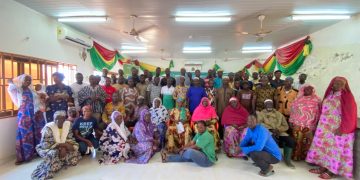
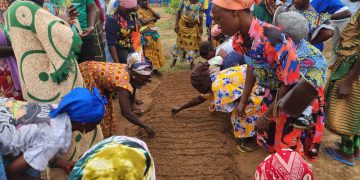

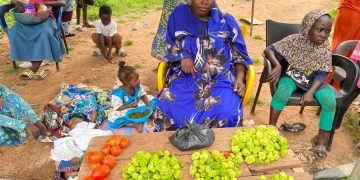
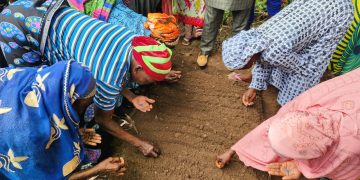


























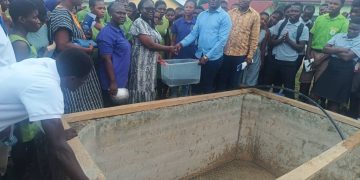












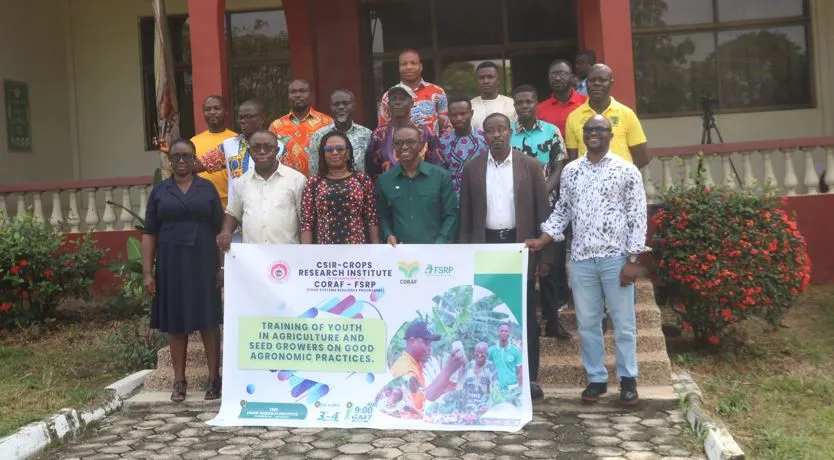
The Council for Scientific and Industrial Research – Crops Research Institute (CSIR-CRI), in partnership with CORAF and the Food Systems Resilience Programme (FSRP), recently conducted a two-day training programme for Ghanaian youth and seed growers on modern food crop production methods.
The initiative aims to promote scientific farming practices and enhance agricultural productivity across the country.
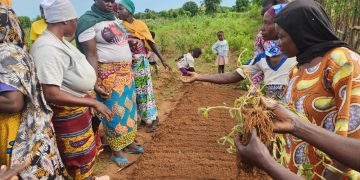
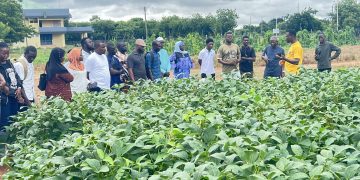
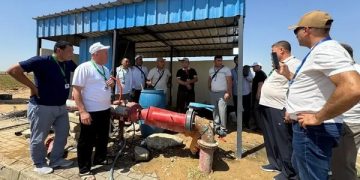
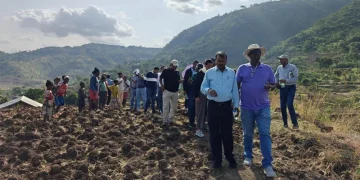
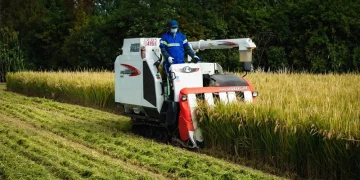
Under the theme “Training of Youth in Agriculture and Seed Growers on Good Agronomic Practices,” the workshop brought together farmers, agricultural extension officers, and officials from the Ministry of Food and Agriculture. Participants received hands-on training in improved production techniques for maize, rice, yams, soybeans, and cowpea, as well as rapid multiplication of cassava planting materials, covering a broad spectrum of cereals, legumes, roots, and tubers.
Speaking on the sidelines of the training, CSIR-CRI Director, Prof. Maxwell Darko Asante, emphasized the institute’s commitment to translating research into practical solutions for farmers.
“We have a technology park where stakeholders can observe and learn modern crop production methods. Beyond the park, we expect these technologies to be implemented in the field,” he said.
Prof. Asante explained that the training targets farmers, extension officers, and Ministry of Agriculture personnel, who will act as key agents in transferring modern agricultural knowledge to local communities.
He stressed the importance of moving away from traditional farming practices and embracing a scientific approach.
“Farming must become more scientific. We cannot continue relying on outdated methods while the world evolves. Research should generate modern technologies, and these must reach the farm. This is the only way to improve productivity,” he noted.
The CSIR-CRI Director also underscored the role of investment in boosting agricultural productivity.
“Technology alone is not enough. For meaningful results, investment is crucial. We call on both government and the private sector to invest in agriculture,” he added, highlighting that agriculture remains the backbone of national development despite perceptions of risk.
“There is no developed nation that has not modernized its agriculture. To feed ourselves, support industries, and grow economically, we must invest in science-driven agriculture,” Prof. Asante said.
Meanwhile, Prof. Emmanuel Otoo, who led sessions on modern yam production, pointed out that the institute’s innovations aim to tackle barriers that deter youth from entering farming.
“Many young people perceive agriculture as labor-intensive and capital-heavy. Our modern methods and tools simplify farming, reducing the reliance on sheer physical effort,” he explained.
Prof. Otoo expressed confidence that the adoption of modern practices would encourage more young Ghanaians to take up farming, thereby enhancing food security and creating employment opportunities across the country.

