



































For years, 52-year-old Stella Nyaaba moved between markets in Bongo, Bolgatanga and Navrongo, struggling to sell parboiled rice amid high transport costs, low sales and uncertain profits.
“Five years ago, I could parboil only one bag of rice in a month,” she recalled. “Even then, I sometimes couldn’t sell it after moving from market to market.”
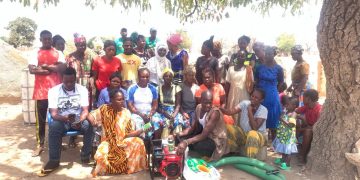
Stella, a mother of four, depends on a small family farm for subsistence during the rainy season and parboils rice to support her household. She is also Chairperson of the Anafobisi Lelingo Asongtaaba Women Farmers Group, formed over 20 years ago to improve women’s agricultural productivity.
About five years ago, Stella and 35 members ventured into rice parboiling to diversify incomes. The effort, however, was threatened by the absence of a stable market. Some members abandoned the trade and migrated south in search of menial jobs.
A turning point
The fortunes of Stella and her group changed with the introduction of the fortified rice initiative, now supplying public and private schools across seven regions. The programme addresses micronutrient deficiencies among schoolchildren while creating reliable markets for smallholder farmers and women parboilers.
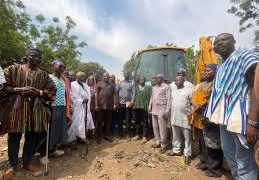
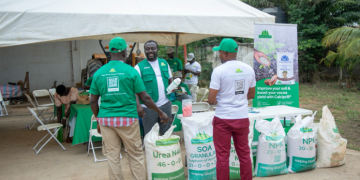
At Bongo-Bogorogo, a rice fortification machine installed at the Upper East BBN Farmers Cooperative Union Ltd is processing parboiled rice purchased from local women at stable prices. The fortified rice is supplied to selected basic and second-cycle schools across Northern Ghana.
The BBN Cooperative, a women-led organisation, buys rice from farmers and parboilers across the Upper East Region and beyond, fortifies it, and sells it into institutional markets—providing a dependable income stream that has boosted production and livelihoods.
Sustaining education through enterprise
Ms Mavis Agana, a parboiler from Anafobisi and a student of Bolgatanga Technical University, said the market linkage has transformed her life.
“I used to struggle to sell even one bag in a month,” she said. “Now I parboil up to 20 bags a month, all bought by the BBN Cooperative.”
The income supports her education and daily needs. “This rice business is what sustains me in school,” she added.
About the initiative
The fortified rice initiative is led by the United Nations World Food Programme (WFP) with funding from the Foreign, Commonwealth and Development Office (FCDO), in collaboration with the Ghana School Feeding Programme (GSFP), Ghana Education Service (GES), Ghana Health Service (GHS) and Women in Agriculture Development (WIAD).
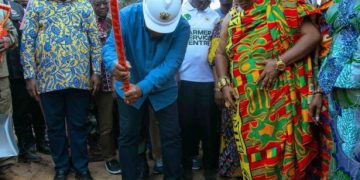
To support local production, WFP procured four rice fortification units valued at over US$80,000 for millers in the Upper East, Ashanti, Greater Accra and North East regions. Three machines have been installed so far. WFP also supplied 60 metric tonnes of fortified rice kernels worth over US$91,000 for initial production.
The pilot assesses the feasibility and economic returns of scaling up rice fortification in Ghana, while supporting millers to develop sustainable business models that strengthen local value chains.
Empowering women-led agribusiness
Ms Priscilla Aberinga Alemiya, General Manager of the Upper East BBN Farmers Cooperative Union Ltd, said the fortification equipment and 1,165 bags of fortified rice kernels have been operational since May 2025.
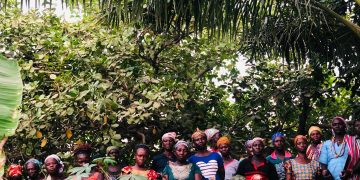
The cooperative, formed in 2021, comprises 1,256 women from 42 farmer-based organisations across Bolgatanga, Bawku and Navrongo zones.
“Previously, we only milled and sold rice,” she said. “Now we produce nutrient-rich fortified rice and have a sustainable market.”
With WFP’s support, the cooperative increased annual production from 350 to 485 metric tonnes, generating about GH₵4 million in revenue and GH₵400,000 in profits within months.
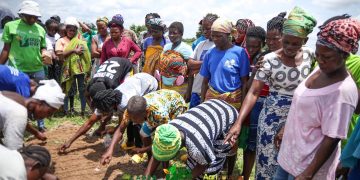
Beyond market access, women have received training in leadership, business management and record-keeping, strengthening their enterprises and incomes.
Reaching schools, improving nutrition
Through linkages with caterers and the National Food Buffer Stock Company (NAFCO), the BBN Cooperative supplies fortified rice to schools across Northern Ghana.
It serves five senior high schools and 208 low-fee private schools in 17 districts, reaching 58,991 pupils with 123 metric tonnes of rice and contributing to a 7.9 percent increase in enrolment.
Overall, 157,510 students in 365 basic schools and 35 senior high schools across 12 districts in six regions are targeted under the pilot.
In 2025, BBN Cooperative and Ko Franco Farms supplied 170 metric tonnes of fortified rice to nine senior high schools, while Max Industries is preparing an additional 200 metric tonnes for private schools and WFP livelihood programmes for pregnant and breastfeeding women, children and adolescent girls.
Impact at OLL Girls SHS
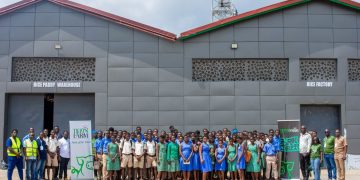
Our Lady of Lourdes Girls’ Senior High School in the Kassena-Nankana Municipality is among the beneficiaries.
Mrs Edna Atiirimbey, the School Matron, said meal preparation had improved. “Students now eat everything without complaints. The rice is tasty and adequate,” she said.
Dining Hall Master Patrick Dinaa noted fewer complaints about hunger and health. “The rice expands well, portions are enough, and complaints like itchy eyes have reduced,” he said, adding that the rice stays fresh longer after cooking.
Students also welcomed the change. “I used to have itchy eyes after eating rice, but that is gone,” said Miss Edna Asebire, the Dining Hall Prefect, who called for the programme’s expansion.
Looking ahead
WFP is finalising a cost-benefit analysis to guide potential scale-up and assess the feasibility of making fortified rice a standard component of the Ghana School Feeding Programme and wider public consumption.
Source: Access Agric

