












































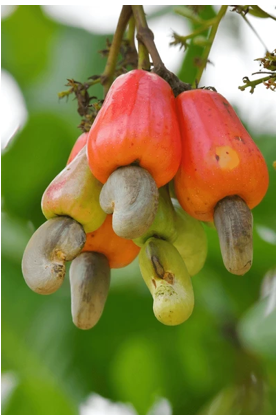
Cashew value chain actors are at odds with government after the minimum producer price for the 2025/26 crop season was set at GH¢12 per kilogram, down 20% from the previous year.
The Tree Crops Development Authority (TCDA) announced the new floor price on Dec. 15, a reduction from GH¢15 in 2024, citing shifts in global market conditions and a prevailing Free On Board (FOB) price of US$1,400 per metric tonne. Under the pricing formula, the indicative price stood at GH¢11.16 per kilogram, but officials rounded up to GH¢12 to support farmer motivation.
The decision has drawn criticism across the value chain. Farmer groups argue the reduction is a “disincentive” that fails to reflect rising production costs and indicating that it could discourage investment in the sector, affecting long-term output to the detriment of the wider value chain.
“The farmers were expecting a better price than the approved floor price. If nothing at all, the TCDA should have maintained the GH¢15,” said Daniel Munufie of the Bono Regional Cashew Farmers Cooperative. “Farm maintenance and labour costs are at an all-time high, and any unjustified reduction of farmers’ income would erode our profit margins and further compound the poor livelihoods of us, the primary producers.”
He urged the regulator to review the pricing matrix “to satisfy all actors in the cashew value chain with an equitable pricing regime.”
Other farmers expressed similar concerns. Madam Bertha Tiwaa, a farmer at Sampa in the Bono Region, said: “It is unfortunate that the TCDA mostly sacrifices farmers’ interests for other value chain actors when negotiating prices for raw cashew nuts (RCN). I am really disappointed with the reduction, and it will discourage many farmers from expanding their farms, posing a threat to sustainable production of the crop.”
Processor and aggregator groups, however, argue the opposite, claiming the GH¢12 floor price remains too high. They say the rate does not reflect recent appreciation of the cedi, calculated using a six-month average exchange rate of GH¢11.02 per dollar, nor the deterioration in nut quality during the period. Aggregators warned that purchasing lower-grade nuts at the approved price lacks “business sense” under current global market trends.
“If the regulator had applied the pricing matrix religiously, the minimum price should be between GH¢9 and GH¢10, not GH¢12,” said Charles Kwame Kuma, a cashew processor at Duadaso No. 1 in the Jaman North District of the Bono Region.
“Looking at the current strength of the cedi, the FOB price of US$1,300 per tonne and the prevailing nuts quality, it is not a fair deal for processors. But because we are the minority, we have to work with it,” he explained.
Sector sources said excessive rainfall in December 2025 across the Bono and Bono East regions contributed to the decline in cashew nut quality. Some nuts recorded a kernel outturn ratio (KOR) of around 42, compared to the TCDA quality specification of 46. As a result, some aggregators have been buying at GH¢8-10 per kilogram, contrary to the national minimum price.
An aggregator who spoke on condition of anonymity confirmed that farmers refusing price reductions had their produce quantity reduced by two kilograms to offset rotten nuts, or else faced rejection of their stock. “If aggregators are forced to buy at GH¢12, farmers will be at a disadvantage. Aggregators will turn to buy from neighbouring countries like Côte d’Ivoire, where quality is currently better than Ghana’s,” he said.
The TCDA said in a statement that it will monitor and regularly review the raw cashew nut price in response to market changes to ensure stability and fairness in the industry. “It must be noted that it is an offense for any actor to buy RCN below the approved minimum producer price,” it added.
Source : bftonline

