



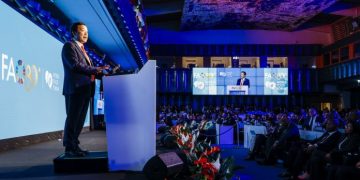




Set against the backdrop of FAO’s 80th anniversary, the fifth edition of the World Food Forum in 2025 was remarkable, with 62 country chapters featuring a strong presence of global leaders, impressive numbers, and high-level events. This year’s forum further solidified a five-year leadership in creating a premier international platform for discussions focused on transforming global agrifood systems.
From 13 to 17 October, the FAO Director-General QU Dongyu welcomed distinguished leaders at the Organization’s headquarters in Rome, including among other Pope Leo XIV; King Letsie III of Lesotho; Sergio Matarella, President of Italy; Giorgia Meloni, Prime Minister of Italy; Luiz Inácio Lula da Silva, President of Brazil; Muhammad Yunus, Chief Adviser of the interim Government of Bangladesh; Gabriel Boric, President of Chile; Yamandú Orsi Martínez, President of Uruguay; Abdoulkader Kamil Mohamed, Prime Minister of Djibouti; Russell Mmiso Dlamini, Prime Minister of Eswatini; Queen of the Kingdom of Spain and Princess Basma bint Ali of Jordan.
The list of high level dignitaries also included three Vice Prime Ministers, 79 Ministers, and 33 Deputy Ministers. The forum saw the participation of 16,500 in-person attendees, including youth, Indigenous Peoples, scientists, farmers, investors, and innovators, as well as more than 60,000 participants joining online from nearly 200 countries.
The Forum’s digital reach expanded dramatically, connecting with 1.5 billion people through social media and generating 1.6 million engagements worldwide.


Left/Right: FAO Director-General QU Dongyu (L) welcomes His Holiness Pope Leo XIV. World Food Day Global ceremony and 80th Anniversary celebration. ©FAO/Christian Mantuano
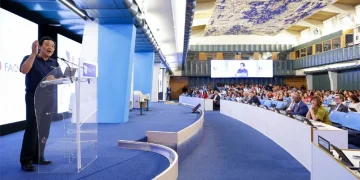
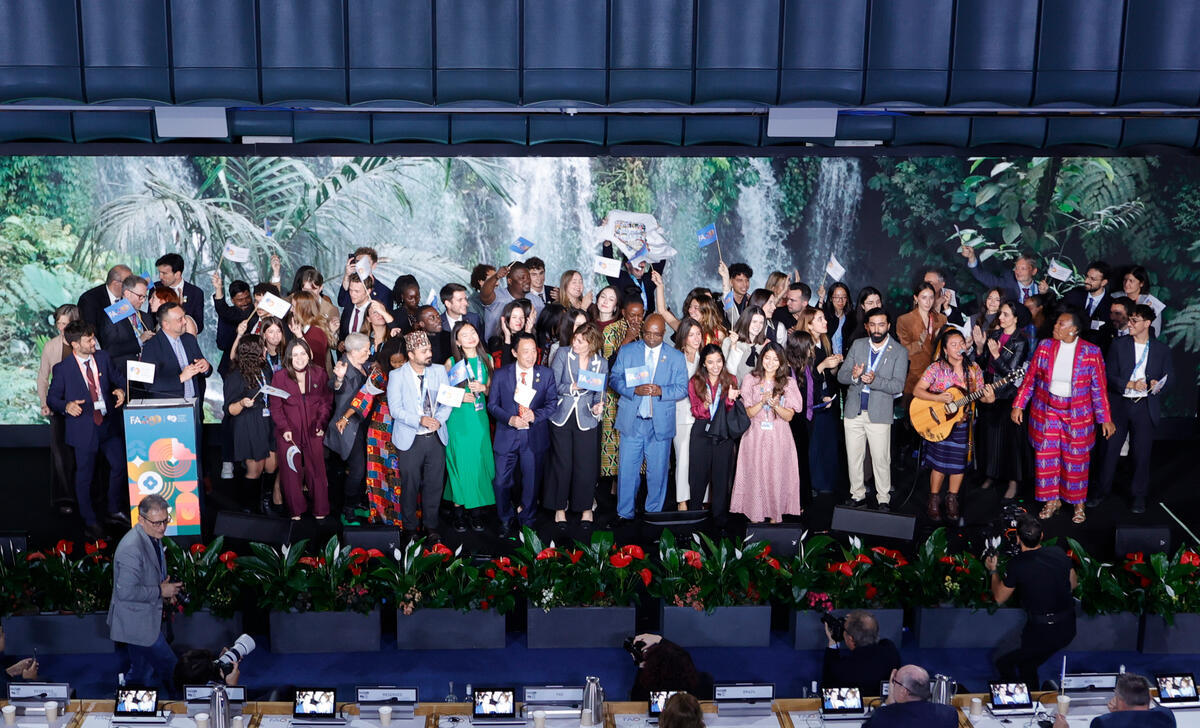
FAO Director-General QU Dongyu takes part to the group picture at the end of the World Food Forum 2025 Closing Ceremony. © FAO/Giulio Napolitano
The three pillars
Across its three interconnected pillars—Investment, Science and Innovation, and Youth—the Forum demonstrated how integrated approaches can address today’s complex agrifood system challenges.
The Hand-in-Hand Investment Forum showcased $17.2 billion in agrifood investment opportunities, with 31 countries and six regional initiatives presenting concrete, data-driven plans. These proposals are expected to transform the lives of an estimated 160 million people by advancing climate-resilient production, value-chain development, nutrition, job creation and sustainable rural livelihoods.
The scale and ambition of the investment opportunities presented during WFF 2025 reflected a broader shift in the global landscape. Members, development partners and private sector actors increasingly recognize that agrifood systems transformation is not only essential, but investable. Throughout the forum, FAO’s convening power and professional approach were evident and visible, connecting countries with partners, capital with science-based solutions, and global commitments with concrete action on the ground.
Science and innovation were also central. The Science and Innovation Forum brought together more than 7,300 participants from 182 countries, highlighting advances in digital public goods, climate services, biotechnology and innovation ecosystems that empower farmers – especially smallholders – while safeguarding natural resources. Discussions emphasized that science must be accessible, inclusive and responsive to local realities, particularly when paired with traditional and Indigenous knowledge.
Youth and women emerged as unmistakable drivers of change. The WFF Youth Assembly convened more than 1,200 young leaders and experts in person, alongside tens of thousands of participants online from all six regions. The Assembly showcased practical solutions – from regenerative agriculture and food entrepreneurship to digital innovation and policy advocacy. By providing more than $160,000 in direct support to youth-led solutions, it reinforced a clear commitment to turning ideas into action.
Director-General QU Dongyu described World Food Forum 2025 as a historic turning point for global agrifood systems. “This was not just another global gathering – it was a defining moment,” he said. “Transformation is possible when science guides decisions, investment matches ambition, and people – especially youth, women and Indigenous Peoples – are placed at the centre. Food is the foundation of peace, dignity and our shared future.”

Remarkable events
The Forum opened with a strong public-facing dimension through the Global Exhibition: From Seeds to Foods. Held outside FAO headquarters, the exhibition connected 10,000 visitors with more than 200 exhibitors from 150 countries, bringing FAO’s work directly to the public and translating global policy discussions into tangible experiences.
FAO’s strengthened role as a global platform for dialogue with Indigenous Peoples came to life through the HOPE Room at the FAO Museum and Network (FAO MuNe), developed in close coordination with the Indigenous Peoples’ Advisory Group. More than just an exhibition, the HOPE Room is a space for listening and learning, celebrating Indigenous Peoples as custodians of biodiversity, food traditions and living landscapes.
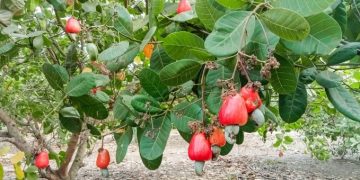
Concrete country-level results were also on display through FAO’s One Country One Priority Product (OCOP) initiative. From chestnuts in Albania and potatoes in Lesotho to jackfruit in Bangladesh, OCOP demonstrated how targeted value-chain development can scale when countries take ownership of their priorities – creating jobs, generating income and linking small producers to markets.
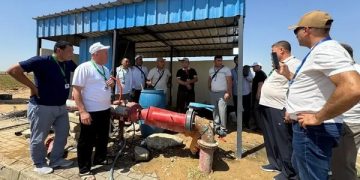
Water security emerged as a critical cross-cutting issue. Embedded within the Forum, the Rome Water Dialogue reinforced a clear message: without smarter water governance and sustained investment, the foundations of food security will not hold. Additionally, the South-South and Triangular Cooperation Ministerial Dialogue strengthened global solidarity and cooperation.
Another high-level moment was the celebration of World Food Day 2025 on 16 October, which marked FAO’s 80th anniversary and reaffirmed the Organization’s enduring mission to end hunger and build more efficient, more inclusive, more resilient and more sustainable agrifood systems across the globe.
In 2025 the message from Rome was clear: transforming agrifood systems is a shared responsibility – anchored in people and powered by partnerships. With momentum building and commitments in motion, the future of food must be shaped hand in hand, for the benefit of people, planet and generations to come.


