


























As global gold prices draw renewed attention to Ghana’s mining sector, agribusiness leaders are warning that the country risks overlooking a more sustainable and inclusive engine of growth, agriculture.
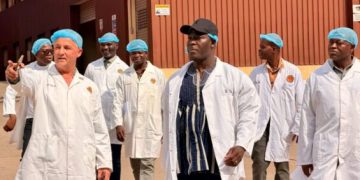
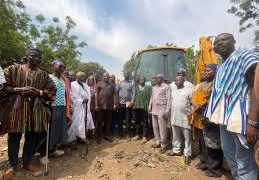
At Dawhenya, near Prampram in the Greater Accra Region, Marphlix Trust Company is quietly making that case with action. In June 2025, the company revived a long-abandoned irrigation and greenhouse facility under the Ministry of Food and Agriculture (MoFA), transforming it into a modern agribusiness training and production hub for Ghanaian youth.
The facility, originally developed by the Ghana Irrigation Development Authority (GIDA) in partnership with Israeli firm, Agritop, comprises about 100 greenhouse units that had been dormant for nearly eight years.
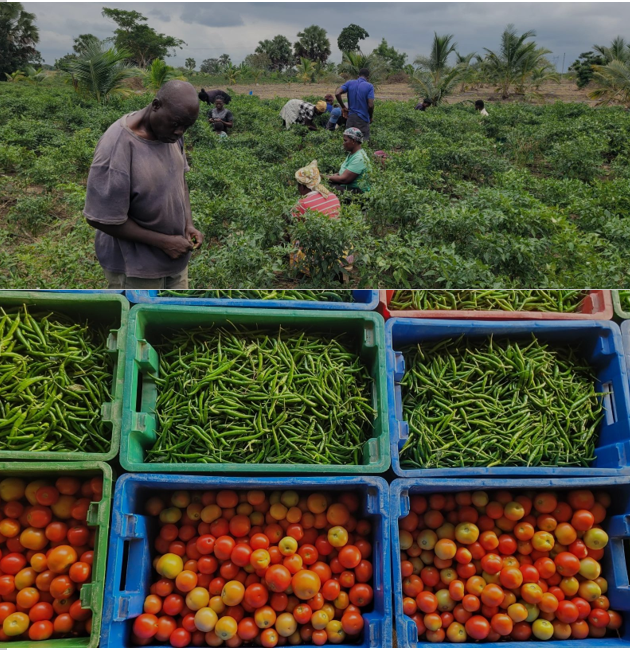
Today, it supports export-oriented vegetable production and hands-on training for young people seeking opportunities beyond traditional subsistence farming.
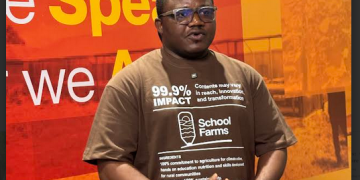
For Dr Felix Mawuli Kamassah, Chief Executive Officer of Marphlix Trust Farms Limited and Marphlix Trust Institute, the revival underscores a broader message, that is, Ghana’s economic reset cannot rely disproportionately on minerals, no matter how attractive global prices appear.
“Everybody is talking about gold because of the volumes and the foreign exchange it brings in. But agriculture is more powerful than gold. You cannot eat gold today. You can harvest from agriculture today and eat today,” Dr. Kamassah said.
Climate change is forcing a rethink
The push for smarter, technology-driven agriculture is no longer optional, Dr Kamassah argues, pointing to visible climate shifts.
“We did not even have harmattan this year. That alone tells you climate change is here. If we do not move into smart agriculture, controlled environments and irrigation-based farming, we will struggle,” he noted.
Marphlix’s greenhouse operations are built around controlled-environment agriculture, allowing year-round production, efficient water use and reduced chemical residues through improved pest management.
The model mirrors practices in countries such as the Netherlands, where technology has turned limited land into a major export advantage.
“This is the direction Ghana must move. With water, infrastructure and the right support, agriculture can be done all year round,” Dr. Kamassah said.
Changing perceptions, attracting youth
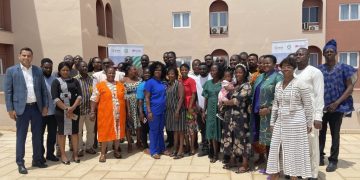
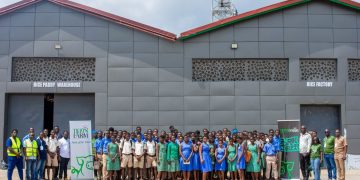
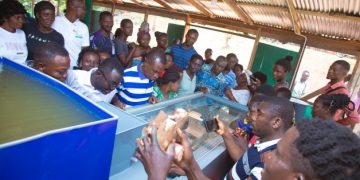
Beyond production, the Dawhenya facility has become a mindset-shifting platform for young Ghanaians, including national service personnel from accounting, economics and non-agricultural backgrounds.
“We are exposing young people to understand that agriculture is no longer cutlass and hoe. You can work in agriculture in your coat and still be professional,” he explained.
The response has been encouraging. Many trainees, he said, have requested to remain at the facility rather than accept postings elsewhere, a signal that agribusiness, when modernized, can compete with other career paths.
Exports, currency stability and jobs
Looking ahead to 2026, Marphlix plans to expand operations but says private effort alone is not enough.
“We need government attention and intervention. We cannot do it alone,” Dr. Kamassah said, linking agribusiness expansion directly to Ghana’s export and currency objectives.
He noted that exporters, particularly SMEs, play a critical role in sustaining foreign exchange inflows, even if they attract less attention than large-scale gold exports.
“When you add exporters and smallholder farmers together, the employment numbers are far higher than mining. That matters for economic stability,” he said.
He recalled the severe losses exporters suffered during the currency volatility of recent years, when packaging materials priced in dollars surged beyond GH¢17 to the dollar. While recent cedi stability has brought relief, he stressed that sustaining it requires deliberate support for export-oriented agriculture.
“If the government strengthens exports, we help maintain the balance in the forex market,” he said.
Agriculture versus mining
While acknowledging mining’s contribution, Dr. Kamassah warned against overdependence on a sector that is capital-intensive, environmentally disruptive and limited in employment scope.
“Mining employs technical people, but agriculture employs everybody. When gold is exhausted in one place, they move on. Agriculture stays and protects the environment,” he said.
He argued that even mining ultimately depends on agriculture, noting that food supplied to mining communities underpins productivity across the sector.
A call for policy rebalancing
As Ghana pursues its reset agenda, 24-hour economy ambitions and a $10 billion export target, Marphlix is urging policymakers to place agriculture at the center of that vision.
“Gold cannot be the only success story. If we really look at agriculture, invest in smart farming and support exporters, we can compete with gold and do it in a way that creates jobs, protects the environment and feeds the nation,” Dr. Kamassah added.
At Dawhenya, the revived greenhouses stand as a working example of what that shift could look like: modern, export-driven and powered by Ghanaian youth, not abandoned infrastructure and missed opportunity.
Source : bftonline

