













































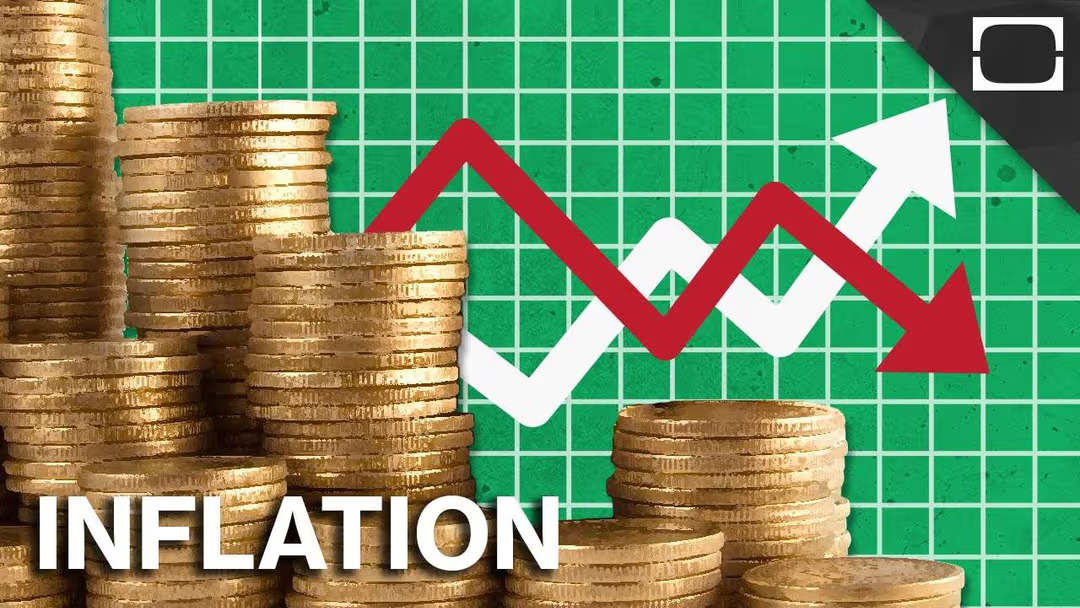
Ghana’s Producer Price Inflation (PPI) ended the year 2025 at 1.9 per cent, reflecting a steady stabilization of prices at the factory gate. Data released by the Ghana Statistical Service (GSS) reveals that while year-on-year costs for producers rose modestly, month-on-month pressures saw a notable decline.
The 1.9 per cent annual rate for December 2025 represents the price change for all goods and services at the producer level compared to December 2024. Significantly, the monthly inflation rate turned negative at -0.8 per cent, indicating that, on average, producer prices actually decreased between November and December 2025.
The overall PPI figure shows industry and services moving in slightly different directions:
Industrial PPI stood at 2.1 per cent in December 2025. This marks a 0.5 percentage point increase from the 1.6 per cent recorded in November, suggesting a slight uptick in the costs of manufacturing, mining, and utility production toward the end of the year.
Conversely, services recorded a much lower annual inflation rate of 0.6 per cent. On a month-on-month basis, service prices rose by a marginal 0.2 per cent between November and December.
The low PPI figures align with a broader trend of “disinflation” in the Ghanaian economy. Earlier this month, Government Statistician Dr. Alhassan Iddrisu reported that consumer inflation had also dropped to a multi-year low of 5.4 per cent.
Analysts suggest that the easing of producer price pressures is a positive signal for the coming year, as lower factory-gate costs typically lead to more stable prices for consumers at the retail level. This stability is credited to a combination of a relatively stable Cedi, improved local production, and a softening of global commodity prices.
Source: 3news.com

