








































For many years, farming in Ghana has been seen as a “potential sector of the future.” That future has arrived, as of 2026. Agriculture is no longer limited to subsistence farming and roadside sales.
It’s become one of the most appealing places for startups, young entrepreneurs, agriculture innovators and small-scale investors.
As a business coach who works closely with entrepreneurs in Accra, Kumasi, Tamale, Ho and Takoradi, I’ve noticed a definite shift. Young people are increasingly posing critical questions: What are the steps for packaging farm produce? What contribution may I make? How do I progress beyond the farm gate?
These are concerns of growth rather than survival. 2026 stands out because multiple factors, including economic pressure, technology, consumer behaviour, policy focus and market gaps, are all converging at the same moment.
Together, they are laying the groundwork for farming companies to thrive, scale and become lucrative enterprises.
In 2026, the opportunity lies not only in food production, but also in issue solutions throughout the agricultural value chain, including inputs, storage, logistics, processing, marketing and finance.
Food demand
Ghana’s population continues to expand, and urbanisation is accelerating. More people are living in cities, dining out more frequently and expecting accessible, clean and regular food supplies.
Restaurants, hotels, chophouses, boarding schools, hospitals and supermarkets are all seeking dependable supplies.
However, many people worry about inconsistency in availability, poor quality and a lack of uniformity. For example, a tomato-growing firm in Akumadan with a constant supply to Kumasi restaurants has an edge.
A rice farming and packaging company in the Northern Region may attract clients who appreciate local rice but want better cleaning and packaging.
In 2026, individuals who can produce consistently and competently will always have a market.
Rising food prices
Import dependence has gotten pricey. The cedi’s pressure on major currencies has raised the price of imported rice, poultry, onions and processed commodities.
Consumers are adjusting. Many Ghanaians are now asking, “Is this locally produced?” and “Is there a cheaper Ghana-made alternative?” This opens opportunities for farming businesses that focus on local alternatives to imports.
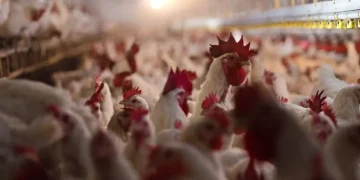
Real-world examples include local poultry entrepreneurs replacing frozen imported chicken; soybean and maize farmers feeding feed mills, and cassava processors producing starch, flour and industrial inputs on-site.
Technology
Historically, agricultural technology sounded impressive but felt remote. In 2026, it is practical, inexpensive and accessible, even on a basic smartphone.
Farming firms are increasingly employing WhatsApp to take orders and handle customers, mobile money to pay employees and receive payments, simple Excel or farm management tools to track costs and drones and weather apps (on a small scale) for planning.
A young farmer in Ho can now work directly with buyers in Accra. A vegetable business in Dawhenya uses basic meteorological data to better anticipate harvest timings.
Youth unemployment
Graduate unemployment remains a significant challenge in Ghana. But what is changing in 2026 is the thinking. Young people are no longer choosing farming as a “last resort.”
Many enter with: Business planning, branding concepts, value-added strategies and market-first thinking.
Graduates are now running mushroom farms for supermarkets, snail farms for specialised urban markets and organic vegetable farms that sell directly to health-conscious consumers.
These young farming enterprises mix education, innovation and ambition. They aren’t scared to experiment, fail, adapt and scale. This enthusiasm is one of the main reasons 2026 is a watershed moment.
Value addition
In 2026, the biggest opportunities are not just in growing crops, but in what happens after harvest.
Raw produce has thin margins. Processed, packaged and branded products have higher value.
Examples include turning plantain into packaged chips, processing pepper into bottled sauces, converting cassava into high-quality gari, flour or starch and packaging honey, spices and herbs for urban markets.
My advice remains simple: “If you only sell raw produce, you are leaving money on the table.”
Farming startups that focus on processing, storage, branding and distribution are building more sustainable businesses in 2026.
Policy attention
While issues exist, agriculture continues to get attention from government programmes, development partners, non-governmental organisations and financial institutions.
In 2026, more training programmes will focus on agribusiness rather than merely farming; donors and accelerators will help youth agripreneurs, financial institutions will gradually design products for agribusinesses and public-private partnerships in agro-processing will grow.
This does not mean that the system is flawless. However, it does imply that farming businesses now have more resources than ever before, particularly those that are formal, data-driven and growth-oriented.
Conclusion
2026 is not a golden year for everyone in agriculture. It is the year for prepared farming startups that approach farming as a business, understand their clients, manage costs and plan for the long run. Ghana will always require food.
The real questions are: who will generate it? How will it be produced? And who will reap the benefits? For businesses eager to study, test and establish smart agribusiness models, farming in 2026 offers more than just survival. It’s about potential, influence and profitability.
As a business consultant, I have a clear message: if you have been waiting for the “right time” to start farming or agribusiness in Ghana, 2026 is it.
The writer is a Senior Lecturer/SME Industry Coach, Coordinator (MBA Impact Entrepreneurship and Innovation) at the University of Professional Studies, Accra.
[email protected]
IG: andy_ayiku
@AndrewsAyiku
F: Andyayiku
Source: Graphic online

