









































The government has announced plans to invest US$3 billion in commercial agriculture as part of its 2027 economic transformation agenda, with a focus on increasing local food production, reducing imports, expanding agro-processing and creating jobs across the agricultural value chain.
The Minister of Finance, Dr. Cassiel Ato Forson, revealed this move by government during his presentation of the 2027 Budget Statement and Economic Policy to Parliament on Thursday, November 12, 2026.
The investment forms the second pillar of the government’s four-year US$10 billion economic programme, known as the New Economy, New Ghana: Jobs and Prosperity, which is expected to run from 2027 to 2030.
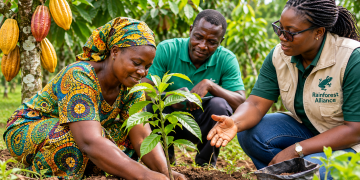
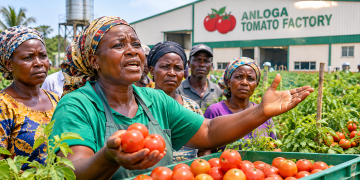
Under the commercial agriculture pillar, the government plans to develop eight major agricultural industries: rice, sugar, poultry, maize and soybean feed, aquaculture, oil palm, vegetables and cocoa value addition.
The initiative is expected to move agriculture beyond primary production by connecting farmers to processing factories, storage facilities, transportation services, buyers and export markets.
Agriculture Positioned as a Major Driver of Economic Growth.
Dr. Forson noted that agriculture remains one of the most important sectors of Ghana’s economy, contributing about 20 per cent of national output, nearly 40 per cent of employment and approximately 25 per cent of export earnings.
However, he expressed concern about the country’s continued spending on food and agricultural imports, particularly products that could be produced competitively within Ghana.
He explained that heavy dependence on imports affects the local currency, exposes the country to changes in international food prices and limits opportunities for local farmers, businesses and industries.
The Finance Minister argued that every food product imported unnecessarily represents a missed opportunity for local farmers, factories, transport operators and workers.
He said the government’s investment would help turn Ghana’s land, water and agricultural businesses into sources of food security, higher rural incomes, industrial raw materials, exports and employment.
Eight Agricultural Industries to Receive Attention
The government’s plan will focus on developing eight agricultural value chains, with each expected to have its own production targets, financing arrangements, processing facilities and market plans.
The selected areas are intended to address some of Ghana’s major food supply gaps while creating opportunities for farmers, processors, investors and other businesses.
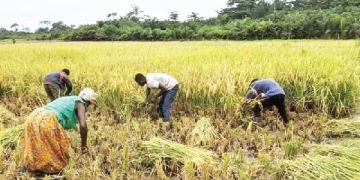
Rice production will be a major priority, with plans to establish production hubs in the Afram Plains, Volta Basin, Western Ghana and Northern Ghana. The government intends to bring an additional 100,000 hectares of land under rice cultivation, targeting yields of five to six metric tonnes per hectare.
The programme is expected to create approximately 125,000 jobs. Government also plans to link rice import licences from 2027 to purchases from local rice producers and millers, with the longer-term target of ending commercial rice imports by 2030.
For the sugar industry, the government is targeting self-sufficiency by 2030 through increased local production and the development of the sugar value chain.
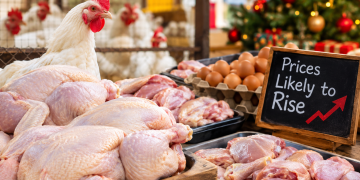
The poultry industry will also receive attention through stronger local production, supported by improved supplies of maize and soybean for animal feed. This is expected to address one of the major costs facing poultry farmers and reduce the country’s dependence on imported poultry products.
Under aquaculture, the government intends to expand local fish production to help close the gap between domestic supply and demand.
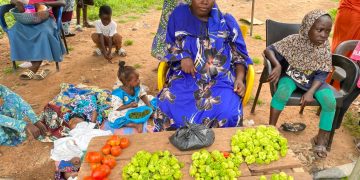
Oil palm and vegetable production are also included in the programme, with opportunities to expand local supply, processing and distribution.
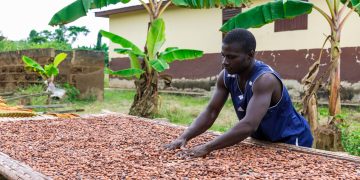
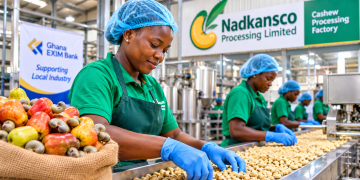
For cocoa, the government is targeting increased domestic processing, with at least 50 per cent of cocoa processed locally by 2028 and 100 per cent by 2030. This is expected to increase the value Ghana earns from cocoa rather than relying mainly on exports of raw beans.
Government to Connect Farmers to Markets and Processing Facilities
A key part of the commercial agriculture plan is the development of a national system that connects all stages of agricultural production and marketing.
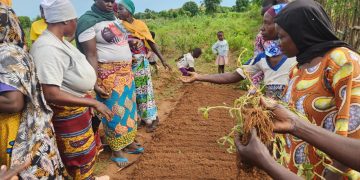
Under this arrangement, farmers are expected to have better access to land, water, improved seeds and animal breeds, irrigation, machinery, extension services and financing.
The system will also connect farms to storage facilities, processing factories, packaging services, transportation companies, institutional buyers, retail outlets and export markets.
Dr. Forson explained that agricultural production must be supported by reliable storage, processing and markets to ensure that farmers receive the full benefit of their efforts.
He pointed out that producing large quantities of food without adequate storage can lead to losses, while factories without a reliable supply of raw materials may remain idle. Similarly, providing farmers with credit without securing markets for their produce can leave them struggling to repay their loans.
He assured Parliament that the government would work to address these gaps by developing a more connected agricultural system.
Opportunities for Farmers, Investors and Agribusinesses
The US$3 billion commercial agriculture investment is expected to create opportunities for different groups across the agricultural sector.
Farmers are expected to benefit from improved access to production support, markets and processing facilities. Agribusinesses and food processors could benefit from a more reliable supply of locally produced raw materials, while investors will have opportunities to participate in the development of farms, factories, storage facilities and other agricultural businesses.
The plan also presents opportunities for companies involved in agricultural machinery, irrigation, transportation, packaging, animal feed, financial services and food distribution.
For young people, the expansion of commercial farming and agro-processing could create employment opportunities beyond traditional farming, including factory operations, logistics, marketing, technology and other related services.
A New Direction for Ghana’s Agricultural Sector
The US$3 billion allocation forms part of the government’s broader US$10 billion New Economy programme, which will cover eight areas of the economy between 2027 and 2030.
For agriculture, the central goal is to increase what Ghana produces locally, process more of its agricultural produce within the country and create stronger markets for farmers and businesses.
The success of the plan will depend on how effectively the proposed investments are implemented, how quickly farmers and businesses can access the necessary support and whether reliable markets are created for locally produced food.
If successfully delivered, the programme could strengthen Ghana’s food supply, reduce import dependence, create jobs and increase the contribution of agriculture to national economic growth.
The Finance Minister’s message to Parliament was clear: agriculture must become more than the production of food. It must become a strong business sector that supports farmers, creates industries, attracts investment and provides decent jobs for Ghanaians.