



































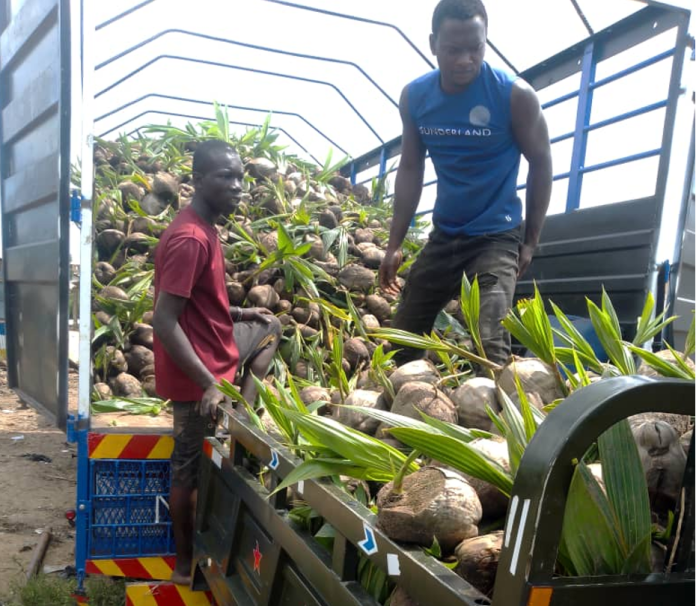
Ghana EXIM Bank, the Presidential Initiative on Agriculture and Agribusiness (PIAA) and Coconut Federation Ghana have completed a major inspection tour of coconut farms across 10 key growing regions barely two months after distributing 3 million elite, disease-resistant seedlings to farmers.
The initiative – fully financed by EXIM Bank – is part of the president’s flagship programme to plant 11 million seedlings across 11 regions, aimed at positioning Ghana as Africa’s leading coconut producer and a competitive player in the global market.

GEXIM has prioritised coconut as a high-value export crop with strong potential for foreign exchange earnings, job creation and rural economic growth. Global demand for coconut and its derivatives continues to surge, with coconut water alone valued at US$5.73billion, coconut meat at US$5.19billion and coir products at US$0.64billion.
Ghana is already expanding its footprint in the market. In 2021, the country exported more than 41 million kilogrammes of coconut worth US$11.44million. Ghana is now the world’s ninth-largest exporter of desiccated coconut, valued at US$22million in 2022, while the global coconut trade reached US$14.19billion in 2023.
International buyers at Fruit Logistica 2025 in Berlin expressed strong interest in Ghanaian coconut products – including desiccated coconut, fresh nuts, oil, copra cake and coir – citing the country’s organic cultivation, superior taste and high oil content.
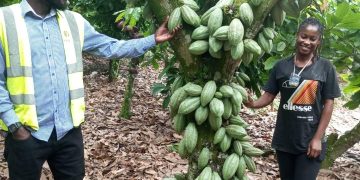
The inspection team visited over 600 farms and reported strong seedling performance and high farmer commitment. Vice-President of the Coconut Federation, Kwaku Boateng, praised the progress and noted the sector’s potential to create thousands of direct and indirect jobs, particularly for youth and women.
Farmers expressed appreciation for the free seedlings, with many requesting additional supply for the next planting season to expand production.
Coconut cultivation is now active in 11 regions, involving thousands of farmers, processors and exporters. The EXIM-funded programme aims to support 80,000 farmers, create more than 50,000 indirect and up to 20,000 direct jobs, boost export earnings and strengthen rural industrialisation as Ghana accelerates efforts to meet rising global demand.

