


































The Ghana Institute of Horticulturists (GhIH) has called on government to provide targeted support to address the widespread infestation of root-knot nematode (RKN), which is undermining vegetable production in the Upper East Region.
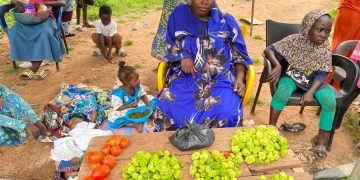
The pest has severely affected crops, particularly tomatoes, with yield losses estimated at over 70 per cent. The infestation also delays crop maturity and reduces quality, discouraging many farmers from engaging in vegetable production, according to the institute.
GhIH described the situation as a national agricultural challenge that requires public funding to support the use of biosafe nematicides for treating affected soils.
The Upper East Region has significant arable land suitable for vegetable cultivation, which, if fully utilised, could reduce the country’s dependence on imported vegetables from neighbouring countries, the institute said.
The call was made by the President of GhIH, Dr. Mohammed Mujitaba Dawuda, who is also Head of the Department of Horticulture at the University for Development Studies (UDS), during a working visit to the Regional Directorate of Agriculture and the United Nations World Food Programme in the region.
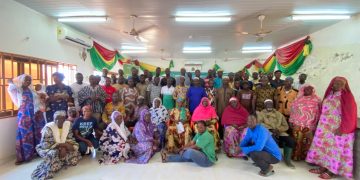
The visit formed part of efforts to establish a GhIH Upper East branch, introduce the institute’s objectives, encourage agricultural staff to join the association, and identify solutions to long-standing challenges affecting horticultural production.
The engagement brought together district directors and heads of agricultural departments, alongside other value chain actors, smallholder farmers and non-governmental organisations, to strengthen collaboration aimed at addressing persistent constraints in the sector.

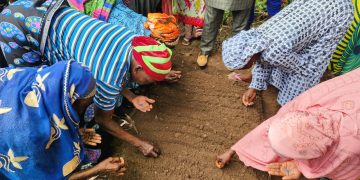
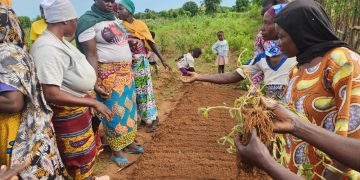
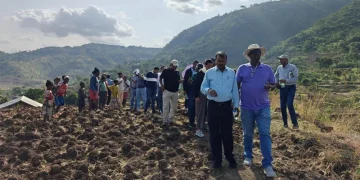
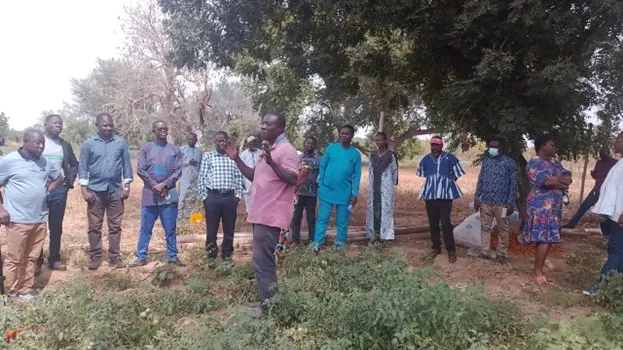
As part of the visit, the team toured a tomato farm in the region, where they interacted with farmers and the media. GhIH used the opportunity to reiterate its call for government to treat the root-knot nematode infestation as a national issue and to allocate funding for environmentally safe soil treatment measures.
To mitigate the challenge, GhIH pledged to collaborate with the Ministry of Food and Agriculture (MoFA), through the Upper East Regional Directorate of Agriculture, on projects, extension services and capacity-building initiatives to improve irrigated crop production and food security.
The proposed collaboration includes the development of joint project proposals to secure funding for training and equipping Agricultural Extension Agents, enabling them to transfer appropriate technologies to farmers through demonstrations and field-based learning. The aim is to support year-round production of tomatoes, onions and other horticultural crops.
Participants at the meeting noted that although the region has substantial agricultural potential, limited access to sustainable water sources, modern technologies and farm inputs continues to constrain production. They identified the rehabilitation of the Pwalugu Dam and other irrigation schemes as critical to boosting agricultural output.
The Upper East Regional Director of Agriculture, Alhaji Fuseini Zakaria, commended GhIH for its initiative and commitment to working with MoFA and government to implement policies that would revitalise agriculture, create employment, enhance food security and support economic growth.
He noted that current management strategies for root-knot nematode, including crop rotation and chemical nematicides, are either costly, environmentally harmful or insufficient, while the use of resistant varieties and biofumigants remains limited.
Dr. Dawuda said GhIH remains focused on advancing horticulture through research dissemination, policy engagement and capacity building, and indicated that efforts are ongoing to strengthen the technical capacity of agricultural staff in the region to improve horticultural productivity.

