












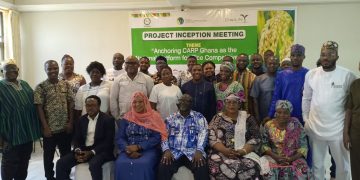
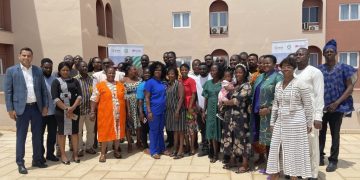





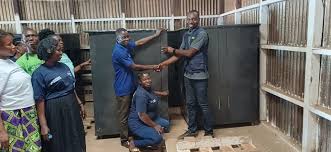












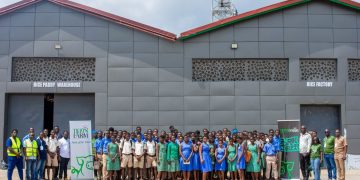











The Council for Scientific and Industrial Research – Savanna Agricultural Research Institute (CSIR-SARI) has trained 30 small-scale agro-processors in improved soybean oil extraction techniques under the Technologies for African Agricultural Transformation Phase II (TAAT II) project.
The training forms part of the Soybean Compact funded by the African Development Bank and coordinated by the International Institute of Tropical Agriculture (IITA). It seeks to strengthen soybean value chains in northern Ghana by improving local processing efficiency and product quality. Participants were drawn from small-scale enterprises, farmer-based organisations and youth-led agribusinesses in the Northern Region.
The practical sessions covered modern oil extraction methods, including cleaning, roasting, milling, pressing, clarification and safe storage. Trainers also emphasised improved recovery rates, quality control, hygiene standards and basic equipment maintenance to help processors meet the requirements of urban markets and organised buyers.
Project Coordinator for the TAAT Soybean Compact, Charles Nelimor, said many small processors rely on traditional methods that result in low oil yields and inconsistent quality, limiting profitability and market access. The improved techniques, he noted, are designed to reduce losses and enhance efficiency.
Socio-economics expert at CSIR-SARI, Dr Desmond Sunday Adogoba, described soybean as a strategic crop for northern Ghana due to its adaptability and value as a source of income, nutrition and livestock feed. He said while production has increased, value addition remains limited, preventing farmers and processors from fully benefiting from the crop’s economic potential.
He added that improved processing would enable participants to produce higher-quality soybean oil for household and commercial use, while soybean cake generated as a by-product could be sold as animal feed to create an additional income stream.
The initiative forms part of broader efforts to promote agribusiness development, create employment and reduce Ghana’s reliance on imported edible oils. Participants welcomed the hands-on training, saying it would help improve product consistency, reduce waste and strengthen competitiveness within the soybean sector.
Source : bftonline

