



































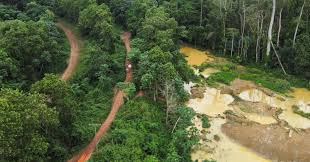
The Government has successfully reclaimed nine forest reserves that were previously declared high-risk red zones due to extensive environmental degradation caused by illegal mining and timber activities.
These forest reserves had for years remained inaccessible to forestry officials after being taken over by armed groups engaged in illegal mining and logging, effectively turning them into no-go areas and threatening Ghana’s biodiversity and forest ecosystems.
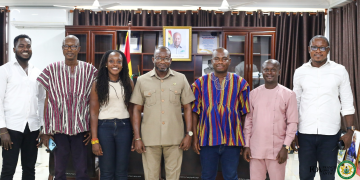
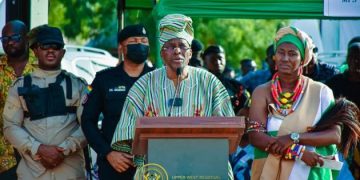
The Minister for Lands and Natural Resources, Mr Emmanuel Armah-Kofi Buah, revealed this development during a working visit by the Vice President, Professor Jane Naana Opoku-Agyemang, to the Ministry as part of her nationwide familiarisation tour of ministries and state agencies.
According to the Minister, the successful reclamation of the forest reserves was the result of deliberate government action to rebuild and strengthen the operational capacity of the Forestry Commission, whose law enforcement capabilities had deteriorated over the years.
He explained that the Commission had been retooled, motivated and adequately supported to confront illegal activities head-on, enabling officers to regain control of forest areas previously dominated by armed illegal miners and loggers.
Mr Buah noted that beyond illegal mining, unauthorised timber operations had posed a significant threat to Ghana’s forest resources. To address this, the Ministry has intensified monitoring and enforcement measures, including the inauguration of a specialised Ashanti timber monitoring team to clamp down on illegal logging activities in the region.
As part of efforts to ensure long-term protection of forest reserves while generating economic benefits for surrounding communities, the Minister said the Government was placing renewed emphasis on ecotourism development.
He highlighted ongoing initiatives at key sites such as Kakum National Park, the Shai Hills Resource Reserve, and other forest and wildlife areas aimed at attracting private sector investment, boosting domestic tourism, and encouraging Ghanaians to explore and appreciate the country’s natural heritage.
Touching on land administration, Mr Buah announced that the Government had embarked on major reforms at the Lands Commission to improve efficiency, transparency and public trust in the land administration system.
He said the Commission was expected to fully digitise its operations within the next two years, following the Government’s decision to allow it to retain 70 per cent of its internally generated funds to finance the digital transformation process.
The digitisation, he explained, would address longstanding challenges such as missing land records, bureaucratic delays and inefficiencies, while enabling citizens to access land services remotely without having to be physically present at Commission offices.
In addition, the Minister disclosed that the Government had begun decentralising land administration services to make them more accessible to citizens at the local level. So far, 36 Lands Commission offices have been established across the country.
He said the long-term goal was to set up Lands Commission offices in 110 metropolitan, municipal and district assemblies, significantly reducing the need for individuals to travel to regional capitals to process land-related transactions.
On climate action, Mr Buah said Ghana’s forest protection and reclamation efforts were gaining increasing international recognition, reflecting the country’s growing leadership in environmental sustainability.
He disclosed that Ghana is expected to receive US$20 million in emission reduction payments this year, with an additional US$30 million in climate support funding anticipated, as a result of its commitment to forest conservation and climate change mitigation.
“These developments demonstrate that the international community is recognising Ghana’s efforts to protect its forests and contribute meaningfully to global climate action,” the Minister stated.
Responding to the briefing, Vice President Professor Jane Naana Opoku-Agyemang commended the Ministry for the progress made, describing the reclamation of the degraded forest reserves as a major milestone in the country’s environmental protection efforts.
She emphasised that safeguarding the environment was both a moral responsibility and a matter of national survival, stressing that environmental degradation and pollution had direct consequences for public health and livelihoods.
“When you hear about the health implications and deformities linked to polluted water bodies, it is not a laughing matter. Protecting the environment is ultimately about protecting ourselves,” she said.
The Vice President also praised the Ministry’s digitisation and decentralisation initiatives, noting that bringing land administration services closer to communities would help resolve land-related challenges at the grassroots level.
She further urged that land banks being developed to support agricultural investment should be structured in a way that considers the needs of women, many of whom continue to face barriers in accessing land for farming and agribusiness.
Professor Opoku-Agyemang assured the Ministry of the Government’s full backing and encouraged staff to remain committed and diligent in delivering results that would strengthen environmental governance and sustainable land management across the country.

