



























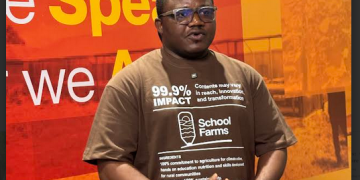
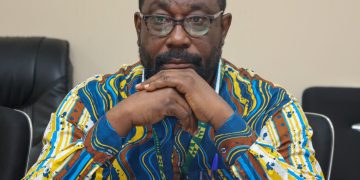







A professor of environmental horticulture at the University for Development Studies (UDS), Prof. Abdul-Halim Abubakari, has called on government to promote the development of organic fertiliser through venture capital support to make it accessible to farmers.
He said government should also provide incentives such as subsidies and improved market access for farmers who use organic fertilisers, to reduce the over-reliance on chemicals that pose risks to human health.
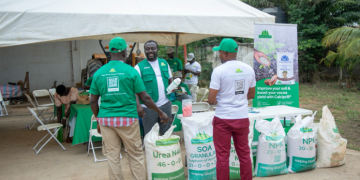
According to him, organic fertiliser improves soil fertility, increases yields and enhances the nutritional quality of crops through gradual nutrient release. This, he explained, supports long-term farm viability and resilience to drought and flooding.
He noted that research has shown that mapping agro-industrial organic materials in Ghana would help determine the amount of feedstock needed for large-scale organic fertiliser production.
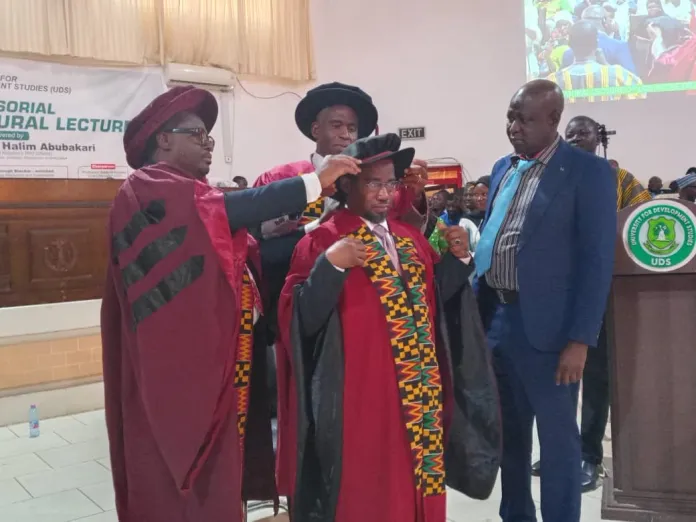
Prof. Abubakari made the call at the 22nd Professorial Inaugural Lecture of UDS at the Andani Auditorium on the Tamale Campus. The lecture was held on the theme “Transforming Ghana’s Urban Organic Food System through Biochar-Enriched Compost Innovations: Circular Economy Pathways for Climate Resilience and Sustainable Development.”
He stressed the need to mobilise stakeholders in organic fertiliser production to support small and medium-scale enterprises to scale up research outcomes.
“Tamale’s urban food system is regionally connected but seasonally fragile. It requires better infrastructure, data-driven planning and stronger local production to improve resilience,” he said.
He added that composting and biochar systems could create green jobs, especially for the youth, while local certification and safety systems would rebuild consumer confidence in urban food. Universities, particularly UDS, should serve as centres for innovation, policy support and enterprise development.
Policy relevance
Prof. Abubakari said the adoption of these approaches would support Ghana’s climate commitments, national sanitation and waste-to-resource policies and medium-term development frameworks, as well as help attain the Sustainable Development Goals, especially SDGs 2, 11, 12, 13 and 15.
He pointed out that the absence of national standards for compost and biochar, limited financing for circular-economy businesses and weak integration of soil, waste and climate policies remain major governance gaps.
He said Ghana could become a continental leader in circular and carbon-smart urban food systems if it focuses on restoring degraded soils, recycling organic waste, reducing dependence on inorganic fertilisers and building a strong circular bio-economy.
A holistic production system that promotes biodiversity, healthy soils and biological cycles, he said, would help Ghana become a sustainable food supplier to the sub-Sahelian region.
The Vice-Chancellor of UDS, Prof. Seidu Al-Hassan, commended Prof. Abubakari for the research, saying it would help address long-standing agricultural challenges and make the sector more attractive to young people.

