




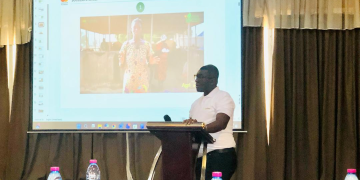
































Ashanti Regional Director of Agriculture, Dr David Anambam, says the introduction of mechanisation and modern methods is critical to encouraging youth interest in agriculture.
He says this helps reduce the physical burden of farming and makes the sector more appealing to the youth.
He disclosed that the Ministry of Food and Agriculture (MoFA) is strengthening collaborations with allied agencies and partners to help rope in more rural folks, especially women and youth, in the agricultural value chain and create more sustainable job opportunities through mechanisation.
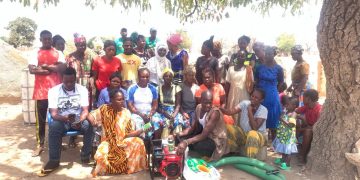
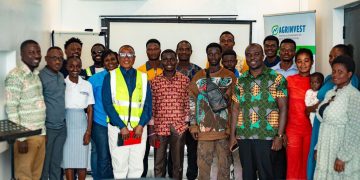
Officials are already leveraging interventions by AGRA Ghana and its partners, Agri-Invest Limited and the Kumasi Institute of Tropical Agriculture (KITA), who are currently implementing the Strengthening Access to Mechanisation for Agri-Businesses for Enhanced Youth Employment Opportunities project at Jeduako in the Sekeyere Central District of the Ashanti Region.
The project, which is a component of the Youth Entrepreneurship for the Future of Food and Agriculture (YEFFA) program, is an agricultural mechanisation initiative that is creating new employment pathways for young people while improving farm productivity in the farming community of Jeduako.
Youth in the Ashanti, Upper West, Northern, Bono East and North East Regions are also benefiting from the project.
The project, being implemented in collaboration with the Ministry of Food and Agriculture, also aims to expand access to affordable mechanisation services and financing for youth-led agribusinesses.
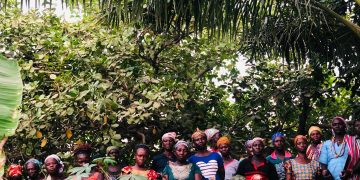
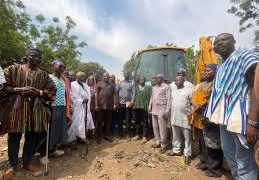
During a visit to the Jeduako community, Chief Executive Officer (CEO) of Agri-Invest Limited, who doubles as the project coordinator, Kofi Kyeremanteng Nyanteng, explained that the intervention has reached 510 beneficiaries in the community, including 350 young people, 70 per cent of whom are women.
He further explained that the initiative connects youth to mechanisation service opportunities, trains them to use simple income-generating tools, and links them to affordable financing options.
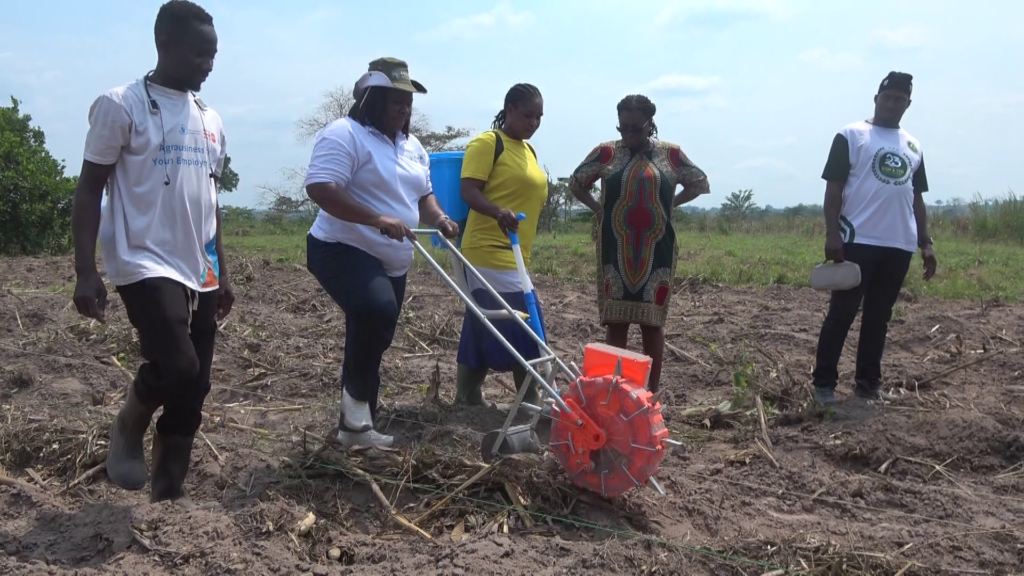
As part of the rollout, the project has deployed four push planters, creating jobs for nearly 20 young people, and five handheld shellers to support service provision.
Dr Anambam indicated that the AGRA Ghana initiative directly aligns with the government’s Feed Ghana Programme, which places strong emphasis on youth participation as a pathway to increasing national food production and strengthening livelihoods.
He commended AGRA Ghana and its partners, indicating that the project’s overall goal is to boost efficiency, raise farm incomes, and contribute to national agricultural transformation.
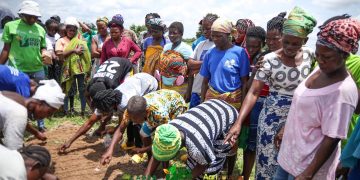
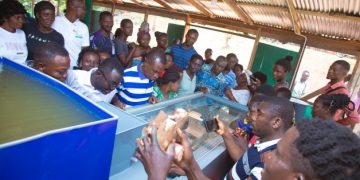
At a demonstration farm, one of the beneficiaries, Abena Patricia Manu, who handles the push planters, was excited about how she can use the machine to broadcast rice easily without employing more labour.
“The machine has come to lessen the burden on us, and we are able to increase productivity and reduce costs. I am able to broadcast the rice on an acre of land in a day, which used not to be so,” she revealed.
In the Jeduako community, other beneficiaries have lauded AGRA Ghana’s intervention in providing handheld maize shellers.
One of them, Rose Amponsah, said, “Farmers were losing out before the intervention, but now we are able to shell our maize with ease and even do the same for other farmers for monetary gains.”
Satch Avudzi, Program Officer at AGRA, expressed confidence that training youth on mechanisation will attract more youth to agriculture.
Project Coordinator at the Kumasi Institute for Tropical Agriculture (KITA), Ellison Owusu Fordjour, said the project is building beneficiaries’ capacities.
It seeks to empower over 3,000 people, including women and youth. To ensure long-term impact, Mr Fordjour indicated that the project is deploying Community Agribusiness Advisors to facilitate access to spare parts, connect beneficiaries with suppliers and manufacturers, and provide ongoing technical support.
Before the project, farmers relied heavily on manual planting, broadcasting, and labour-intensive shelling. In some cases, several labourers had to be hired and fed during planting seasons, increasing production costs.
Shelling delays were also common because only one tractor served the community, often arriving late and exposing harvests to risks such as spoilage or bushfires. With handheld shellers and other portable tools, farmers can now process produce promptly and more efficiently.
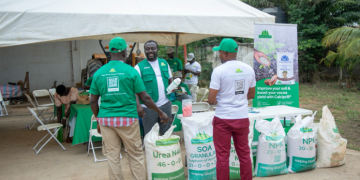
The project by AGRA Ghana and the MasterCard Foundation has so far supplied equipment, including push planters, handheld shellers and fertiliser applicators, to beneficiaries in the Jeduako community.
Ghana Country Director of AGRA, Dr Betty Annan, expressed excitement that the project is creating jobs for young people and giving them opportunities to become agricultural entrepreneurs.
“I was impressed. Yes, some of the equipment was given to them for free as starter packs. But as they teach them financial management, that will give them the opportunity to be able to establish their own businesses as time goes on,” she said.

