












































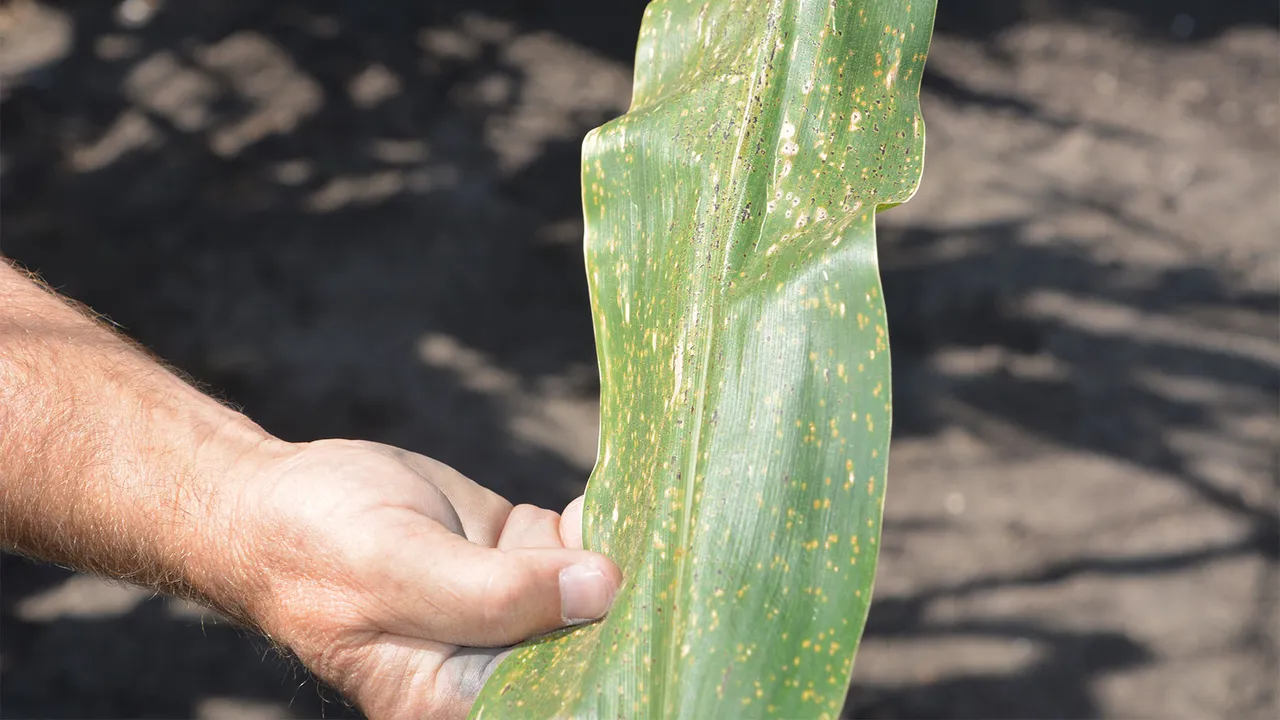
Extension experts say more nitrogen, fungicide and tillage won’t solve disappointing corn yields. Instead, here are four management tips to improve your crop’s production.
Extension experts, Jennifer Brhel and Dan Quinn shared insights into maximizing corn yields going forward in 2026, during the Farm Progress Show 2025 held in Decatur, Illinois, Progress City USA.
According to them, not everyone harvested great corn yields in 2025, especially people who farm where southern rust or tar spot infested fields or where the rain spigot shut off early, yields likely dipped below your expectations.
University of Nebraska Extension crops and water educator for York, Seward and Fillmore counties, Jennifer Brhel believes some farmers may respond by upping nitrogen rates, increasing fungicide passes, including more tillage and adding more water in irrigated fields. However, Brehl, doesn’t believe those are the correct responses.
“Increased nitrogen rates, more fungicide applications and tillage are not the answers for higher yields,” Brhel said. “There were multiple field situations where only 150 pounds of nitrogen and one fungicide application resulted in above-average yields. In those situations, correlations between management practices and strong yields included balanced overall nutrition where nitrogen was reduced, timely fungicide application and not overirrigating.”
Dan Quinn, Purdue Extension corn specialist, made similar observations. Although it was unusual, southern rust even invaded northern Indiana counties in 2025, hitting some areas harder than others.
“Two or even three fungicide applications still didn’t help a lot if they weren’t timed correctly,” Quinn said. “The residual effect of fungicide applications runs out after about three weeks. What matters most is when you apply it.”
Seeking higher corn yields
Here are four corn management tips from Brhel and Quinn for 2026:
- Use effective nitrogen rates. That might be a reduced rate if you’ve applied more N than necessary. “It was interesting walking our on-farm research studies where we had nitrogen ramps [of varying N rates] and observing the correlation between less southern rust in lower nitrogen rates and more southern rust in higher nitrogen rates,” Brhel said.
Independent researchers noticed a similar trend. Quinn noted that higher N rates or higher populations lead to more biomass, which can result in higher humidity, favorable to disease.
“That can happen with irrigated fields,” Quinn said. “In 2024, there were documented cases where tar spot was worse and yields lower in irrigated corn versus nonirrigated corners.”
- Find right fungicide timing. “There were people with yields of 250 or more who applied only one fungicide while others applied two,” Brhel said. “Some applied two fungicide timings of two different generic products and did as well as the higher-priced products with one application.
“The key was not applying the fungicide too early so there was some late-season residual.”
- Remember, tillage is not the answer. Southern rust doesn’t overwinter in the Midwest, Quinn said, which means tilling under corn residue makes no difference in whether southern rust is present in 2026. The disease must move into the region from Southern states in the spring.
Tar spot does overwinter in corn residue. In theory, tillage might help, but spores can blow from field to field, Quinn said. Brhel added, “There are other management considerations for tar spot, including hybrid selection and not overapplying nitrogen and irrigation.”
- Avoid overirrigating. Watering at the wrong time can hurt yields, as noted previously. “Anytime nonirrigated fields yield the same or more than irrigated fields, it’s often due to overirrigation,” Brhel said. “This year’s relative humidity was very high. The crop didn’t use as much water. We were keeping some soils too wet by irrigating, which may have added to crown rot and stalk rot.”

