




















































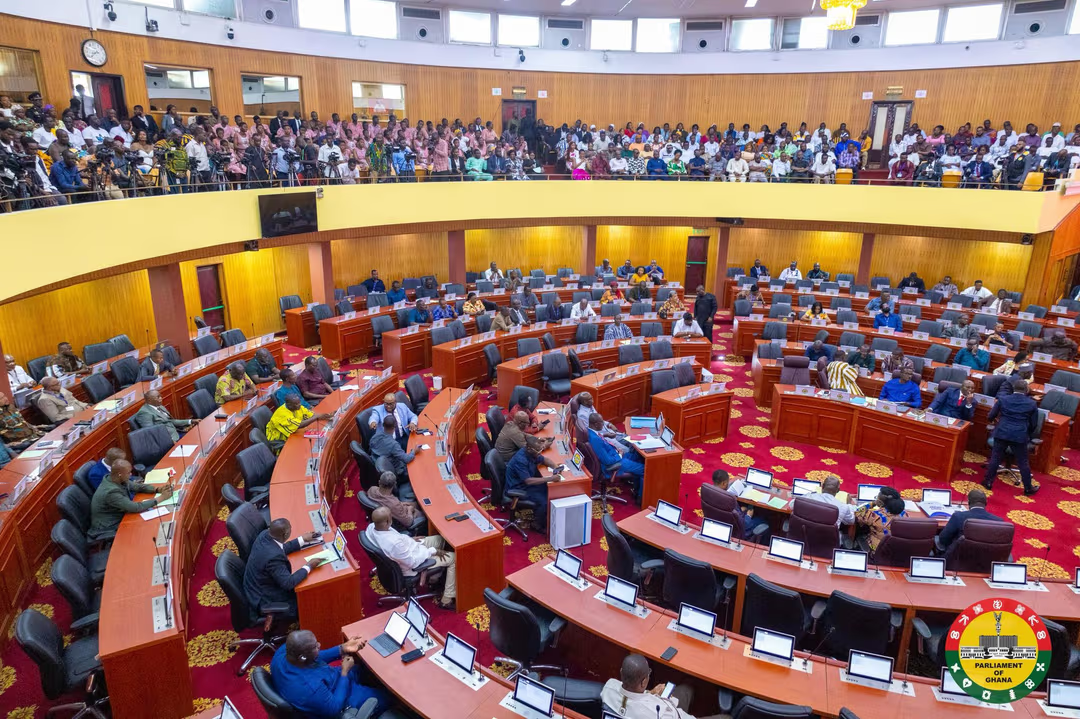
Parliament has officially passed the 24-Hour Economy Authority Bill, 2025, a flagship policy of the John Mahama administration.
The bill was passed after extensive deliberations and debate between the Majority and Minority caucuses on the floor of the House on Friday, February 6, 2026.
The objective of the Bill is to establish the 24-Hour Economy Authority to implement the 24-Hour Economy and Accelerated Export Development Programme.
The 24-Hour Economy and Accelerated Export Development Programme seeks to address longstanding structural issues within the productive economy of the country.
It further seeks to reduce the dependence of the country on exporting relatively low-value raw materials and reliance on costly imported finished and intermediate goods.
The Authority is expected to ensure the integrated, sustainable transformation of national systems for economic production, supply chain, marketing and labour power development.
The bill, which was laid before Parliament in late 2025, is designed to transform Ghana’s economy into a 24-hour operational system. It provides for the establishment of a 24-Hour Economy authority to serve as the central coordinating body responsible for implementing the policy nationwide.
The Authority will be responsible for mobilizing investment, coordinating public and private sector activities, and making sure that the infrastructure and regulatory support systems required to maintain 24/7 economic activity are in place.
The 24-hour economy policy was one of the NDC’s main campaign promises during the general elections of 2024.
Government has since positioned the policy as a significant driver of job creation, productivity, and economic growth.
During the deliberations, members of the Minority caucus raised concerns about the policy, cautioning that if the policy is not carefully executed, it may provide security issues and cause inconvenience for Ghanaians.
Nhyiaeso MP, Stephen Amoah argued that the policy is a cliche stating that it fails to clearly explain what new value the proposed authority would bring beyond formalising what is already happening.
Notwithstanding the criticism, the Majority Caucus maintained that the policy’s advantages exceed its drawbacks and that sufficient security and regulatory safeguards would be in place to ensure its smooth implementation.
The bill’s passing now opens the door for the 24-Hour Economy Authority to be formally established and for the implementation procedures to begin.
Source: 3News.com

