


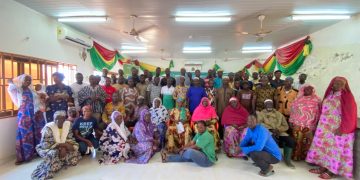
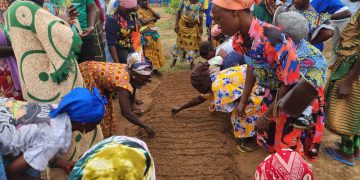

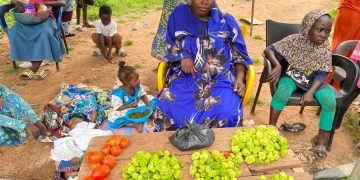
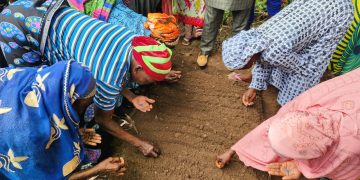












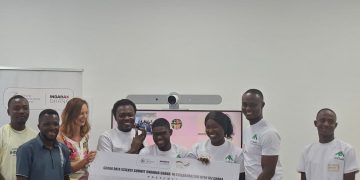

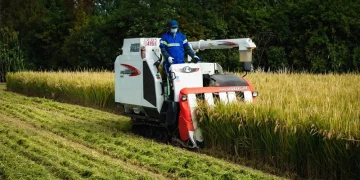

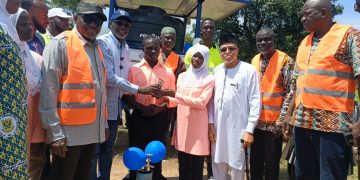
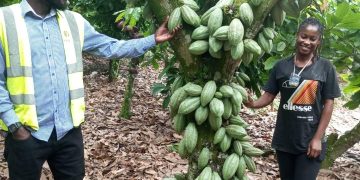
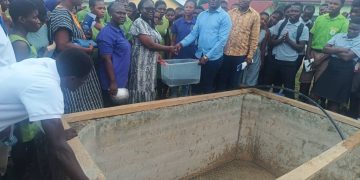












Over the past eight years, Agrihouse Foundation’s Agricultural Students Career Guidance and Mentorship Dialogue Bootcamp (AG-STUD) initiative has transformed the lives of more than 10,000 young people across Ghana. What began as a bold intervention to reorient young minds toward agriculture has grown into a powerful movement shaping the next generation of agricultural leaders.
Designed as a five-day immersive experience, the Agricultural Students Career Guidance and Mentorship Dialogue Bootcamp (AG-STUD) goes far beyond traditional classroom learning. It instills leadership, responsibility, and ownership of Ghana’s agricultural transformation agenda through mentorship, coaching, industry visits, business training, and practical exposure across the agricultural value chain.
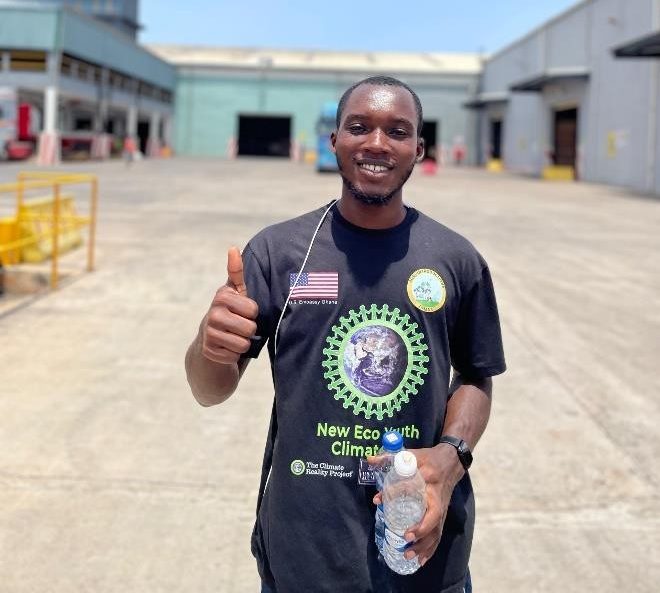
As the Agricultural Students Career Guidance and Mentorship Dialogue Bootcamp (AG-STUD) scales up to reach even more young people across the country, its greatest testimony lies in the voices of its alumni. One such voice is Kelvin Fafanyo, a 23-year-old Master of Philosophy student in Water Resources Engineering and Management at Kwame Nkrumah University of Science and Technology (KNUST), whose journey reflects the transformative power of structured exposure.
The Gap Between Youth and Agriculture
Youth unemployment remains one of Ghana’s most persistent development challenges. Yet paradoxically, agriculture, one of the country’s most opportunity-rich sectors continues to struggle to attract educated young people.
The contradiction is not accidental, it is structural. Agriculture does not fail young people. Our systems fail to expose young people to agriculture as the dynamic, technology-driven, value-creating ecosystem that it truly is.
I write this not as an outsider, but as someone whose academic and career trajectory shifted because of one immersive experience which is the Agricultural Student Career Guidance and Mentorship Dialogue Bootcamp (AG- STUD) organised by Agrihouse Foundation.
I am currently pursuing a Master of Philosophy in Water Resources Engineering and Management at the Kwame Nkrumah University of Science and Technology (KNUST). However, the clarity driving my specialization did not emerge from lecture halls alone. It was crystallized during the 8th Agricultural Students Career Guidance and Mentorship Dialogue Boot Camp (AG-STUD). In one week, my understanding of agriculture expanded beyond anything years of study had offered.
Structured youth exposure and industry integration.
Before participating in 8th Agricultural Students Career Guidance and Mentorship Dialogue Bootcamp (AG-STUD), my grasp of the agricultural value chain was theoretical. I understood agriculture in fragments, production, sustainability, resource management but not as an interconnected economic system linking input suppliers, cold-chain logistics providers, financial institutions, processors, exporters, policymakers, and media. That week changed everything.
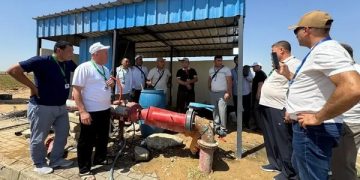
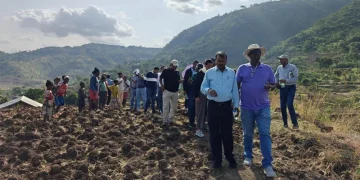
We visited farms, agrochemical and fertilizer companies, media organizations shaping agricultural narratives, cold-chain logistics firms, and engaged public officials. On “A Day with the Input Dealers,” our exposure to post-harvest handling systems revealed the scale of losses Ghana continues to incur not because we lack production capacity, but because we lack sufficient storage, preservation, and distribution infrastructure. This is not merely an operational challenge. It is a policy failure.
Post-harvest losses represent lost farmer incomes, reduced national food supply, weakened export potential, and unnecessary pressure on land and water resources. Addressing them requires more than technical interventions. It requires human capital intentionally trained to solve them.
Agriculture as Enterprise, Not Emergency
A pivotal moment came during a visit to Ransboat, where thousands of eggs were collected daily under the leadership of the Managing Director Ransford Atiemo. The experience was transformative. Agriculture was no longer subsistence. It was enterprise. It was employment. It was food security.
It was systems thinking in action. This is the version of agriculture young people must see.
Unfortunately, many graduates encounter agriculture only through outdated stereotypes: manual labor, low income, high risk, and limited prestige. Without deliberate exposure to modern agribusiness models, young people rationally choose other sectors.
This perception gap has national consequences. Ghana cannot achieve food security, reduce import dependency, or build climate resilience if its educated youth remain detached from the sector.
Water: The Strategic Lever Often Ignored
One observation followed me across every farm and facility we visited: water was central to everything. Water for irrigation, water for processing, water for sanitation, water for waste management.
Agricultural productivity is fundamentally tied to water systems. Yet water resource management is too often treated as a separate technical domain rather than as the backbone of agricultural policy.
Climate variability, erratic rainfall patterns, and competing water demands are intensifying. Without strategic investment in efficient irrigation systems, watershed protection, water recycling technologies, and data-driven water allocation frameworks, agricultural expansion will remain vulnerable.
This realization directly shaped my decision to pursue advanced studies in Water Resources Engineering and Management. Strengthening agriculture requires strengthening water governance.
If Ghana’s agricultural transformation agenda does not integrate sustainable water systems at its core, productivity gains will be temporary.
Why Youth Exposure Is a National Development Strategy
Programs like the Agricultural Students Career Guidance Mentorship and Dialogue Bootcamp (AG -STUD) demonstrate something critical: exposure changes ambition. When young people see agriculture as:
- A value chain, not just farming
- A technology platform, not just tradition
- A business ecosystem, not just subsistence
they begin to locate themselves within it. The implications are profound. A youth population actively engaged in agriculture becomes:
- An employment solution
- A food security safeguard
- A climate adaptation mechanism
- A driver of rural industrialization
This is not rhetoric. It is economic logic.
Yet youth integration into agriculture remains largely incidental rather than institutionalized. Boot camps and mentorship dialogues are often driven by private foundations and corporate sponsors rather than embedded within national policy frameworks.
That must change.
A Collective Responsibility
To policymakers; invest in exposure as seriously as you invest in infrastructure. To educational institutions; align curricula with industry realities. To corporate sponsors and financial institutions; continue backing youth-focused agricultural initiatives like the Agricultural Students Career Guidance and Mentorship Dialogue Bootcamp (AG-STUD) your investment shapes national resilience.
To young people; do not dismiss agriculture before you truly see it. I am living proof that one week of structured exposure can redirect a lifetime of ambition. Now imagine the national transformation possible if thousands of young Ghanaians experienced the same clarity. Agriculture does not fail young people. Our systems fail to show them its possibilities and that is a failure we can correct.
By Kelvin Fafanyo

