







































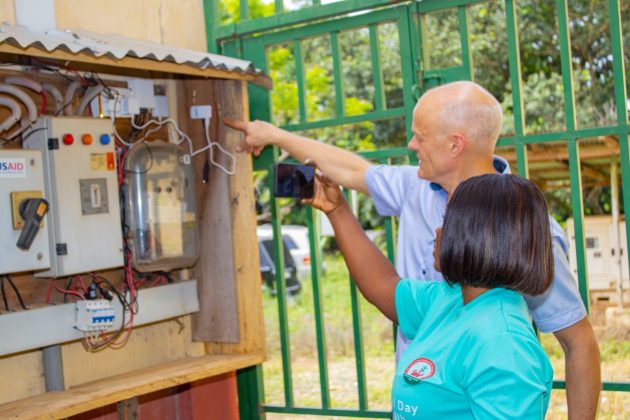
A consortium including the Crops Research Institute of the Council for Scientific and Industrial Research (CSIR-CRI) is introducing cutting-edge technologies using artificial intelligence models to address challenges in Ghana’s seed systems.
The initiative is under the SeedSure Project, being funded by the Foreign Commonwealth and Development Office (FCDO) with other consortium members including MMVSense (UK), Gyre Energy Ltd (UK) and Smart Agri (Brazil).
Dr Hillary Mireku Botey, a Researcher at CSIR-CRI and the Project Lead explains that the project deploys AI-driven germination monitoring alongside smart thermal energy storage to ensure reliable seed viability under unstable power conditions.
It enables near real-time seed germination rate assessment while the AI-controlled thermal energy system maintains stable cold-storage temperatures during power outages, reducing seed deterioration, post-harvest losses, and dependence on diesel generators.
SeedSure directly supports climate-smart agriculture by lowering energy consumption and cost and greenhouse gas emissions while strengthening national seed systems, he noted.
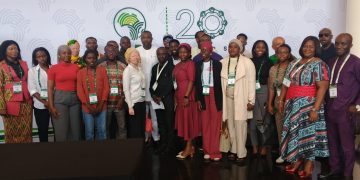
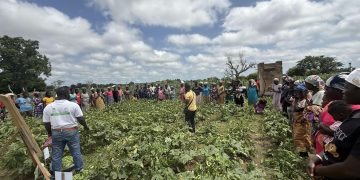
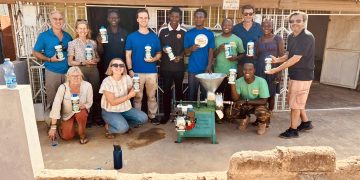
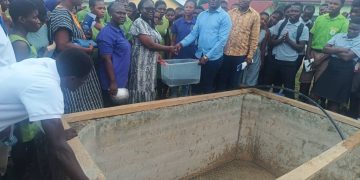
Speaking at a demonstration meeting for seed producers, regulators and inspectors to better appreciate the technologies at Kwadaso near Kumasi, Dr Botey said over the years, due to power fluctuations researchers are unable to maintain good temperature in the storage system, thereby losing almost 60-100 percent of seeds.
Explaining how these new technologies work, he said “the AI energy bricks has the ability to reduce the cycling times for the compressor which used to be about 22 minutes and currently the model has reduced it to between 8 and 12 minutes which reduces cost and time.”
The new technology is able to maintain a steady temperature even when power is off to secure the quality of the seeds”, he indicated.
Dr Botey said the expectation was that seeds stored from foundation, breeder, to certify that go to the farmers would be of high quality.
Researchers are also using another AI tool on a phone to run germination tests which hitherto was done manually to reduce time and help seed regulation as well as certification.
He indicated that researchers, for now, were testing the models on maize and soybean, and was hopeful that the technologies would be extended to other crops including rice and tomatoes later.
According to Dr Botey, the smart app is currently scalable, and the next step is to train seed producers and give them access to the app for them to apply.
In terms of the cold storage system, researchers have tested it not for too long and want to observe it for a while before giving access to users in the value chain although the initial look is very positive.
Dr Botey rallied for a robust seed system in Ghana to ensure food security and urged the government to assist and invest in cold room storage facilities.
Source : GNA

