


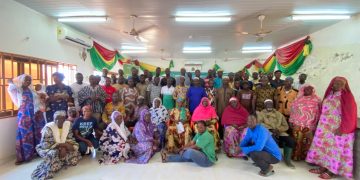
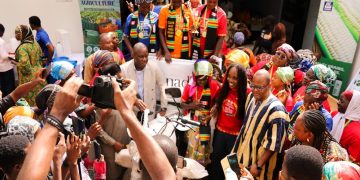















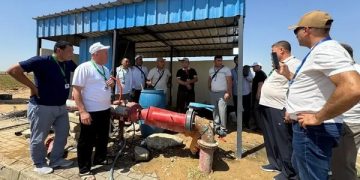
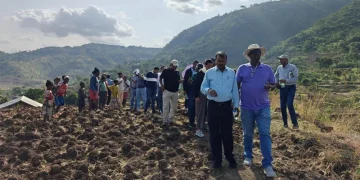
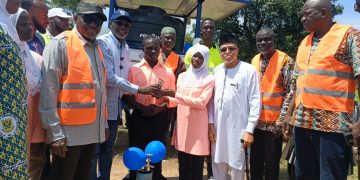









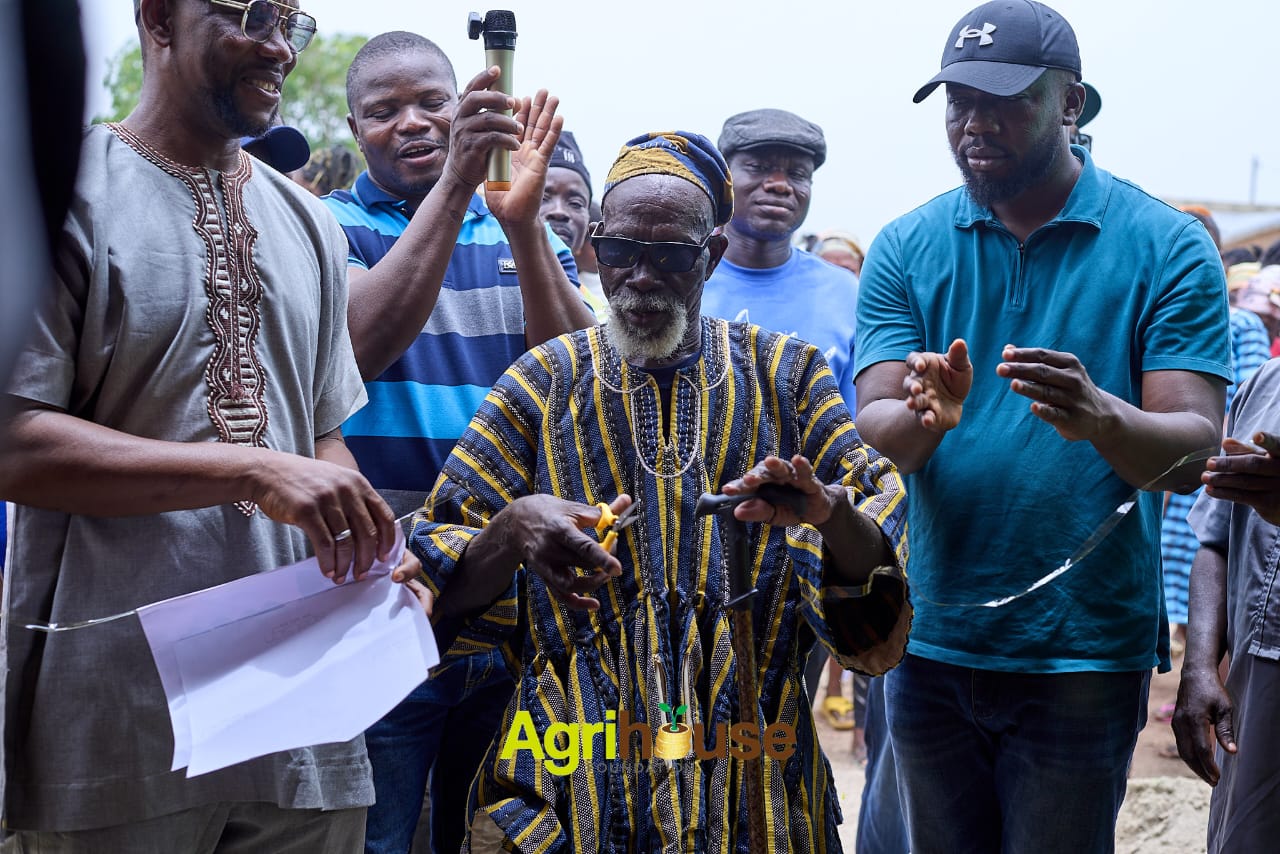
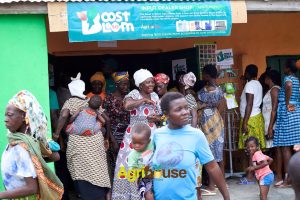
The traditional authority in Kotitabig, in the Nabdam District of the Upper East Region, has thrown its full support behind the opening and operation of the Boost to Bloom agricultural input dealership shop. The assurance was given during the official commissioning of the shop on April 10, 2026.
Speaking on behalf of the Chief, his representative, Bihinaab Tibil, said the project has the blessings and support of both the community and traditional leaders. He offered prayers for the success of the shop, the Agrihouse Foundation, and its partners while officially cutting the ribbon to open the facility.
He also encouraged young farmers to take ownership of the project, embrace it as their own, and make full use of the services provided. According to him, the initiative presents a valuable opportunity to improve their livelihoods.
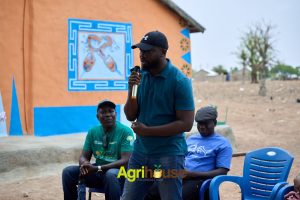 The event was marked with singing and dancing, as men and women in the community expressed their joy and appreciation for the initiative, which they believe will promote economic inclusion.
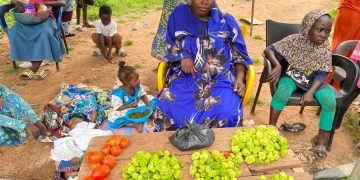
Teni Bongre Aduko, a local food vendor, said the new shop will boost agricultural activities, help reduce food costs, and increase farmers’ profits.
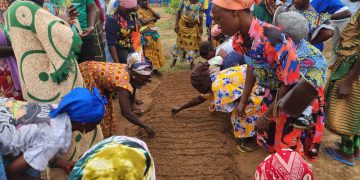
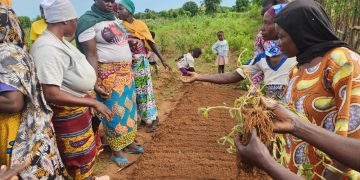
Addressing the gathering, the Monitoring and Evaluation Officer for AGRA, Shamsudeen Alhassan, explained that the goal of the Boost to Bloom project is to create alternative livelihoods through vegetables farming, improve market access, and ensure easy access to farm inputs, especially for young people and women. “We are happy it is playing out well,” he said.
The Executive Chair of Agrihouse Foundation, Ms. Alberta Nana Akyaa Akosa, noted that the shop also serves as an aggregation and service center. She said it will provide technical support to farmers and help link them to markets so they can sell their produce at better prices.
She added that the input dealership shop is part of a broader effort to bring affordable farm inputs closer to rural farmers while creating sustainable agri-jobs. According to her, the project also aims to improve nutrition, food security, and incomes through training, coaching, mentorship, and agribusiness development.

