

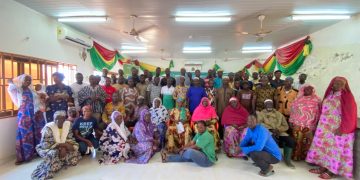

































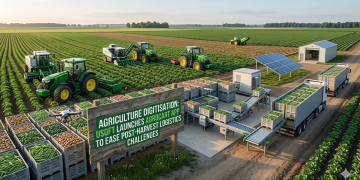


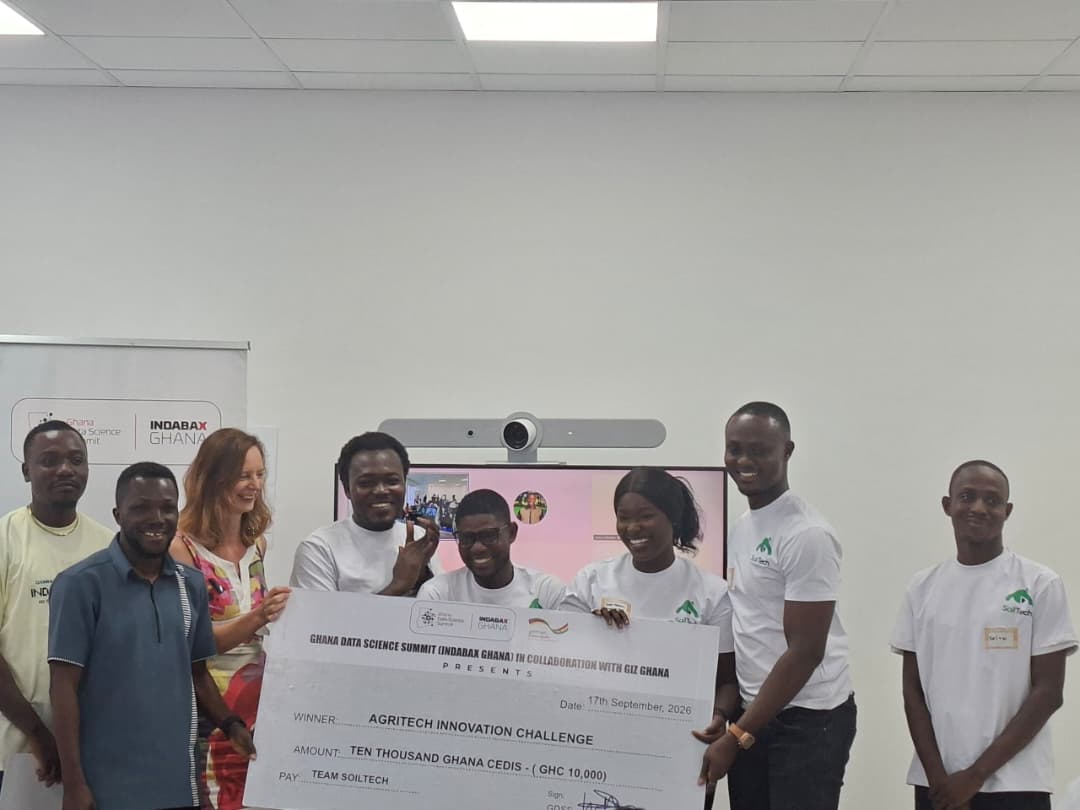
Young Innovators and Startups have showcased technology-driven solutions aimed at improving food security and reducing post-harvest losses at an AgriTech Innovation Challenge organized by the Ghana Data Science Network and the –Private Sector and Innovation Promotion in Ghana program of GIZ Ghana.
The innovation challenge brought together emerging innovators to develop digital solutions capable of addressing persistent challenges especially postharvest losses within Ghana’s agricultural value chain.
Launched during the 2026 Ghana Data Science Summit (IndabaX-Ghana), the competition focused on developing functional prototypes of Farmer-to-Buyer Digital Marketplace Platforms to connect farmers directly with buyers and improve the movement of agricultural produce from farms to markets.
From 72 applications received following the opening of the challenge in June 2026, eight teams were shortlisted to develop prototypes and pitch their solutions before a panel of judges.
The participating startups presented innovative approaches designed to reduce food waste, improve farmers’ incomes and ensure consumers have access to fresh agricultural produce.
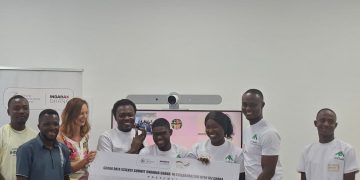
The winning startup, SoilTech, proposed a digital platform that leverages field agents and agricultural extension officers to connect farmers with buyers, particularly in rural communities where digital literacy remains low.
Members of the team said their solution sought to address the significant volume of food lost, estimated at about USD 1.1 billion annually before reaching consumers due to inefficiencies in the supply chain.
According to the team, the platform would facilitate direct transactions between producers and buyers while relying on trusted field agents to support farmers unfamiliar with digital technologies.
“We want to break that gap that has been created between farmers and consumers as well as buyers,” members of the team explained during the pitching session.
They noted that agricultural produce often spends long periods moving through multiple intermediaries before reaching markets.
Another finalist, Team Kuapa Dwaso, presented a marketplace platform focused on linking farmers to buyers at fair and competitive prices.
The team proposed combining a digital trading platform with warehousing facilities to enable farmers to safely store produce while waiting for confirmed orders from buyers.
The startup also incorporated SMS notification services to keep farmers informed about transactions regardless of the type of mobile device they use.
The innovators said consultations with farmers and market traders informed the design of their solution, helping them address challenges related to crop spoilage, trust and market access.
Mr. Atsu Daniel Agbenyega, Co-Chair and Steering Committee Member of GDSS-IndabaX Ghana, said the objective was to encourage the practical application of Data Science and AI in solving real-world agricultural problems.
He said they were hopeful that the solutions developed by participants would attract support from government institutions, non-governmental organisations, investors and development partners.
According to Mr Agbenyega, challenges such as post-harvest losses continue to affect Ghana’s agricultural sector, making innovation critical to improving food security and farmer livelihoods.
Mrs. Arlett Stojanovic, Head of Programme for the Private Sector and Innovation Promotion (PSInno) programme at GIZ Ghana said the German Development Cooperation was committed to supporting young entrepreneurs to develop innovative solutions to strengthen Ghana’s food security and agricultural sector.
She noted that the competition together with the subsequent support provided by GIZ, demonstrated the organisation’s continued commitment to advancing innovation and growth in Ghana’s agricultural sector.
Participating SMEs and groups received certificates of recognition and cash prices at the end of the competition. SoilTech emerged as the overall winner and received GHS10,000, while Kuapa Dwaso placed second and received GHS7,000.
Logric secured third place with a prize of GH¢5,000. Five other shortlisted prototypes who did not make the top three received cash prizes for their efforts.
Source : GNA

