









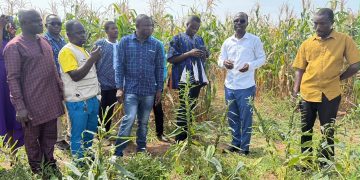

























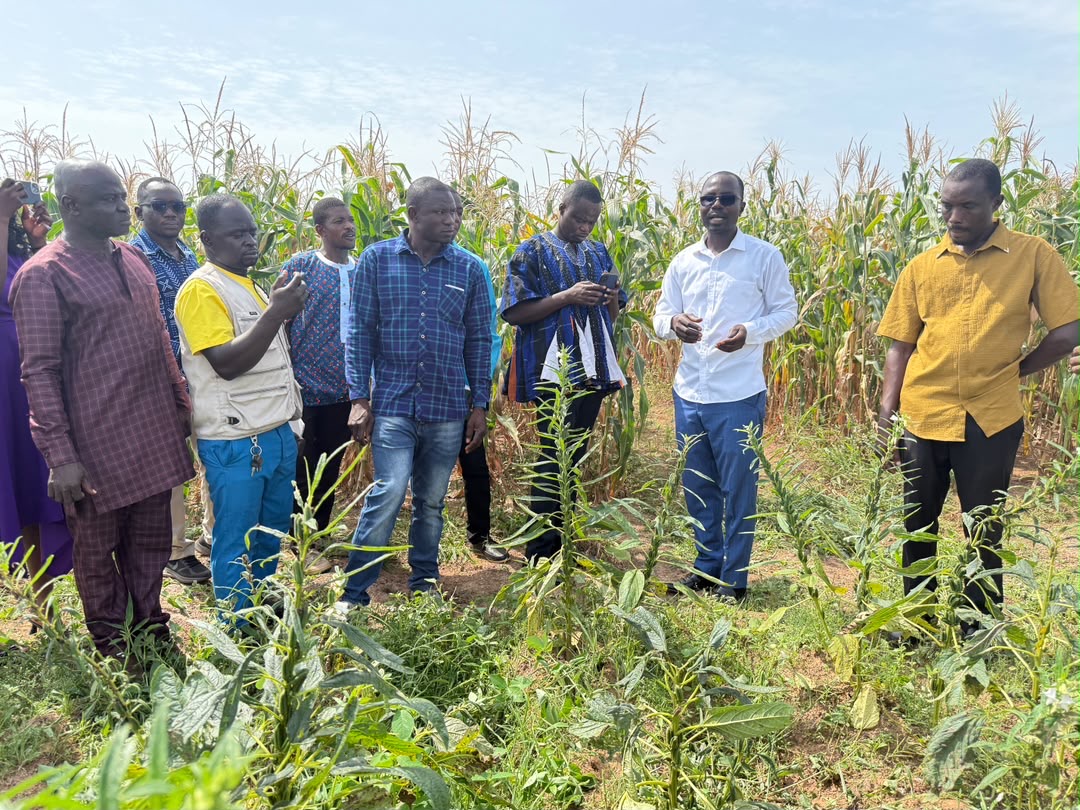

The Council for Scientific and Industrial Research-Savanna Agricultural Research Institute (CSIR-SARI) has developed three improved candidate varieties of sesame to boost production and productivity in the country.
The genotypes, selected from an initial pool of 400 accessions, demonstrated an average yield potential of about 1.2 tonnes per hectare compared with 0.6 tonnes per hectare commonly obtained by farmers cultivating traditional varieties.
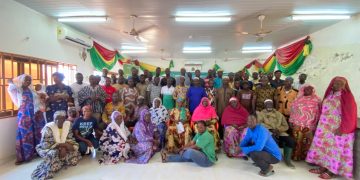
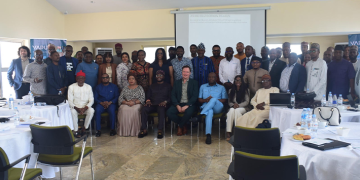
Dr Emmanuel Yaw Owusu, Sesame Breeder at CSIR-SARI, announced this at a Sesame Product Development Team and Key Stakeholders Workshop, held at Nyankpala, near Tamale.
The workshop was attended by researchers, farmers, representatives of the Department of Agriculture, seed companies, processors, agro-input dealers, aggregators, exporters and development partners to discuss progress in sesame research and identify practical strategies to strengthen the crop’s value chain in the country.
It was organised under the Vision for Adapted Crops and Soils Sesame Impact Accelerating project, implemented by CSIR-SARI in collaboration with the International Maize and Wheat Improvement Center.
The project seeks to develop improved sesame varieties adapted to the country’s agroecological conditions with higher yields and desirable traits that meet the needs of different market segments including export, food processing, and oil production.
The country currently has no officially released improved sesame varieties leaving many smallholder farmers rely on grains purchased from local markets for planting.
Some commercial farmers also obtain planting materials from neighbouring countries including Burkina Faso.
Dr Owusu said the three selected genotypes would be presented to the National Varietal Release and Registration Committee next year for evaluation and consideration for official release.
He said the release of improved varieties would make quality planting materials more accessible to farmers, especially smallholders, who often lacked the resources and networks needed to source improved seeds from other countries.
He called for increased investment in local sesame processing to enable farmers to secure better returns and create more value from their produce.
Dr Owusu observed that although sesame production is expanding in the northern parts of the country especially in areas such as Chereponi, Tumu, Garu, Tempane and Navrongo, more than 90 per cent of the country’s sesame produce was exported due to limited opportunities for local processing and value addition.
He urged stakeholders to become ambassadors for sesame production and processing.
He also called for improved data collection and documentation by the Department of Agriculture to support research, investment, and policy decisions in the sector.
Dr Zakaria Issahaku of Mayiya Investments, making a presentation on “Driving Sesame Commercialisation in Ghana through Quality Seeds of Improved Varieties”, said improved varieties and good agronomic practices must be aligned with the requirements of buyers and processors.
He said farmers needed to meet quality standards, supply consistently, and have access to dependable markets.
He said effective market linkages, quality management and coordination amongst farmers, aggregators, processors and buyers were equally important to building a competitive industry.
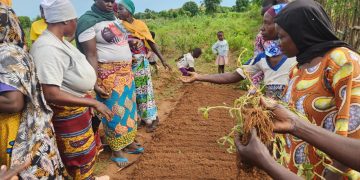
Madam Lovia Moor, a representative of the Widows and Orphans Movement, an organisation that works with women engaged in sesame cultivation, said improved varieties could strengthen women’s participation in production and processing while creating opportunities to enhance their livelihoods.
She encouraged more farmers especially women to take advantage of the opportunities in the sesame value chain.
Dr Francis Kusi, Director of CSIR-SARI said the Institute was committed to developing improved varieties of underutilised crops to increase agricultural productivity and improve farmers’ incomes.
He expressed confidence that the improved sesame varieties would be released for cultivation next year to provide farmers with better planting materials to support increased production, improve livelihoods and contribute to the growth of the country’s agricultural sector.
GNA