










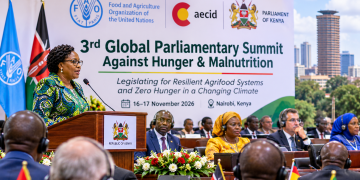












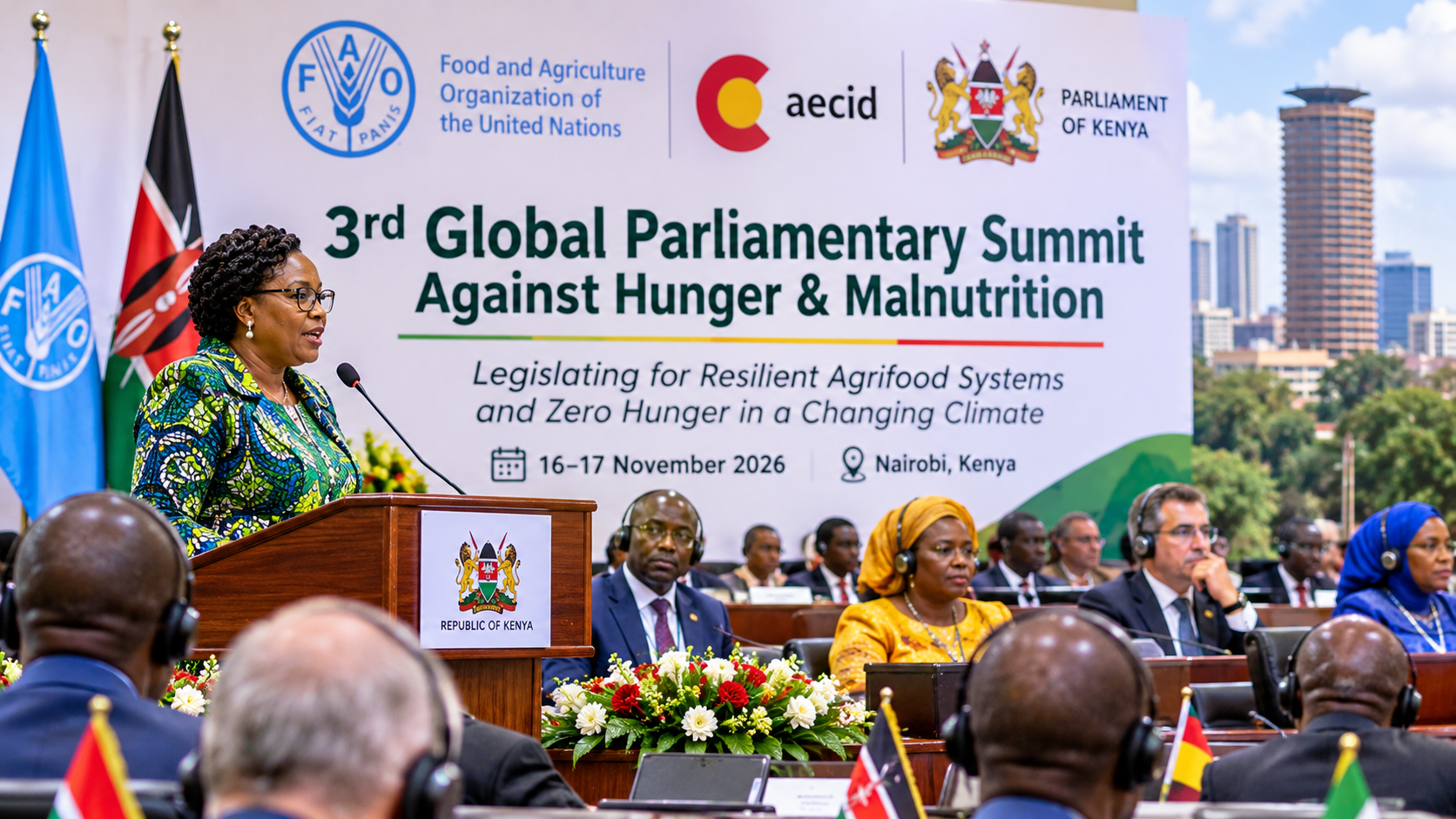
Parliamentarians from across the world are expected to converge on Nairobi, Kenya, from November 16 to 17, 2026, for the Third Global Parliamentary Summit Against Hunger and Malnutrition, a high-level gathering aimed at strengthening parliamentary action towards ending hunger, improving nutrition and building sustainable agrifood systems.
The summit, which will be hosted at the Parliament Buildings in Nairobi, marks the first time the global parliamentary gathering is being held on African soil. It is expected to bring together more than 250 legislators from over 100 national parliaments, alongside representatives of international organizations, development partners, civil society and other stakeholders.
The event is jointly organized by the Food and Agriculture Organization of the United Nations (FAO), the Spanish Agency for International Development Cooperation (AECID) and the Parliament of Kenya, with parliamentary partners.
Under the theme, “Legislating for Resilient Agrifood Systems and Zero Hunger in a Changing Climate,” the two-day summit will provide a platform for lawmakers to exchange experiences, strengthen partnerships and identify practical ways through which parliamentary institutions can contribute to food security and better nutrition.
The gathering comes at a time when food insecurity, malnutrition, climate change, conflict and economic instability continue to place pressure on food production and access to nutritious food in many parts of the world.
Strengthening the Role of Parliament in Food Security
A major focus of the summit will be the role of parliamentarians in turning global commitments on food security and nutrition into practical action.
Through lawmaking, budget approval, parliamentary oversight and accountability, legislators have an important responsibility in ensuring that national policies and investments address the needs of farmers, rural communities and vulnerable populations.
According to the FAO, parliamentarians can help create the conditions needed for inclusive, resilient and sustainable agrifood systems by supporting effective laws, allocating public resources and holding governments accountable for their commitments.
The summit will therefore explore how national parliaments can strengthen their contribution to the fight against hunger while ensuring that food security and nutrition remain important priorities in national development plans.
Three Key Areas to Shape Discussions
The discussions will focus on three major areas.
The first is realizing the Right to Food through inclusive development and social justice. This will involve strengthening food security, promoting gender equality, creating economic opportunities and supporting rural communities.
The second focuses on promoting access to and consumption of healthy diets. Discussions will examine the need to ensure that people have access to safe, affordable and nutritious food, while encouraging policies that support healthier communities.
The third area is developing efficient, inclusive, resilient and sustainable agrifood systems. This will include strengthening sustainable food production, promoting climate action, supporting innovation and improving the ability of food systems to withstand environmental and economic challenges. These areas are expected to guide discussions on how parliamentary action can contribute to long-term solutions to hunger and malnutrition.
Kenya’s Opportunity to Advance the African Food Security Agenda
For Kenya, hosting the summit provides an opportunity to share its experiences and engage other countries on policies and interventions aimed at improving food production, nutrition and agricultural development.
Speaking ahead of the event, Hon. Adan Yusuf Haji, Member of Parliament for Mandera West and Chairperson of the Eastern Africa Parliamentary Alliance on Food Security and Nutrition, described the hosting of the summit on African soil as an important milestone.
He noted that the meeting would allow parliamentarians to strengthen partnerships, share experiences and identify priority areas for parliamentary action.
He also called for greater investment in addressing malnutrition, including the promotion of indigenous foods and traditional crops as part of efforts to improve food security and nutrition.
Hon. Haji further highlighted the need for countries to prioritise their ability to feed their populations, stressing that food security is closely linked to national development and independence.
Meanwhile, Hon. Dr. John Mutunga, Chairperson of the Departmental Committee on Agriculture and Livestock in Kenya’s National Assembly, called on African parliaments to identify and implement effective frameworks to strengthen food security and nutrition systems.
He also encouraged the media to focus on solutions and report on how hunger and malnutrition affect households, communities and national development.
President William Ruto is expected to officially open the summit on November 16.
Building on Previous Global Parliamentary Commitments
The Nairobi gathering builds on two previous Global Parliamentary Summits Against Hunger and Malnutrition held in Spain in 2018 and Chile in 2023.
The previous meetings helped establish a platform for parliamentary cooperation and strengthened the commitment of lawmakers to support global efforts towards ending hunger and improving nutrition.
The 2023 summit in Chile also explored voluntary commitments by parliamentary networks through the Global Parliamentary Pact Against Hunger and Malnutrition, including ways to monitor progress and follow up on legislative action.
The 2026 edition is expected to build on these commitments by encouraging stronger cooperation among national parliaments and identifying practical ways to translate political commitments into action.
As the global community continues to face challenges related to food insecurity, malnutrition and climate change, the summit presents an opportunity for parliamentarians to strengthen their role in shaping policies, supporting investment and promoting food systems that can meet the needs of present and future generations.

