



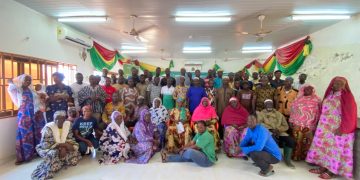
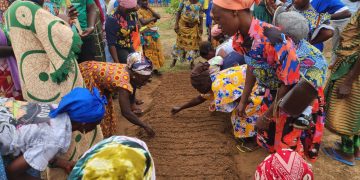
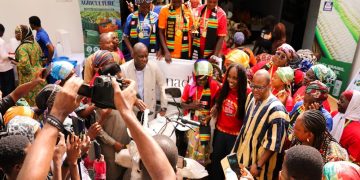
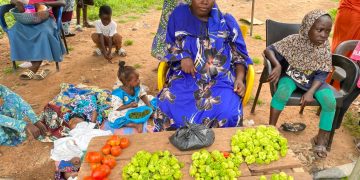













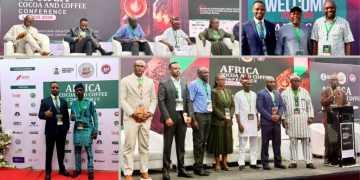


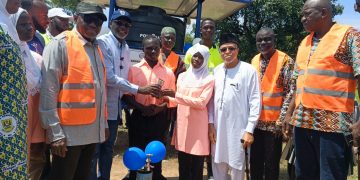
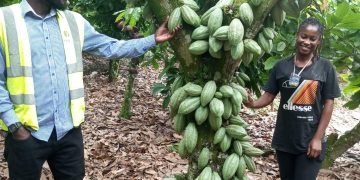










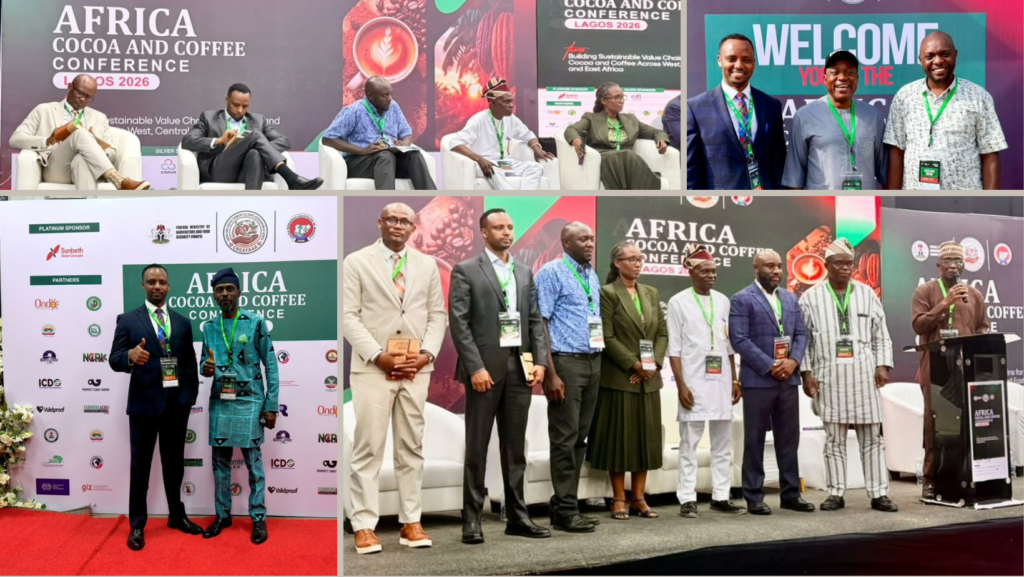

The Cocoa and Coffee Farmers Alliance Association of Africa (COCEFAAA) in collaboration with the Federal Ministry of Agriculture and Food Security (FMAFS), Cocoa Research Institute of Nigeria (CRIN) and other collaborating partners held Africa Cocoa and Coffee Conference in Lagos, Nigeria with a call on urgent and united African action to transform the continent’s cocoa and coffee industry from dependency to prosperity.
The 2026 Africa Cocoa and Coffee Conference held in Lagos, Nigeria, by the Cocoa and Coffee Farmers Alliance Association of Africa (COCEFAAA) bought together 100, cocoa farmers and partners within the cocoa value chain.
The two-day conference, with the theme, “Building Sustainable Value Chains for Cocoa and Coffee across West, Central and East Africa,” brought together stakeholders across the cocoa and coffee value chains to discuss the challenges and opportunities facing the sectors and possible actions to achieve better outcomes for farmers.
The conference focused on policy, trade, traceability and regulatory compliance, institutional collaboration to support farmers livelihoods and strengthen resilience, as well as child labour and forced labour in cocoa and coffee production.
It also had panel sessions that discussed the European Union Deforestation Regulation (EUDR), compliance and market access, investment, inclusion, innovation and value addition. Other areas of focus included climate resilience, research and sustainable production, as well as the cocoa and coffee revival agenda in Africa, with emphasis on emerging technologies, cell-cultured cocoa and the next generation of sustainable value chains.
Presentation
Global President, COCEFAAA, Comrade Adeola Adegoke, said Africa produces over 70% of the world’s cocoa and is the birthplace of coffee Arabica; yet the smallholder farmers behind these industries remain among the continent’s most economically vulnerable.
He said there was a need for stakeholders to come together to address the challenges confronting farmers and develop strategies that would produce better outcomes across the value chains in Africa.
“The expected outcomes of the conference included empowered farmers and stronger cooperatives, sustainable and climate-smart value chains, increased trade and investment opportunities, value addition, local processing, strategic partnerships and global visibility, as well as improved sector policies and regulatory frameworks, as important outcomes needed to strengthen Africa’s cocoa and coffee industries” he said.
The Hon. Minister of Agriculture and Food Security, Nigeria, Senator Abubakar Kyari, represented by Mr. Ajayi Olutobaba, Deputy Director of Tree Crops highlighted the need for stronger cooperation among African cocoa- and coffee-producing countries to ensure that the continent has a greater voice in shaping international trade policies and standards.
“I believe that coordinated action would be necessary to preserve product identity, improve transparency and ensure that decisions shaping global cocoa and coffee markets take the interests of traditional producers into account” he added.
Board Member COCEFAAA and Founder of AGNimble, Nsidibe Etim called for stronger investment and value addition in the coffee sector, farmer organization, technology and sustainable production to enable Africa to derive greater economic benefits from its cocoa and coffee industries.
“The commitments are intended to strengthen Africa’s position in global cocoa and coffee value chains, protect farmers’ livelihoods and ensure that a greater share of the value generated by these commodities remains on the continent” he said.
Ag. Executive Director, Cocoa Research Institute of Nigeria (CRIN) Dr. A.R. Adedeji added that that the Lagos conference is a moment to think strategically and also time for greater investment in local processing and stronger African brands.
“We must be committed to strengthening farmers’ cooperatives, improving farmers’ incomes, investing in research and extension services” he said.
Declaration
The Cocoa and Coffee Farmers Alliance Association of Africa has emphasized the need for stakeholders, especially the farmers to benefit from government policies.
The Association also stressed that the farmers should not only be the growers but also have profitable returns on their investments.
This was part of the declaration announced at the Africa Cocoa and Coffee Conference held in Lagos.
The conference had shown that “Africa is not short of solutions. We are short of mechanisms to scale them. Together, we commit to African solutions, prosperous farmers and greater African ownership of cocoa and coffee value chains. Ghana and Côte d’Ivoire showed how the LID makes Africa a price-maker. Ethiopia and Rwanda presented GI tagging and branding that captures value for coffee farmers
Ageing in Africa Cocoa Sector
Cocoa and Coffee Farmers Alliance Association of Africa (COCEFAAA), Ghana, Country Director, Nana Yaw Kesseh pointed out that Africa’s cocoa industry faces a challenge that goes beyond diseases and declining yields.
According to him the farmers who have sustained the industry for generations are growing older, while many of their children are choosing different futures.
“The typical African cocoa farmer is often described as being in their late fifties, the aging of the farming population is raising an uncomfortable question: who will produce Africa’s cocoa and coffee when today’s farmers can no longer work on their farms?
Cocoa is not just a commodity; it is a livelihood, a legacy, and a lifeline for millions of African families” he said.
Appreciation
The leaders of the farmer groups present at the conference used the opportunity to thank COCEFAAA Board of Directors and partners for this continental organisation committed to uniting cocoa and coffee farmers, amplifying their voices, strengthening cooperative systems, promoting sustainability, and advocating policies that ensure fair value distribution across the cocoa and coffee value chains in Africa.
“We believe that true transformation must begin with policy dialogues led in producing countries, not in foreign capitals” the farmers said.
Present at the Lagos conference were officials from cocoa and coffee origin-producing countries, governments, research institutions, development partners, commodity associations, the private sector and multilateral organizations.
Source: dailyagricnews.com