

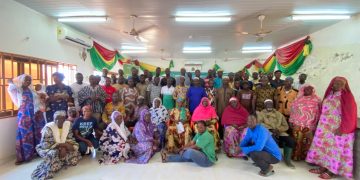
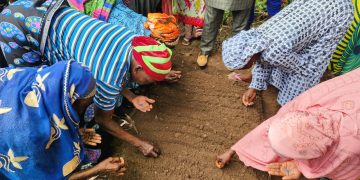
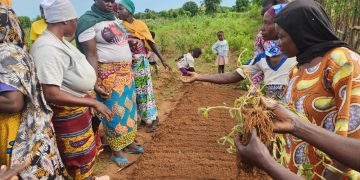
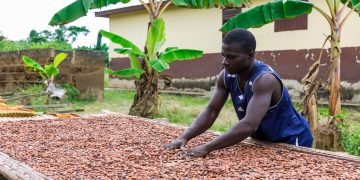


















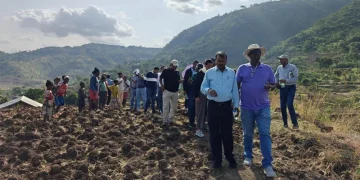










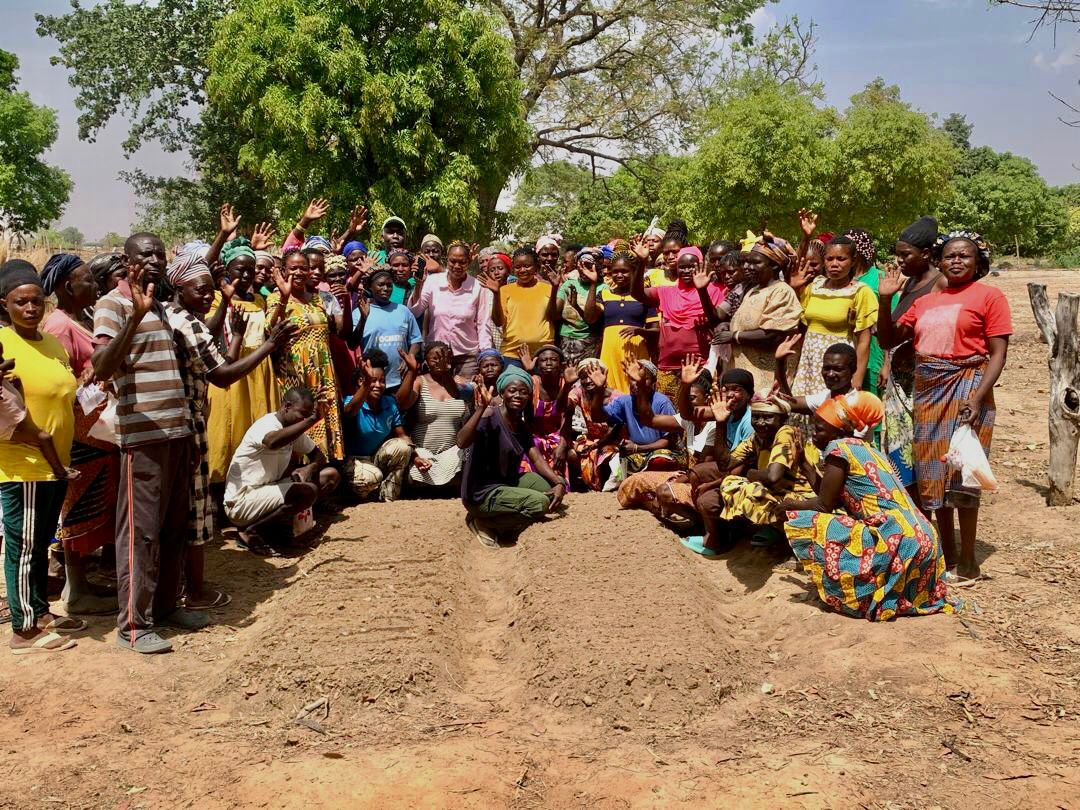
Farmers and aspiring vegetable growers in Dasabligo in the Bongo District of the Upper East Region have received practical training in vegetable seedling production and nursery management under Agrihouse Foundation’s Boost to Bloom Project, an initiative aimed at empowering communities through agriculture.
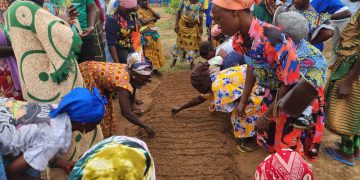
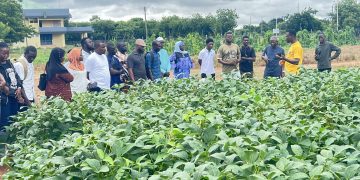
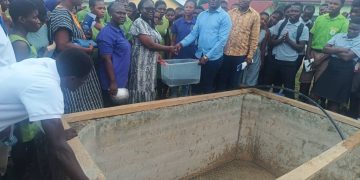
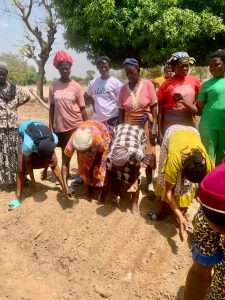
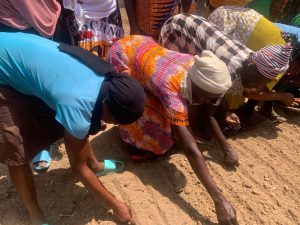
The hands-on training session, held in several communities in the Northern, North East and Savannah regions, where over 120 community members benefited with a focus on equipping participants with improved techniques for raising healthy vegetable seedlings before transplanting them to the field. Facilitators demonstrated the use of seedling trays and properly prepared nursery beds to help farmers produce stronger plants and increase their yields.
Participants were also taught the importance of sterilizing soil before planting seeds to eliminate pests and diseases that can destroy young plants.
A facilitator and Trainer, Mr. Aaron Amartey Amartey explained that farmers could heat topsoil before filling seedling trays to ensure the soil is free from harmful organisms, adding that vegetables such as peppers, tomatoes, and onions can be effectively cultivated in seedling trays prior to transplanting.
Farmers were further advised to handle hybrid seeds carefully, as they are often expensive but highly productive when properly managed.
“Each seed produces one plant, and one plant can give you many fruits. If you lose one seed, you lose many fruits, and that will affect your income,” the trainer Aaron Amartey Amartey explained while encouraging farmers to plant seeds individually rather than broadcasting them.
Participants who spoke after the training expressed optimism about the opportunities the project presents. One of the participants, Seabo Belinda, a farmer, said she joined the training out of her strong passion for farming.
“I decided to participate when I heard about what the project entails. I have the zeal and passion for farming, and I believe this project will help reduce unemployment in our community as it presents opportunities in farming. I am grateful to Agrihouse Foundation and its partners for bringing this opportunity to us,” she said.
Another participant, Veronica, also expressed confidence that the training would help many participants start their own vegetable farms.
“This training will go a long way to help us start our own vegetable farms. We have also learned that it is very important to plant the seeds one after the other to ensure strong seedlings,” she noted.
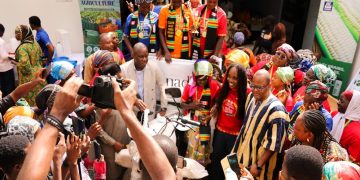
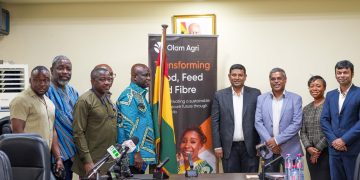
The Executive Chair of Agrihouse Foundation, Alberta Nana Akyaa Akosa, emphasized that the Boost to Bloom Project is designed to equip young people and women with practical agricultural skills to enable them to create sustainable livelihoods.
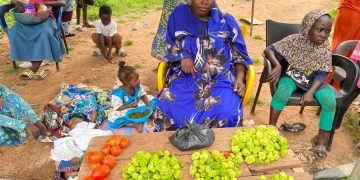
She noted that empowering communities with knowledge in vegetable production can help improve food security while creating employment opportunities.
The training forms part of broader efforts under the Boost to Bloom Project to promote modern vegetable farming practices and support community members to build sustainable agricultural enterprises.

