






Policy think tank Integrated Social Development Centre (ISODEC) has suggested stronger action against illicit financial flows, warning that Ghana must prioritise plugging revenue leakages before deepening reliance on external economic oversight programmes.
The call follows Ghana’s transition from the IMF-supported Extended Credit Facility programme into a new Policy Coordination Instrument (PCI), arrangement with the International Monetary Fund (IMF).
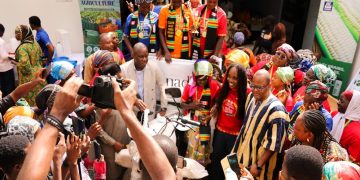
Addressing a press conference in Accra, ISODEC argued that Ghana’s fiscal challenges are being driven not only by budget deficits and debt pressures, but also by large-scale capital outflows linked to trade misinvoicing, corporate tax avoidance and weaknesses within the extractive sector.
According to the group, Ghana lost an estimated 32.6 billion dollars through illicit financial flows between 2013 and 2023 – an amount it says far exceeds the financing typically received under IMF-supported programmes.
“Ghana’s cumulative IFF losses for the period 2013 to 2023 are estimated at USD 32.6 billion, money that left Ghana’s economy through trade mis-invoicing, corporate tax abuse (Base Erosion and Profit Shifting), and the structural mechanisms of unequal exchange,” the group stated.
“To put this in perspective: this figure dwarfs the financing that any IMF programme would provide,” ISODEC noted.
ISODEC maintains that recovering lost revenues and strengthening domestic resource mobilisation should become a central pillar of Ghana’s economic strategy rather than continued dependence on external policy monitoring arrangements.
The think tank also warned that excessive focus on IMF-style oversight frameworks risks diverting attention from critical domestic reforms needed to improve customs enforcement, strengthen tax auditing of multinational firms and address loopholes within extractive sector contracts.
According to ISODEC, tackling illicit financial flows could have a more immediate and lasting impact on Ghana’s fiscal stability than external credibility programmes alone.
“There is a direct contradiction between what the IMF demands and what Ghana needs to do to retain the value generated by its own resources,” ISODEC added.
The group further stressed that Ghana’s long-term economic resilience will depend not only on reducing borrowing, but also on improving the country’s ability to retain and manage wealth generated from its own natural resources and economic activities.

