




























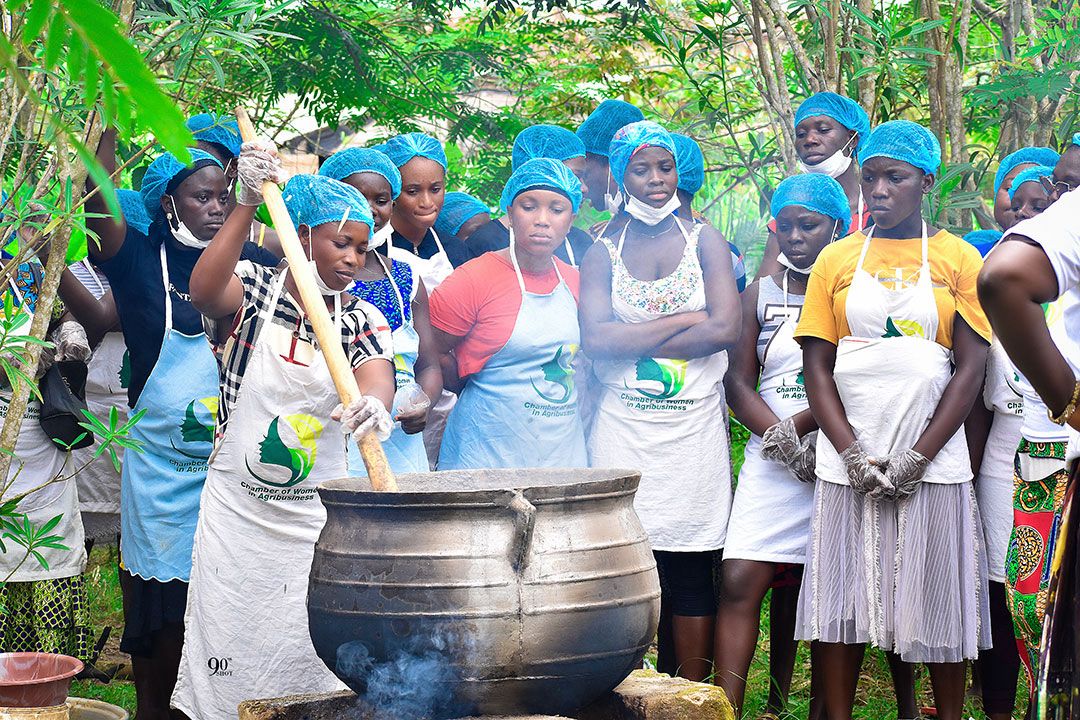
In recent years, sustainability and circular economy conversations have gained significant attention across Africa and the world. More businesses are now exploring innovative ways to convert waste into valuable products, reduce environmental pollution, and promote responsible consumption.
This shift is important and necessary.
From agricultural waste processing to recycling initiatives and eco-friendly manufacturing, many entrepreneurs are working hard to build businesses that create both economic and environmental impact. However, as we celebrate these innovations, there is an important conversation sustainable businesses must not ignore:
Creating value from waste should not come at the cost of harming the environment in the production process itself.
Sometimes, in our attempt to solve one environmental problem, we unintentionally create another.
For example, a business may transform agricultural waste into useful products, but if the production process releases excessive smoke, harmful chemicals, polluted water, or unsafe waste disposal into the environment, then sustainability becomes incomplete.
True sustainability goes beyond the final product.
It includes: sourcing processes, production methods, energy use, waste management systems, supplier practices, packaging, environmental education etc.
As entrepreneurs, we must begin to ask ourselves deeper questions:
- Are our production systems environmentally responsible?
- Are we reducing pollution during processing?
- Are our suppliers practicing sustainable handling methods?
- Are we educating farmers and raw material suppliers on responsible waste management?
- Are we building systems that protect both people and the environment?
Sustainability must be intentional and holistic.
In many developing economies, businesses are increasingly embracing waste valorization, converting waste into valuable products. While this is commendable, there is a need for stronger attention toward cleaner production systems and environmentally conscious operational practices.
At SkinVive, one lesson we continue to learn is that sustainable innovation should not only focus on the product, but also on the process behind the product. This understanding has encouraged us to rethink aspects of our production system, including how agricultural waste is sourced and how smoke generated during soap production can be controlled to reduce environmental pollution.
Responsible production is not perfection.
It is continuous improvement, awareness, and accountability.
As Africa continues to grow its green entrepreneurship ecosystem, we must encourage businesses to see sustainability not as a marketing label, but as a long-term responsibility toward communities, ecosystems, and future generations.
The future of circular economy businesses will not only depend on innovative ideas, but also on how responsibly those ideas are implemented.
Because sustainability is not just about what we produce.
It is also about how we produce it.
Writer : Esther Kyerewaa Twumasi
(Miss Agricultue Ghana)

