


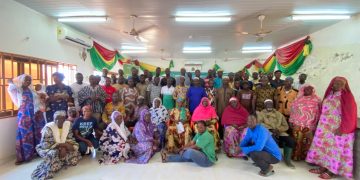

















































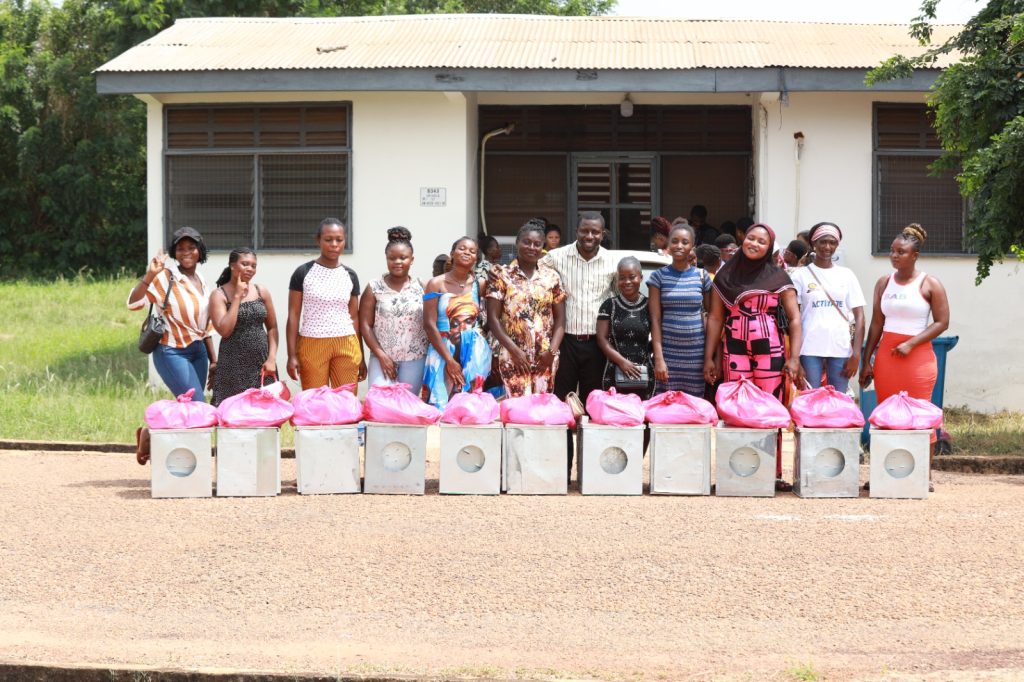
A total of 209 young men and women, who have completed practically oriented agripreneurship short courses have received start-up kits, to establish and expand their own enterprises.
Their training is to help boost youth entrepreneurship at the Mampong campus of the University of Skills Training and Entrepreneurial Development (USTED).
A statement issued by the University and copied to the Ghana News Agency (GNA) in Sunyani said the university, in partnership with the WUSC ACTIVATE project, distributed fully equipped start-up kits to all graduating learners from four specialised training tracks.
The tracks comprised Post‑harvest and Food Processing, Non‑Traditional Agriculture, Livestock Health Management, and Vegetable Production.
It said the event, held on the USTED‑Mampong forecourt, saw beneficiaries walk away with a wide range of practical inputs designed to help them launch micro‑enterprises immediately.
The graduates of the Post‑Harvest and Food Processing programme received ovens, hand mixers, baking pans, and essential baking supplies, including margarine, baking powder, sugar, and other pastry ingredients.
For those trained in Non‑Traditional Agriculture, the start‑up kits were equally comprehensive: some beneficiaries received bee hives, mushroom bags, rabbit colony, grasscutter colony, and snail colony – all aimed at promoting low‑space, high‑return farming models.
The statement said beyond the two main categories, the university also distributed poultry birds (layers and broilers), goats, sheep, vegetable seeds, fertiliser, pesticides, weedicides, as well as drugs and vaccines for beneficiaries who received training in Livestock Health Management and Vegetable production.
It said Dr Benjamin Aboagye Danso, the Project Coordinator for the ‘WUSC ACTIVATE’ initiative, encouraged the beneficiaries to treat the kits as capital, not consumables at the closing session of the training.
“These items are not handouts; they are seed capital for your agribusiness. I urge you to keep proper records from day one – track your costs, sales, and profits. Reinvest what you earn to grow your enterprise,” Dr Danso said.
He also assured the graduates of continued technical and advisory support, saying that “Our doors remain open. If you face challenges in production, marketing, or accessing further inputs, reach out to us. We are committed to walking this journey with you.”
The distribution follows USTED‑Mampong’s broader strategy of linking short‑course certification with tangible business launch support. Many of the beneficiaries are youth and persons with disability who had no prior formal agribusiness training but completed the university’s hands‑on, competency‑based programme.
The Project Coordinator hinted that the start‑up kit distribution will become a standard feature of the agripreneurship short courses, pending continued support from partners like WUSC ACTIVATE, saying that follow‑up mentoring programme was also being planned for the next quarter.
One beneficiary, Susana Opoku, who completed the food processing track, told our reporter: “I used to bake only occasionally. With my own oven and mixer, I can now start a small confectionery business from home.”
Similarly, Patricia Adade from the non‑traditional agriculture class said: “The mushroom bags and snail colony will fit perfectly behind my house. I never imagined I could farm without owning a large plot of land”.
Source : GNA

