



























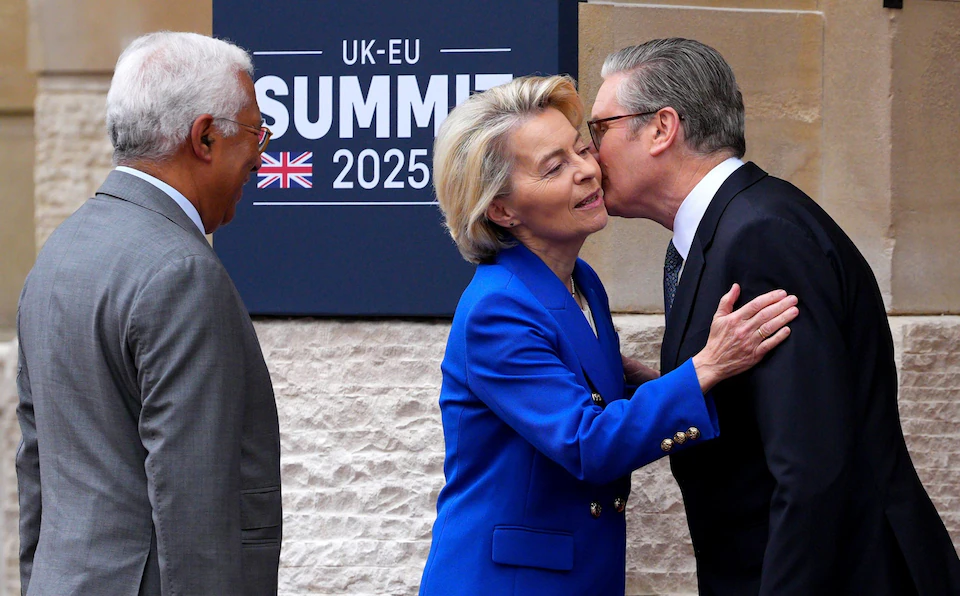
Farmers face a devastating hit from Sir Keir Starmer’s realignment with Brussels, MPs have warned.
Alistair Carmichael, the chairman of the environment, food and rural affairs committee, has raised concerns over the Government’s decision to accept new European Union rules without a transition period.
This risks banning certain farming practices overnight once the new rules come into effect.
Mr Carmichael said: “The dangers of realigning with EU policy, without a sufficient period for proper adjustment, should be obvious to everyone.”
The environment committee had called for a phased approach to the deal and a transition period of at least 24 months to avoid a “cliff-edge” scenario.
However, this proposal was recently rejected by ministers, who confirmed that the agreement will take effect in mid-2027.
As part of a Brexit reset deal, the Government is seeking closer ties to the EU to make it easier to export farm produce to Europe.
However, this could lead to the banning of certain pesticides, herbicides and fungicides, piling yet more pressure on farmers.
‘Farming practices cannot change overnight’
Farming groups, including the National Farmers’ Union (NFU), had asked that the readjustment be phased.
Tom Bradshaw, the president of the NFU, said: “Farming practises cannot change overnight.”
CropLife UK, a trade organisation that represents the agrichemical sector, has warned that the new sanitary and phytosanitary agreement with the EU could cost British farming businesses £810m a year.Mr Carmichael added: “Arable farmers are concerned about this because they are savvy about the various pesticides and insecticides on the market. They’re the ones who really sort of worked up about it.”
Farming groups are particularly concerned that Britain permits the production of gene-edited crops, which are currently banned in Europe.
In response, the Government said: “The EU has accepted that there will need to be areas where the UK will retain its own rules.
“Details of these are subject to negotiation. Details of any exceptions will be published once negotiations conclude.”
There are also concerns that realigning with the EU could lead to looser border checks, at a time when a record amount of illegal meat is being imported.
The environment committee has called on the Government to develop a strategy for tackling this issue, which the Government has responded to by committing to a “new Illegal Imports Improvement project”.
Jonathan Powell, the chief executive of the British Meat Processors Association, said: “If illegal meat comes in and it’s contaminated with African swine fever or foot and mouth, the danger to our industry of an outbreak is massive.
“It would impact livestock numbers, food security and self-sufficiency. We would like to see the illegal meat imports stopped.”
A government spokesman said: “We’ve already allocated a record £11.8bn to sustainable farming and food production over this parliament and this new deal will offer more opportunities for growth by slashing red tape.”
“We have kept businesses informed of the agreed elements of the deal throughout this process and will continue to work with them to ensure a smooth transition”.

