











































Ghana attracted US$2.6 billion in foreign direct investment (FDI) in 2025, a significant increase from the US$617.61 million recorded in 2024, provisional data from the Ghana Investment Promotion Centre (GIPC) has disclosed.
The US$2.6 billion was recorded from 253 new projects and existing companies, with GIPC’s new investment projects accounting for US$1.44 billion, while existing companies added US$14 million in new equity.
The Petroleum Commission’s new capital investments yielded US$994 million from 18 projects, while the Ghana Free Zones Authority recorded US$165 million in new capital investments from 42 projects.
In terms of FDI values by country, the Cayman Islands registered the highest at US$500 million, followed by China with US$486 million, Nigeria with US$105 million, and France/Nigeria with US$100 million. FDI from the United States of America stood at US$51 million in 2025.
By number of projects, China topped the list with 70 projects, followed by India with 22, Nigeria with 10, the United Arab Emirates with nine, and the United Kingdom with eight.
The investment data was compiled in collaboration with the Bank of Ghana (BoG), Petroleum Commission, and Ghana Free Zones Authority, and is expected to be released in two months.
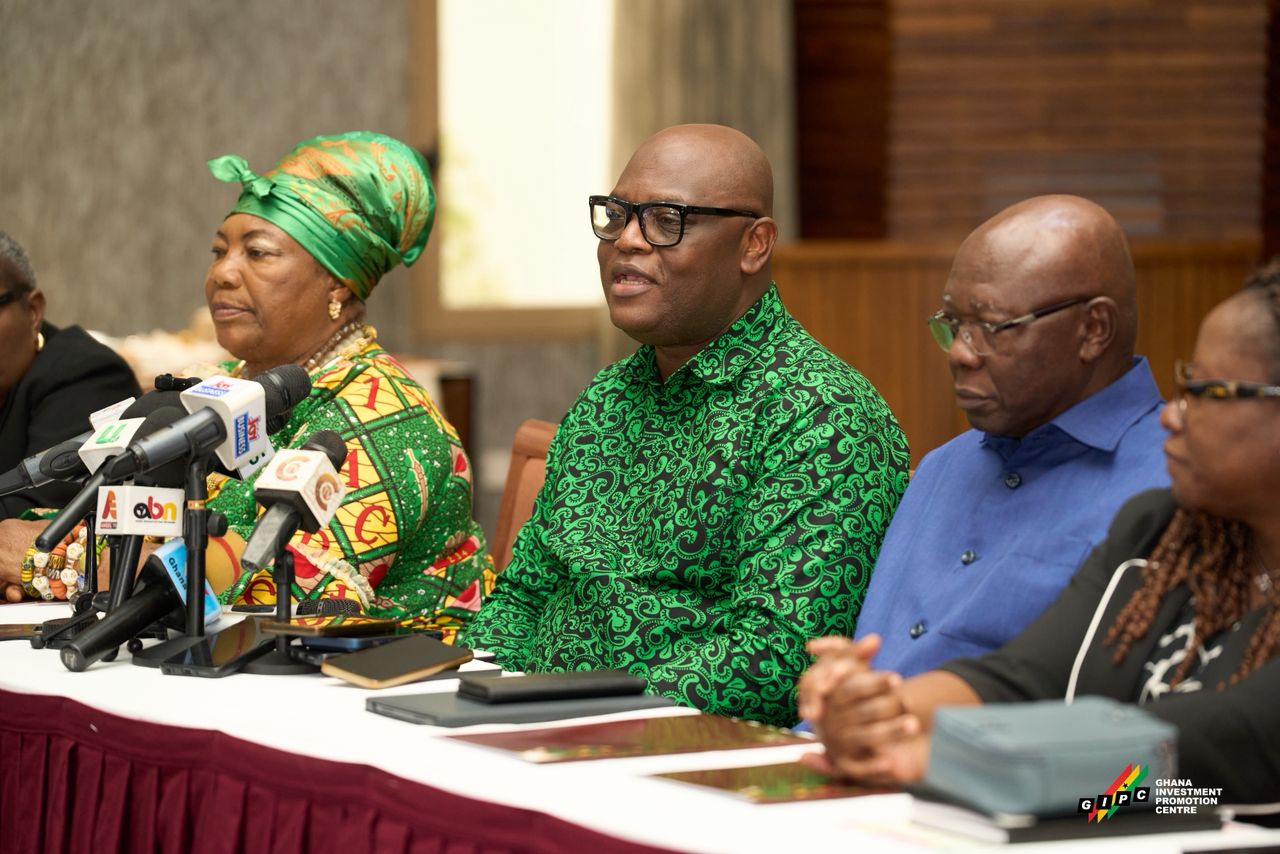
Speaking to the media after a two-day board and management retreat at Peduase on Tuesday, Mr. Simon Madjie, Chief Executive Officer (CEO) of GIPC, indicated that businesses have announced additional commitments to invest over US$5 billion in the country over the next few years.
He said the FDI recorded in 2025 signalled significant improvement in Ghana’s investment environment that has been building over the past few months.
He cited investment announcements from Jubilee Partners and others in the energy and artificial intelligence sectors as concrete expressions of growing investor confidence in the economy.
Mr. Madjie also mentioned that the manufacturing sector recorded increased interest from investors, consistent with the government’s desire to transition Ghana toward industrial sovereignty by producing locally and creating jobs for the youth.
On the legislative front, he said the passage of the new Ghana Investment Promotion Authority bill, awaiting transmission and presidential assent, would create a level playing field for both domestic and international investors.
He explained that the transition would give formal legal recognition to the regulatory functions GIPC already performs, including the registration of foreign businesses and technology transfer agreements.
Key provisions of the new law include the removal of the minimum capital requirement, which he said has been a longstanding challenge for many investors, and the introduction of an investor grievance mechanism to address disputes in a timely manner.
“This transition does not signal hostility toward foreign investment in the country,” the GIPC CEO said, reiterating that Ghana remains open to and welcomes foreign participation in the domestic economy.
He called on the media to partner with GIPC in projecting Ghana’s investment narrative, emphasising that in the international investment system, narrative matters as much as data.
“Ghana’s story of economic recovery, macroeconomic stability, a progressive investment law, and a strong brand must be told consistently and confidently to attract the capital the country needs to drive the next phase of its growth,” he noted.

