

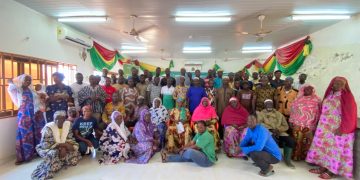

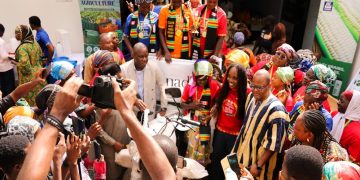














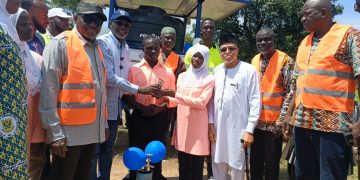








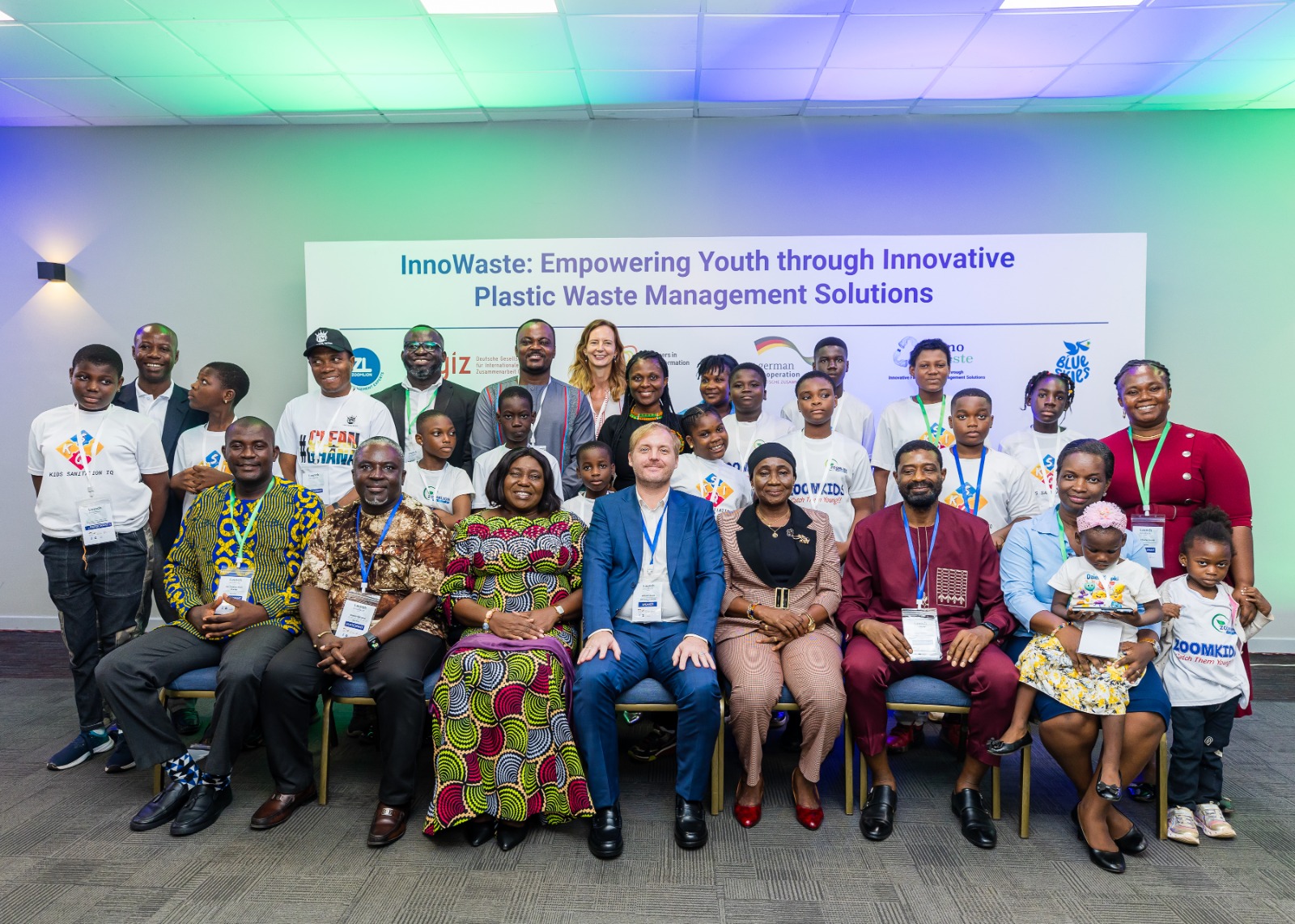
The German Development Cooperation together with Zoomlion Ghana Limited and Blue Skies Product Ghana have officially launched a new project, ‘InnoWaste: Empowering Youth through Innovative Plastic Waste Management Solutions,’ to turn plastic waste into sustainable livelihoods.
The InnoWaste Project is being implemented by Deutsche Gesellschaft fur Internationale Zusammenarbeit (GIZ) GmbH on behalf of the German Federal Ministry for Economic Cooperation and Development (BMZ).
The project, which is on the theme, “From Waste to Wealth: Driving a Circular Future,” is jointly funded through the develoPPP programme together with Zoomlion Ghana Limited and Blue Skies Product Ghana.
It seeks to create sustainable economic opportunities for stakeholders across the plastic waste value chain with particular focus on women and the youth by supporting waste collectors, aggregators, and recyclers to increase their incomes, improve working conditions, and enhance environmental sustainability.
Mr Willhelm Hugo, Cluster Coordinator, Network for Inclusive Economic Development, GIZ, in a welcoming address said the launch marked the strengthening of commitment to transform environmental challenges into an opportunity for innovation, inclusion, and sustainable growth.
He stated, “For many years, GIZ has been supporting Ghana’s transition toward a circular economy through initiatives that promote sustainable waste management, recycling, green entrepreneurship, and climate resilience.
“These efforts are already demonstrating impact even though plastic waste generation continues to grow significantly each year. But we don’t see it as a problem, rather as an opportunity to create jobs, improve livelihoods, strengthen communities, and protect our environment, hence the launch of this project.”
Mr Hugo said through the project, they aimed to create green jobs, improve working conditions, expand social protection, and promote dignified and sustainable livelihoods for thousands of Ghanaians.
“This partnership between GIZ (develoPPP), Zoomlion, and Blue Skies represents what we call a triple win. First, it delivers an environmental win by reducing plastic pollution, promoting recycling, and advancing Ghana’s transition to a circular economy,” Mr Hugo stated.
He added, “Secondly, it creates an economic win by unlocking new business opportunities, strengthening local value chains, and generating decent green jobs. And thirdly, it delivers a social win by improving livelihoods, empowering women and youth, and fostering more inclusive and resilient communities.”
He said the initiative was a reminder that a circular future was not only about recycling plastic, but was about rethinking how to produce, consume, and reuse resources.
He expressed gratitude to the partners, stakeholders, and communities for their collaboration, contribution and commitment which would make it possible to achieve SDGs ‘5’, ‘8’, ‘12’, and ‘17’.
“As we officially launch this project today, let us work together with purpose, innovation, and determination to prove that waste can indeed become wealth, and that together, we can build cleaner communities and brighter futures for generations to come.”
Madam Rita Naa Odoley Sowah, the Deputy Minister of Local Government, Chieftaincy and Religious Affairs in a speech congratulated all partners for bringing the project to life.
She gave the assurance that the Ministry of Local Government, Chieftaincy and Religious Affairs was ready to support in the full realization of the goals of the InnoWaste Project.
She said, “We are grateful for a partner that engages not only at the level of funding, but at the level of ideas, institution-building, and honest technical exchange. The InnoWaste Project is a further expression of that partnership, and we are confident it will deliver tangible, positive outcomes for the communities it serves.”
Ms Suweibatu Adam, the Chief Director of the Ministry of Environment, Science and Technology in a keynote address stated that Ghana generated approximately one million metric tonnes of plastic waste every year.
“A figure growing at an estimated 5.4 per cent annually, driven by population growth and rising per capita consumption. Yet only about 9.5 per cent of that plastic waste is currently collected for recycling.
“The rest, the overwhelming majority ends up in our drains, rivers, oceans, and our communities, threatening marine ecosystems, agricultural land, public health, and the livelihoods of fishing and farming communities who depend on clean water and healthy soils,” she stated.
Ms Adam said, “If we continue this trajectory, plastic leakage into Ghana’s water bodies is projected to grow by 190 per cent between 2020 and 2040: from approximately 78,000 tonnes per year to 228,000 tonnes per year. That is not a future we can accept.”
She called on the citizenry, civil society, the private sector, and other partners to support the InnoWate initiative to create a healthier environment.

