













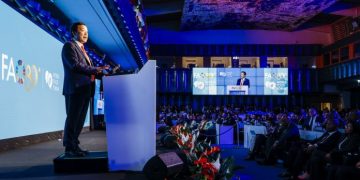









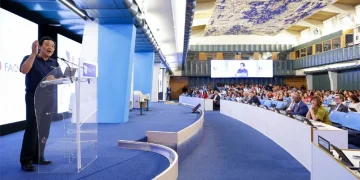
















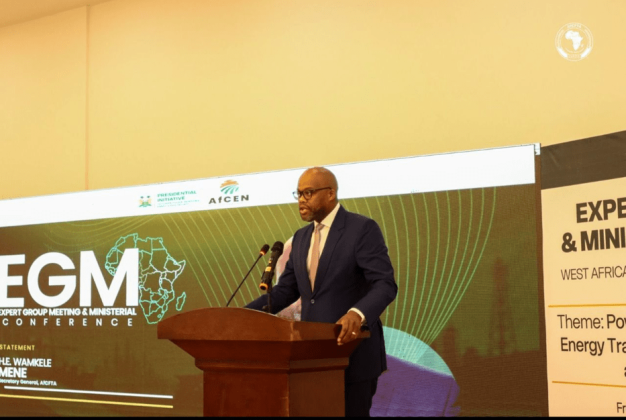
The Secretary-General of the AfCFTA Secretariat, Wamkele Mene, has underscored the urgency of translating strategic frameworks into concrete programmes capable of attracting financing and delivering measurable impact across the continent at a Presidential Initiative on Climate Change, Renewable Energy and Food Security in Freetown, Sierra Leone, Wamkele Mene.
The high-level initiative brought together policymakers, development partners, and private sector actors to explore integrated solutions at the intersection of climate resilience, energy sustainability, and food security, areas increasingly seen as critical to Africa’s long-term economic transformation under the African Continental Free Trade Area.
From Policy to Implementation
In his intervention, Mene stressed that while Africa has made significant progress in developing policies and frameworks, the real test lies in implementation. He noted that regional and continental platforms, including the AfCFTA, must serve as catalysts for converting policy commitments into bankable projects that can mobilise both public and private investment.
According to him, aligning climate action, renewable energy development, and agricultural productivity with trade objectives will be essential to unlocking new value chains and strengthening intra-African trade.
“Regional cooperation and coordinated investment strategies remain central to achieving inclusive growth and industrialisation,” he indicated, pointing to the AfCFTA as a key enabler in harmonising policies and facilitating market access across African economies.
Sierra Leone’s Leadership Recognised
The AfCFTA Secretary-General commended the Government of Sierra Leone for its proactive approach to implementation, highlighting its milestone achievement as the first State Party to complete and launch a national AfCFTA Readiness Assessment Report in 2025.
He described the report as a strategic and forward-looking document that provides a clear roadmap for integrating the country into the continental market, identifying priority sectors, addressing trade barriers, and outlining investment opportunities.
“This is a significant step that demonstrates strong political will and a commitment to translating AfCFTA opportunities into tangible national outcomes,” he noted.
Navigating Global Headwinds
Mr. Mene also acknowledged the broader global challenges currently shaping Africa’s trade and development landscape, including economic uncertainty, supply chain disruptions, and the impacts of climate change.
He emphasised that such challenges reinforce the need for stronger regional integration, resilience-building, and diversification of African economies.
Commitment to Partnership
Reaffirming the Secretariat’s commitment, Mr. Mene assured Sierra Leone of continued technical and strategic support as it advances its AfCFTA implementation agenda. He noted that collaboration between governments, regional institutions, and the private sector will be critical to ensuring the success of the agreement.
As Africa continues to navigate complex global dynamics, the message from Freetown was clear: the continent’s development ambitions will depend not only on well-crafted policies, but on the ability to deliver practical, scalable solutions that drive growth, create jobs, and improve livelihoods.
With Sierra Leone setting the pace, stakeholders are hopeful that more countries will follow suit in transforming AfCFTA frameworks into impactful development outcomes across the continent.
Source : bftonline

