






































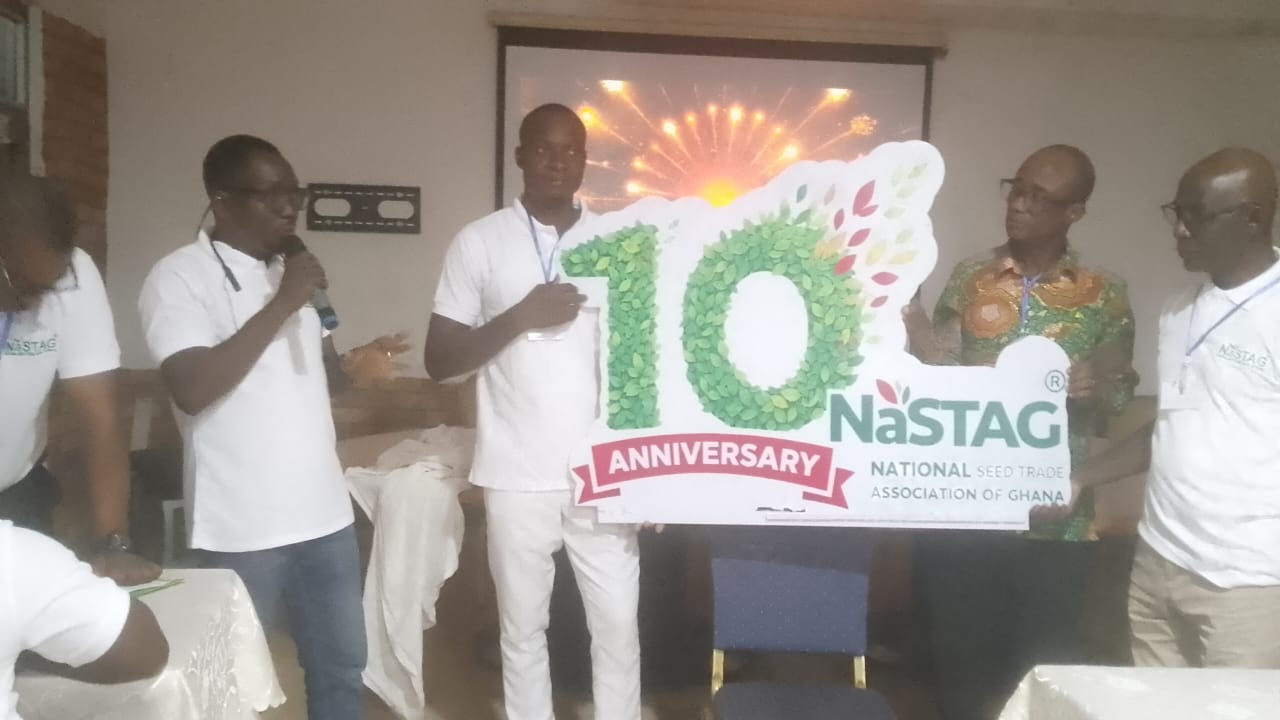
Marking a decade of shaping Ghana’s seed industry, the National Seed Traders Association of Ghana has used the occasion of its 10th anniversary launch to urge government to channel greater investment into the country’s seed sector, describing it as a critical pillar for agricultural growth and long-term food security.
Speaking at the ceremony ,the President of the Association, Seidu Abdulai Mubarak, emphasized that the foundation of agricultural transformation lies in the availability and accessibility of quality seeds. He noted that improved seed systems are central to enhancing productivity and strengthening national food security.
The anniversary launch, held under the theme “Decade of Resilience and Innovation: Building Stronger Partnerships for Ghana’s Food Security,” served as both a reflection on past achievements and a forward-looking call to action. Mr. Mubarak described the occasion as a testament to ten years of perseverance, collaboration, and steady growth within Ghana’s evolving seed sector.
He explained that the celebration is not only about marking time but also about elevating the visibility of NaSTAG, highlighting its contributions, and reinforcing its position as a key driver of agricultural development through private sector engagement.
Central to his message was the importance of uniting stakeholders across the seed value chain. He stressed the need for stronger regulatory frameworks and systems that guarantee farmers consistent access to certified, high-quality seeds—an essential factor in boosting crop yields.
Reflecting on the Association’s journey, Mr. Mubarak pointed out that NaSTAG’s impact over the past decade demonstrates how sustained collaboration can reshape an entire sector, even in challenging circumstances.
Among its notable accomplishments, he cited the introduction of seed traceability systems, which have enhanced transparency and significantly curtailed the spread of counterfeit seeds. He also highlighted the development of a national seed producer catalogue, a tool that enables farmers and industry players to identify reliable suppliers while supporting the broader National Seed Plan and aligning stakeholders under a unified vision.
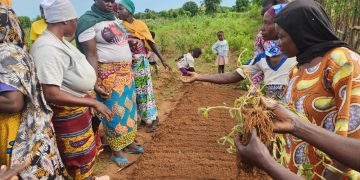
Additionally, initiatives such as Seedlink Platform have amplified the voice of the seed sector in shaping policy decisions. Continuous training programmes for smallholder farmers and efforts to bring seed producers together have further strengthened knowledge sharing, cohesion, and sector-wide growth.
Despite emerging challenges, Mr. Mubarak expressed confidence in the sector’s resilience, underscoring the urgency of deeper collaboration among government institutions, private enterprises, development partners, and farmers.
He concluded by stressing that ensuring food security in Ghana is a collective responsibility, not the mandate of a single entity, reaffirming NaSTAG’s commitment to supporting farmers with climate-resilient seeds to improve productivity and livelihoods across the country.

