



















































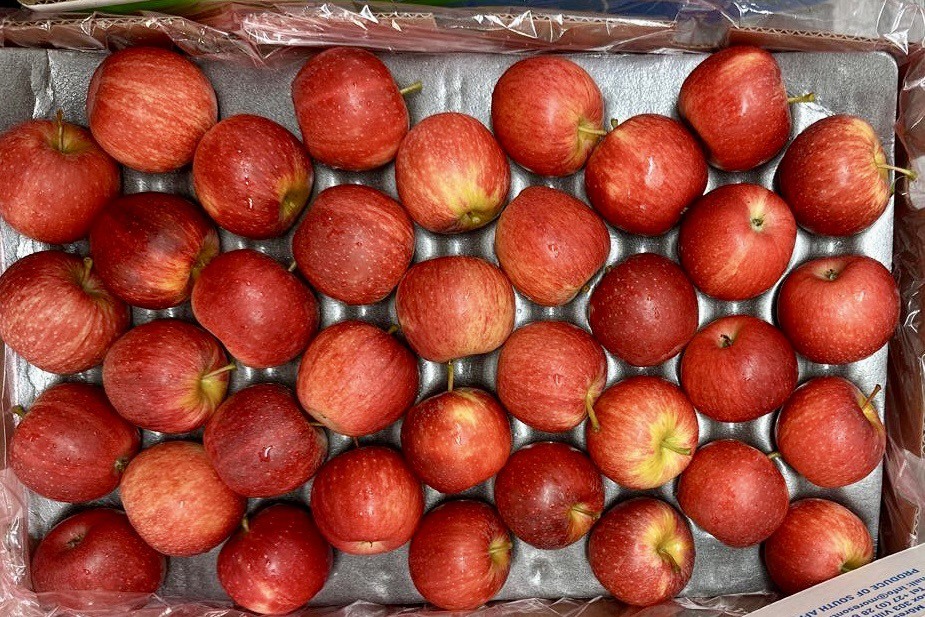
Bhatia sees South Africa gaining traction after three years. “Their season has started strongly, with loading four times higher than 2023 levels. Despite the surplus, prices run 10-20% higher than last year. The supply is very high this year,” he says. “Chilean Royal Gala arrived two weeks ago at competitive pricing, higher than last year but below South Africa and New Zealand.
From early March, South African apples reach India, followed by New Zealand shipments. “Royal Gala is attracting a 15-20% price premium due to Chinese demand, but we are receiving competitive offers from New Zealand,” Bhatia explains, anticipating stabilization as volumes build. Brazil starts week 12 for 12 weeks, offering a budget Royal Gala option coming 10% cheaper than last year. They have a big crop, and Indian importers are keen on this origin,” he adds.
Bhatia anticipates market changes in the coming weeks. “Turkey will wind down, priced out by South Africa. Iranian Reds will face halts in loadings to celebrate Nowruz or Persian New Year, March 12 onwards for 20-25 days, tightening supply and lifting prices. Domestic apples sell briskly now, but March onwards, we expect market shifts to imports. The domestic CA stock will service the north, while South India and Mumbai buyers would focus on imported fruit.”
March looks stable according to Bhatia. “Limited South Africa and New Zealand arrivals post-Ramadan, with mangoes delayed to April, should support sales.” April-May softens amid multi-origin supply plus mango availability; June-July rebounds before Indian apples dominate.”
As Bhatia sums it up, “Southern hemisphere volumes could pressure pricing soon. From April, apples from New Zealand, Chile, Brazil, and South Africa will be available all at once. Hard to predict what we importers can expect.”

