

























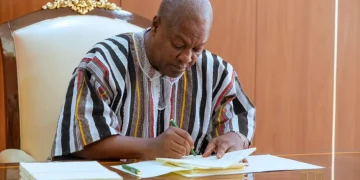




The government of Ghana, through the Ministry of Food and Agriculture, has signed an agreement with the Sentuo Group Limited on Ghana’s agricultural transformation agenda.
The agreement, which aims to reposition Ghana’s agriculture—from a raw commodity-based system into a modern, industrialised, value-driven sector—has two core pillars.
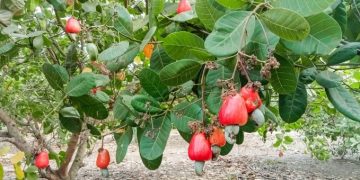
First, the development of large-scale agro-processing and value addition infrastructure across key commodities such as cashew, maize, rice, soybean, and oil palm; and second, and equally important, the establishment of a National Fertiliser Manufacturing Plant and Integrated Agricultural Input Supply System right here in Ghana.
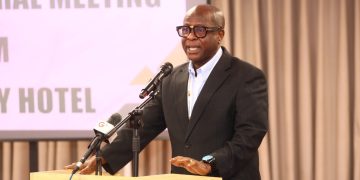
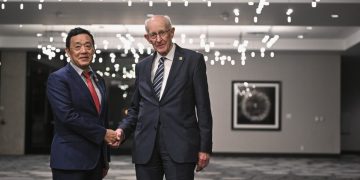
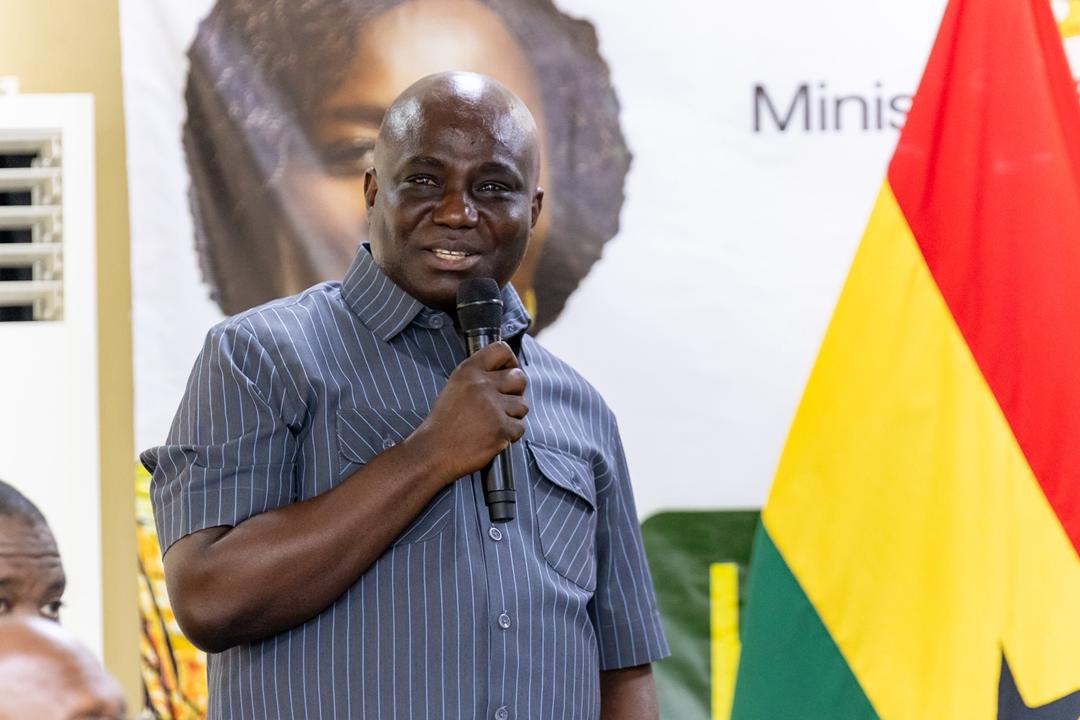
Minister for Food and Agriculture, Eric Opoku, at the signing ceremony in Accra on Monday, April 13, 2026, said, “For decades, our farmers have depended heavily on imported fertilisers. This has exposed Ghana to global price shocks, supply chain disruptions, and significant foreign exchange pressures”.
“With this agreement, we are taking a decisive step toward fertiliser independence. We are building local capacity to produce a wide range of fertilisers—including NPK, urea-based, blended, organic, and speciality fertilisers—supported by storage, logistics, research, and distribution systems across the country.”
The Minister said, “As you are aware, the Government of Ghana has already committed unprecedented resources to support farmers through the 2026 budget. This includes 272,000 metric tonnes of fertilisers for nationwide distribution, over 164,000 metric tonnes of targeted fertilisers for intensified crop production, specialised nutrients such as potassium nitrate, calcium nitrate, compost, and organic enhancers, and GH¢2.7 billion allocated for cocoa fertiliser support and coverage of over 661,000 farmers across the country.”
Mr Opoku noted that “this is one of the largest fertiliser support programmes in our history; however, government alone cannot sustain this at scale without local production.”
“That is why today’s agreement with Sentuo Group is not just complementary—it is strategic and transformational. To our partners, led by Mr Ningquan Xu, we welcome your strong commitment to Ghana,” the Minister added.
He explained that “Your role in financing, designing, constructing, and operating these facilities under a public-private partnership framework—aligned with the Public Private Partnership Act 2020—demonstrates investor confidence in Ghana’s economic direction.”
We are particularly encouraged by your commitment to technology transfer, skills development for Ghanaian youth, job creation, and environmental and industrial compliance. Let me also clarify for the media and the public: This Memorandum of Understanding is a framework agreement; it is not legally binding in terms of financing or sovereign commitments.”
Mr Opoku explained that “All subsequent project phases will go through feasibility and technical studies, environmental and social impact assessments, regulatory approvals, Attorney-General’s review, Ministry of Finance concurrence and Cabinet approval where required.”
Transparency
The agriculture minister said, “This ensures full transparency, accountability, and protection of the national interest.”
“Beyond fertiliser production, this partnership also strengthens Ghana’s agro-industrial ecosystem, including processing plants for cashew, grains, and oilseeds; packaging and finishing facilities; warehousing and aggregation systems; and export-orientated production and market access,” he added.
He said, ‘This integrated approach ensures that Ghana moves beyond production into processing, value addition, and global competitiveness. The expected outcomes are clear: reduced post-harvest losses, increased export earnings, stabilised input costs for farmers, creation of thousands of jobs, strengthened food security, and enhanced economic resilience.”
Source: 3news.com

