



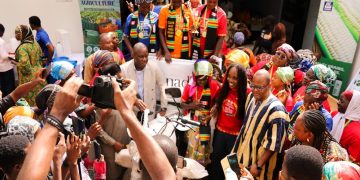









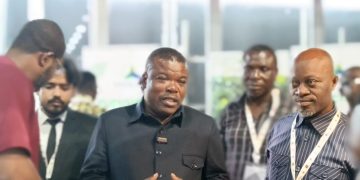
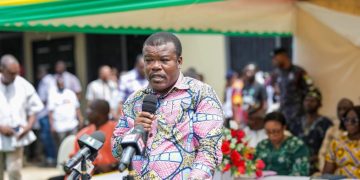






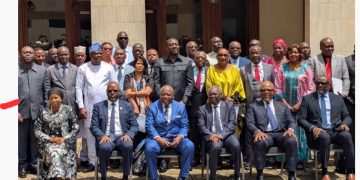


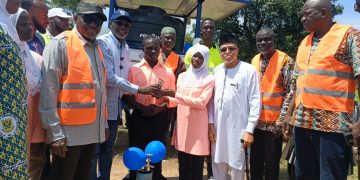







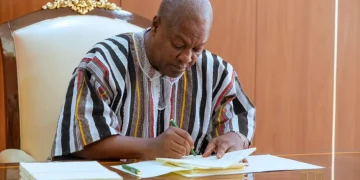






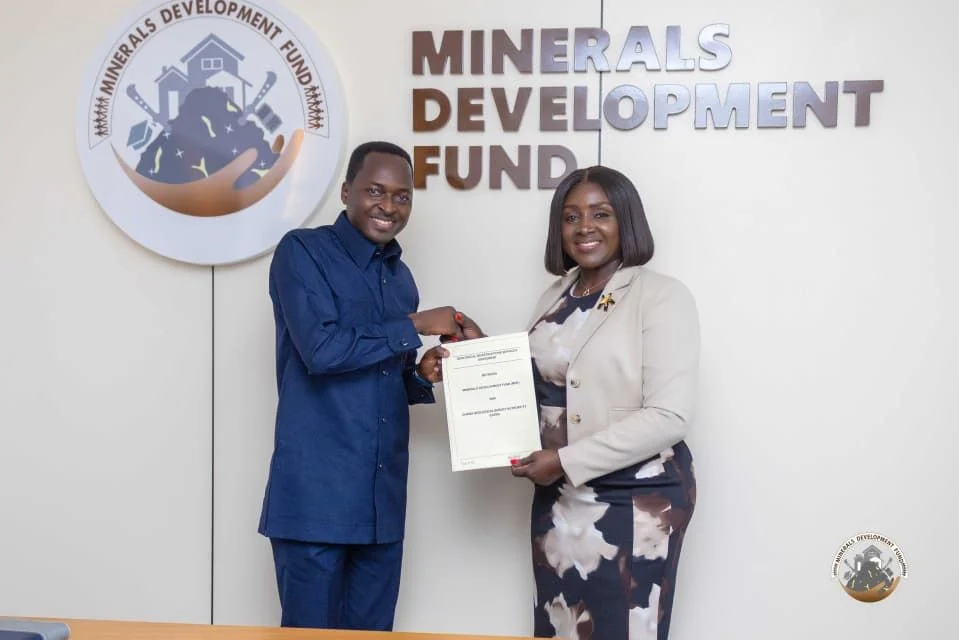
The Minerals Development Fund (MDF) has signed a Geological Investigation Services Agreement with the Ghana Geological Survey Authority (GGSA), signalling a major shift in how the government intends to tackle illegal small-scale mining, not just through enforcement, but through inclusion.
For years, Ghana’s approach to illegal mining, known locally as galamsey, has leaned heavily on interdiction and prosecution.
Although significant efforts have been made through interventions like the establishment of the Blue Water Guards, and the National Anti-Illegal Mining Operations Secretariat (NAIMOS), to preserve water bodies, forest reserves and farm lands, strategic and innovative solutions are continuously being implemented under the leadership and direction of Hon. Emmanuel Armah Kofi Buah, minister of Lands and Natural Resources to further the vision of the president, H.E. John Dramani Mahama.
The MDF-GGSA agreement is poised to change that situation. Rather than simply shutting illegal miners out, the government is creating a structured pathway for communities to mine legally, responsibly and profitably.
Under the agreement, the GGSA will conduct comprehensive geological investigations in designated “blocked-out” areas assigned to MDF by the Minerals Commission.
The investigations will assess mineral viability and environmental risk, ensuring only suitable areas are approved for extraction.
Dr. Hanna Louisa Bisiw-Kotei, Administrator of the MDF, called it a turning point in how Ghana manages its mineral wealth at the grassroots level.
“We are giving communities the tools, data and legal backing to mine responsibly, protect their environment and benefit sustainably from their natural resources,” she said.
Central to the initiative is a commitment to data-driven decision-making. The GGSA’s role will ensure geological intelligence that makes safe, efficient and targeted mining possible.
Dr. Prosper Akaba, the Authority’s Director-General, stressed that this scientific foundation is what separates the new approach from previous reform attempts. “With proper investigation, we can ensure that mining activities are conducted in areas that minimise environmental risks and maximize economic benefits,” he said.
The agreement was signed in Accra and falls under Ghana’s broader national policy on cooperative mining licenses for artisanal and small-scale mining communities.

