












































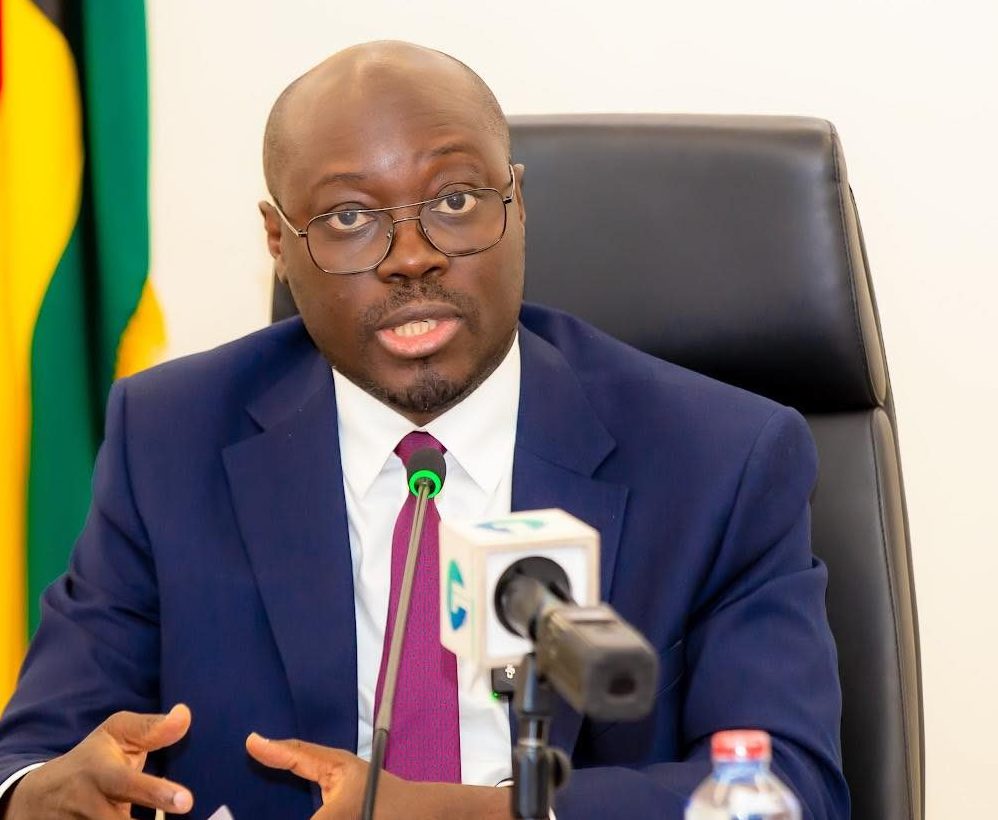
Finance Minister Dr. Cassiel Ato Forson has hinted at a new flagship economic policy dubbed the “New Economy”, signaling what could become government’s next major strategy focused on development and job creation.
The announcement comes after Ghana and the International Monetary Fund reached a staff-level agreement on the sixth review of the country’s IMF-supported programme, alongside discussions on transitioning onto a Policy Coordination Instrument (PCI) after the current bailout programme ends.
Speaking at a joint press briefing with the IMF in Accra, Dr. Forson suggested that government believes the country has largely achieved macroeconomic stability and is now preparing to pivot towards growth and employment creation.
“Clearly, the stability is done. We’ve announced same. It’s been confirmed even by the fund,” he stated.
The Finance Minister said government has built significant resilience through recent reforms and intends to channel that stability into a new phase of economic transformation.
“We’ve built some good resilience and we are building it continuously. It’s now time for us to develop and create jobs, and that is where we are going,” he said.
Although details of the proposed framework remain limited, Dr. Forson disclosed that the initiative to be known as the “New Economy” will soon be formally unveiled to Ghanaians.
“And so, in the coming days, we’ll be announcing our flagship design called the New Economy, where we’ll be looking at areas of development and job creation, and that will be made known to the people of Ghana,” he explained.
The comments come at a critical moment for Ghana’s economy as authorities seek to move beyond fiscal consolidation and stabilisation efforts under the IMF programme towards policies capable of stimulating investment, industrial growth and sustainable employment.
The proposed policy is also expected to shape government’s post-IMF economic direction as Ghana prepares to transition from direct IMF financing support to a non-financing Policy Coordination Instrument aimed at sustaining reforms and policy credibility.

