


























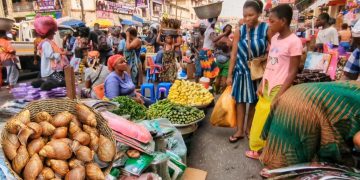

In Ghana, rice is the 2nd most consumed cereal with current per capita consumption of about 51 kilograms and still rising.
Last year alone, Ghana consumed roughly 1.71 million tons of rice but domestically produced around 960,000 tons of milled rice leaving close to 751,000 tons that amount to we spent around 320 million United States dollars.
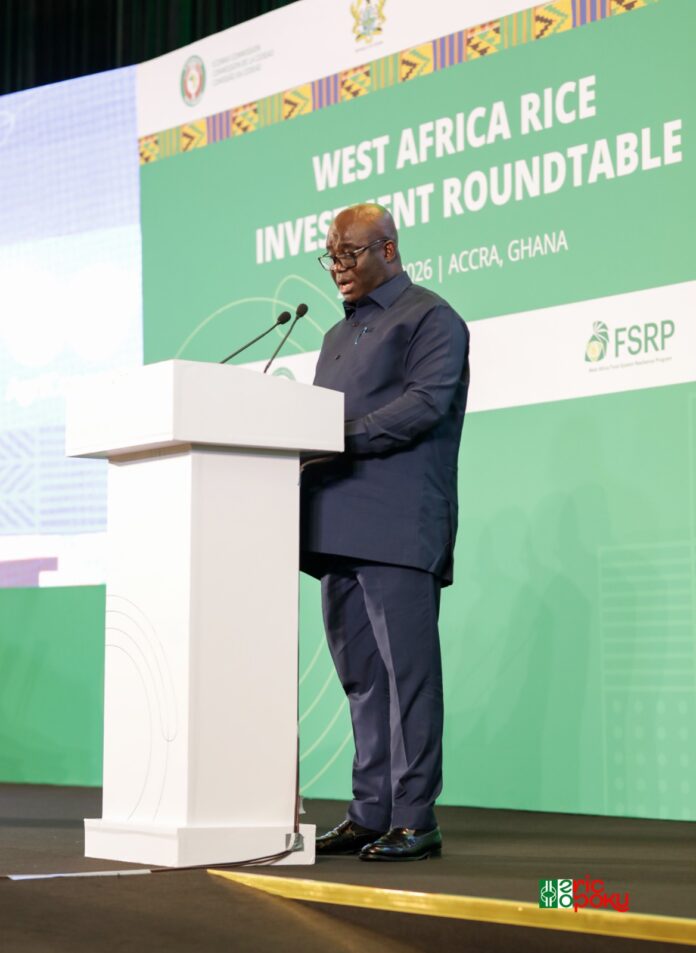
During the West Africa Rice Investment Roundtable held at Kempinski, Accra-Ghana, Hon. Eric Opoku, the Minister of Food and Agriculture said deficit gap is described to be the single largest untapped agribusiness opportunity for investment, industrialization and high-productivity jobs for the youth in Ghana rather than been simply a burden on our balance of payments.
Explaining Ghana’s 3 main ecologies at which the rice production revolves, Minister said rain-fed lowland, in-land valley account for almost 90% of output and irrigation systems around 10%.
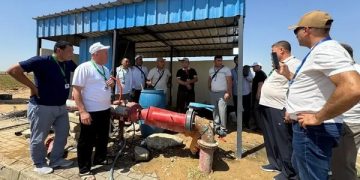
Under the System of Rice Intensification, Hon. Mentioned that irrigated plots in Ghana have reached 6.5 tons per hectare against 3.8 tons under conventional practice, a near doubling on the same land. With improved seed, water, mechanization and agronomy, 6 tons per hectare is well within reach especially under irrigation.
“Ghana’s rice milling recovery stands at around 55% which is below the global benchmark of 65%. This gap stems from over-dried paddy, mixing of varieties, and mills without the required components which result in high breakage and impurities. These losses (amounting to about 50 to 90 million United States dollars annually) increase the cost of production and therefore the price of Ghana rice, making the industry uncompetitive against cheaper imports,” he explained one factor affecting the sector.
He underscored the change that Ghana has made to the underlying problem facing the rice sector, thus the uncertainty about where, precisely, the productive opportunities lie. “We have commissioned advanced satellite-based geospatial mapping to identify, delineate and characterize rice-suitable land nationwide, the full expanse, we will need to reach self-sufficiency, organized into production clusters.”
“Initial mapping across our principal rice-growing regions has identified approximately 515,000 hectares of land currently under rice cultivation, spanning our rain-fed lowland, irrigated lowland and inland-valley ecologies,” he added.

