













































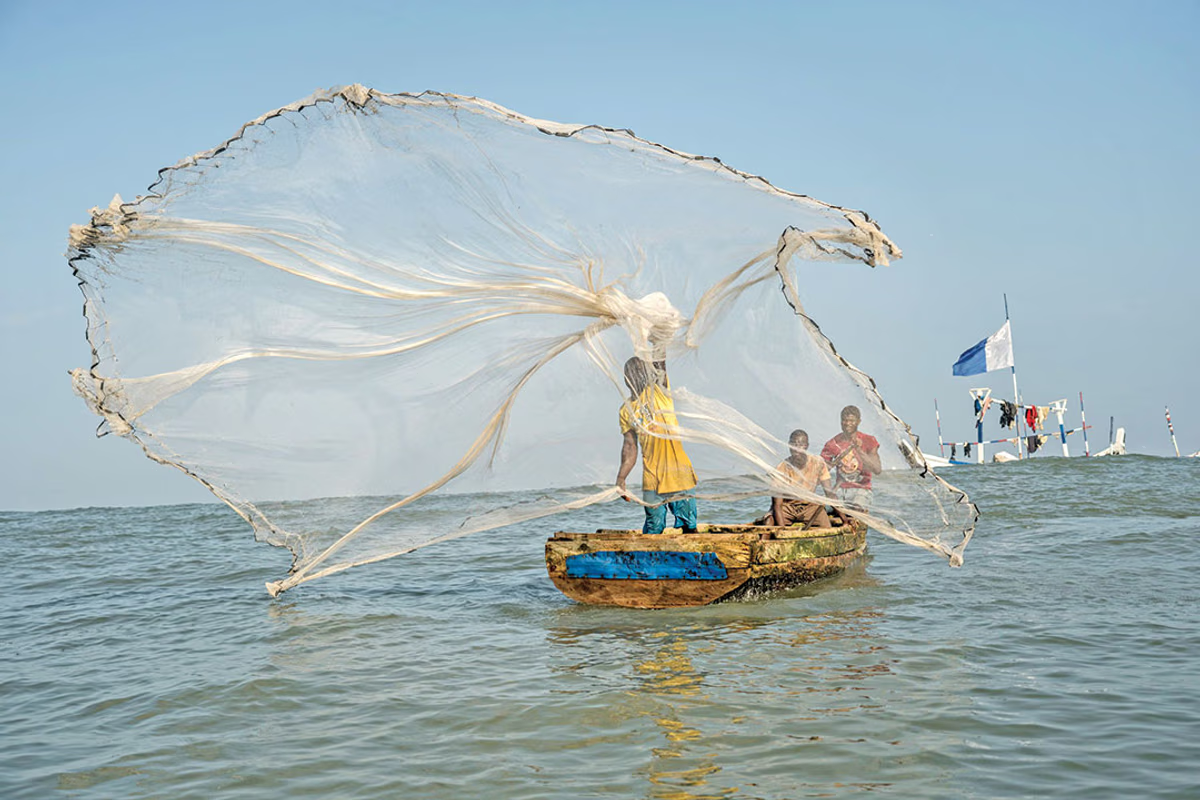
Ghana’s fisheries industry is increasingly concerned that the country’s prolonged European Union (EU) “yellow card” warning over illegal, unreported and unregulated (IUU) fishing could persist much longer, threatening seafood exports, investor confidence and the livelihoods of thousands of people who depend on the sector. Five years after the warning was re-issued in 2021, stakeholders fear that delays in implementing key reforms could eventually result in a more severe “red card,” which would ban Ghanaian seafood exports to the EU.
Why the yellow card matters
The EU’s yellow card system is part of its global campaign against IUU fishing. A yellow card is a formal warning issued to countries whose fisheries management systems are deemed inadequate in preventing illegal fishing. It is not a trade ban, but it signals that a country must implement corrective measures within a reasonable period.
If sufficient progress is not made, the EU may issue a red card, effectively prohibiting seafood exports from that country into the European market.
Ghana’s current situation
According to recent reports, Ghana’s fisheries sector remains under the EU yellow card issued in 2021. The warning followed concerns that although Ghana had strengthened its fisheries laws after an earlier yellow card in 2013—which was lifted in 2015—implementation and enforcement weakened over time.
Industry players say the prolonged warning is creating uncertainty for exporters, particularly companies involved in the tuna industry, one of Ghana’s major seafood export sectors. There are fears that continued delays in satisfying EU requirements could undermine market access and discourage investment.
Government pursuing legal reforms
The Ministry of Fisheries and Aquaculture Development is currently pursuing amendments to Ghana’s Fisheries Act and related regulations to strengthen enforcement against illegal fishing.
Among the reforms being pursued are:
- Stronger sanctions against illegal fishing operators.
- Improved vessel monitoring and surveillance.
- Enhanced traceability of fish catches.
- Greater transparency in licensing and vessel ownership.
- Better alignment of Ghana’s fisheries laws with international obligations and EU standards.
Concerns over illegal fishing
Environmental organisations and fisheries experts argue that illegal practices—including the notorious “saiko” system, where industrial trawlers illegally transfer fish to smaller vessels at sea for sale locally—continue to threaten Ghana’s marine resources.
They also point to concerns about transparency surrounding ownership of industrial fishing vessels, with previous investigations suggesting extensive foreign involvement in vessels operating under Ghanaian licences. These governance issues have been central to the EU’s concerns.
Economic implications
The fisheries sector contributes significantly to Ghana’s economy through:
- Employment for coastal fishing communities.
- Export earnings, particularly from tuna exports to Europe.
- National food security, with fish serving as a major source of animal protein.
Industry stakeholders warn that if Ghana fails to satisfy the EU’s recommendations and receives a red card, seafood exports to the EU could cease, affecting businesses, foreign exchange earnings and thousands of jobs across the fisheries value chain.
Stakeholder outlook
While stakeholders acknowledge the government’s commitment to reform, many believe implementation must accelerate. They are urging Parliament to pass the necessary legislative amendments quickly and for enforcement agencies to demonstrate measurable improvements in tackling illegal fishing.
Their concern is that the longer the yellow card remains in place, the greater the reputational and commercial risk to Ghana’s fisheries sector.

