
































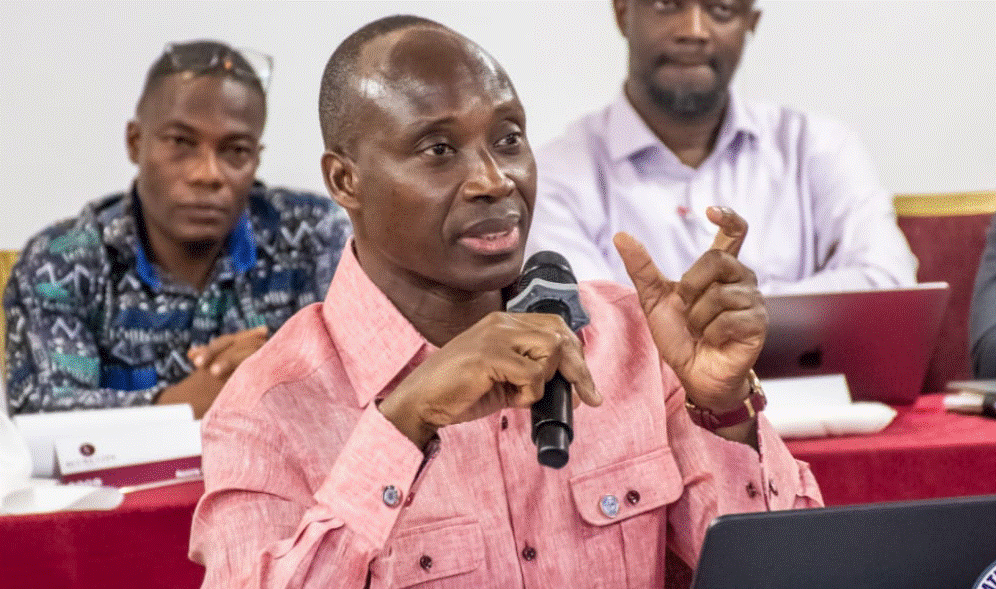
The latest findings from the Mobile Vulnerability Analysis and Mapping (mVAM) survey on food insecurity vulnerability show a clear reality, the Government Statistician, Dr Alhassan Iddrisu has said.
Dr Iddrisu says that while most households are maintaining acceptable food consumption, many are doing so under pressure.
He said “Coping strategies are rising, and vulnerabilities remain concentrated in specific regions and groups.”
Dr Alhassan Iddrisu has said that households with limited education, weak market access, and reliance on small-scale agriculture face the highest risk of food insecurity in Ghana.
He pointed put that the data suggest that 1 in 3 households is already under pressure using coping strategies like reducing meal sizes, borrowing, or switching to less nutritious foods.
Dr Alhassan said that food security is not just a statistic, it reflects how households live, cope, and plan for the future.
These insights matter because they point us to where action is needed most.
“At the Ghana Statistical Service, our role is to provide data that informs decisions and improves lives. But data alone is not enough. It must be used,” he said.
Dr Alhassan further encouraged government, development partners, the private sector, civil society, and all stakeholders to engage with this evidence and act where it matters most.
“I also want to express my sincere appreciation to the households who shared their experiences, our dedicated field staff and technical teams, our partners including the Government of Ghana, the World Food Programme, and KOICA, as well as the hardworking staff of the Ghana Statistical Service whose commitment made this report possible.
“Together, we can turn data into action and action into better outcomes for all,” he said.

