

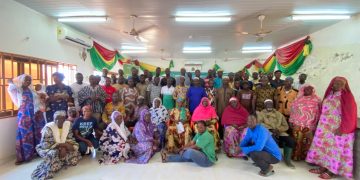












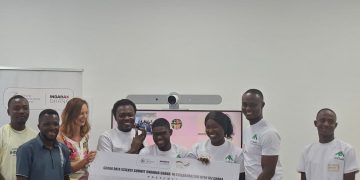










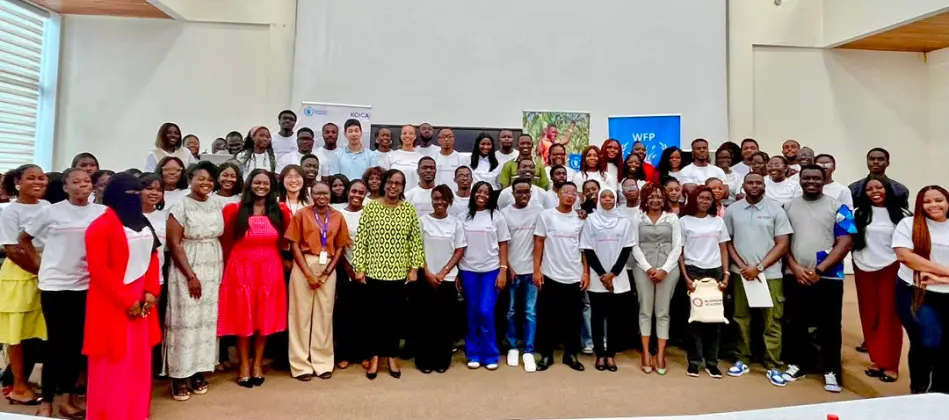
The first cohort of 70 young innovators under the Code4FoodSecurity Fellowship Programme has graduated after completing intensive training in artificial intelligence, data analytics, machine learning and digital innovation aimed at addressing food security challenges.
The graduation ceremony, held in Accra, marked the completion of a programme implemented by the United Nations World Food Programme (WFP) in partnership with the Korea International Cooperation Agency (KOICA) and Blossom Academy.

The initiative, funded by the Government of the Republic of Korea through KOICA, seeks to equip young people with advanced digital skills and support the development of technology-driven solutions to strengthen food systems and contribute to Ghana’s digital transformation agenda.
As part of the fellowship, participants developed practical capstone projects designed to tackle key challenges within the food system, including post-harvest losses, market inefficiencies and limited access to agricultural data.
Speaking at the event, WFP Country Director Aurore Rusiga said innovation and technology are critical to building food systems that are efficient, inclusive, sustainable and resilient.
She noted that the country’s food systems continue to face a range of interconnected challenges, including unpredictable weather patterns, rising production costs, post-harvest losses, market inefficiencies and limited access to timely information.
According to her, these challenges require new approaches to how food is produced, stored, processed, transported and marketed, making it important to place young people at the centre of efforts to transform agriculture and food systems.
Ms. Rusiga said the programme began in January this year with 70 participants and expressed satisfaction that all fellows successfully completed the training.
She described the achievement as a reflection of the participants’ commitment, discipline and determination throughout the programme.
The Country Director commended Blossom Academy, trainers, mentors and technical experts who supported the fellows and delivered what she described as a rigorous and industry-relevant learning experience.
She said that beyond acquiring technical skills, participants were required to apply their knowledge to real-world food system challenges through capstone projects, demonstrating their ability to move from learning to practical problem-solving. “The projects showcased innovative approaches to addressing food security challenges while highlighting the role digital technologies can play in improving agricultural productivity and food systems management,” she added.
Ms. Rusiga further disclosed that 16 fellows secured employment before completing the programme, describing the development as evidence of the strong link between digital skills training and job creation.
She said WFP and its partners remain committed to supporting pathways that enable young people to access employment opportunities, establish enterprises and apply their skills to national development.
The Country Director expressed appreciation to the Government of the Republic of Korea and KOICA for supporting the initiative, noting that the investment contributes not only to the careers of the fellows but also to Ghana’s capacity to harness digital innovation to strengthen food security and resilience.
She also acknowledged efforts to advance the country’s digital transformation agenda, noting that the fellowship complements broader initiatives aimed at developing future-ready skills among young people.
Furthermore, she urged the graduating fellows to continue learning and adapting to technological changes, stressing that the skills acquired through the programme should serve as a foundation for creating solutions that improve livelihoods, strengthen food systems and inspire other young people to embrace innovation.
The Code4FoodSecurity Fellowship demonstrates the importance of combining youth empowerment and technology to build resilient, inclusive and sustainable food systems while preparing a new generation of innovators to support agricultural transformation.
About the United Nations World Food Programme
The United Nations World Food Programme is the world’s largest humanitarian organisation saving lives in emergencies and using food assistance to build a pathway to peace, stability and prosperity for people recovering from conflict, disasters and the impact of climate change.

