








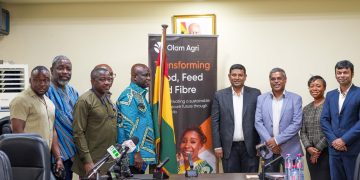

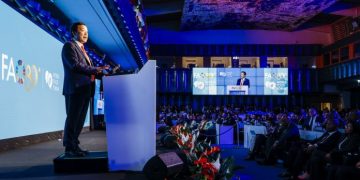
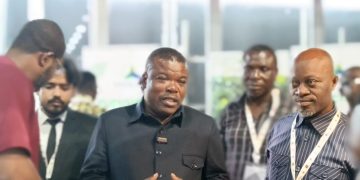








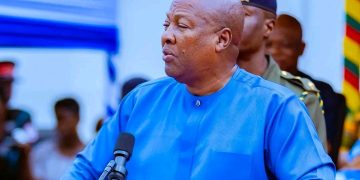








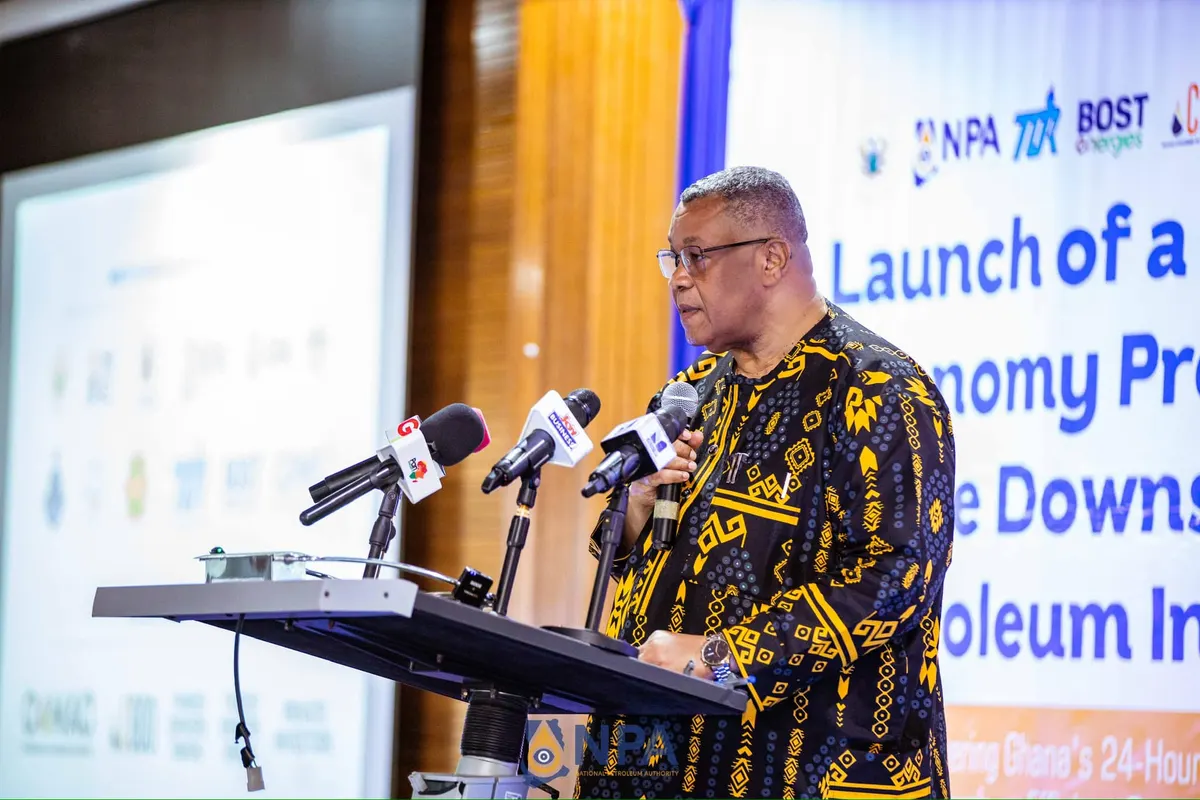
The Presidential Advisor on the 24-Hour Economy, Mr. Augustus Goosie Obuodum Tanoh, has said that the 24-Hour Economy is, at its heart, a productivity programme.
He says it is the President’s instrument for raising what this country produces, “what we earn from what we produce, and the number of Ghanaians who hold productive work.”
He noted that Ghana’s economy is not constrained by ambition. It is constrained by productivity.
He added that the actories run at capacity utilisation well below installed potential.
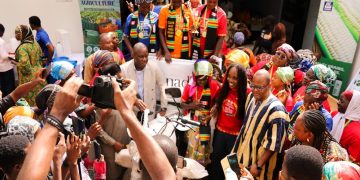
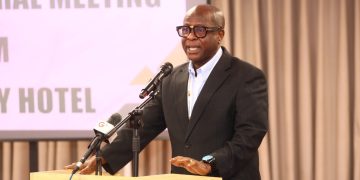
Speaking during the lauch of the pilot or 24-hour operations in the petroleum downstream, in Accra on Tuesday, May 12, he said, “Our farmers lose value because there is no offtake or processing close to where they grow. Our infrastructure idles for hours that other economies use to produce. We are running the economy on a single shift in a world that runs on three.”
He said that the petroleum sector sits beneath every productive activity in this country — agro-processing in Ashanti, manufacturing in Tema, cocoa logistics on the Eastern Corridor, the cold chain that carries perishables to the ports.
“All of it runs on fuel that must be available when production needs it,” he said.
“When a depot closes at six in the evening and the next loading slot is at eight in the morning, that is fourteen hours in which the productive economy above it cannot expand.
“We cannot ask the sectors above the downstream to extend their operating day if the supply chain beneath them cannot. The petroleum downstream is therefore one of our earliest and most important pilots, and starting today, alongside the NPA, we are turning it into the sector that enables every other sector to expand the work it can do, the goods it can produce, and the workforce it can carry,” he said.
The CEO of the National Petroleum Authority (NPA), Godwin Edudzi Tameklo, has announced that the 24-hour operations in the petroleum downstream will be rolled out in phases.
He said it will begin with selected facilities across four regions of Ghana namely: Greater Accra, Ashanti, Western and Northern regions.
he said “It will cover 268 fuel stations across the four regions, eight depots, namely BOST Depot, Kumasi; APD, Tema; TTF, Tema; TFC, Tema; Vana Energy, Tema; Quantum Terminals, Tema; Ghanstock Depot, Takoradi, and Zen Terminals, Takoradi, and two refineries, namely Tema Oil Refinery and SentuoOil Refinery.”
He further stated that this phased approach will enable the authority to test systems, refine operational models, and ensure that the transition is efficient, safe, and sustainable.
Central to this effort , he said, will be the deployment of modern technology for real-time monitoring and the introduction of structured workforce.
“Let me emphasize that safety and security will remain paramount. We will continue to work closely with institutions such as the National Security, Ghana Police Service, Ghana National Fire Service, and other relevant agencies to ensure that all participating facilities operate under the highest security protection and safety standards,” he said.
He further announced that the Inspector General of Police, Christian Tetteh Yohuno, has pledged his support for the introduction of 24-Hour operations in the petroleum downstream sector.
Edudzi Tameklo stated that running a 24 Hour operation in the petroleum sector requires top notch security, hence the support from the Police.
“What it means to you need to firm up your security. IGP Christian Tetteh Yohunu has fully pledged his support for the role out of this initiative.”

