
































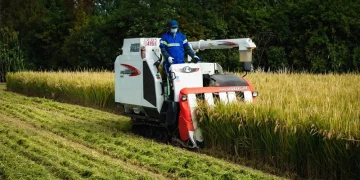



















Usoft Solutions Limited, a Ghanaian software company specialising in the digitisation of business processes across Africa, has launched an innovative digital logistics application dubbed “AgroCart” to connect farmers, traders and cargo owners with drivers.
The application is designed to facilitate the efficient movement of farm produce by operating like a ride-hailing service tailored specifically for agricultural goods and general cargo. It enables quick, localised transportation from farms to markets and buyers, thereby reducing post-harvest losses in rural Ghana.
Usoft Solutions Limited has over the years developed digital platforms such as USCHOOL for schools, ECHURCH for religious organisations, and UVOTE for elections, alongside enterprise resource planning (ERP) solutions for sectors including manufacturing, health, sanitation, agriculture, construction and retail.
On the AgroCart platform, users register either as customers or drivers. Customers can request transport services by uploading a picture of their cargo, indicating pick-up and delivery locations, completing a ride request form, or sending a voice note with the image.
Once a request is submitted, registered drivers within the customer’s district receive notifications, ensuring prompt local response. Interested drivers submit bids based on distance and logistics, allowing customers to select preferred options based on cost, convenience or reliability.
Payments are made through the application, after which the selected driver begins the trip while updating delivery milestones, including pick-up, transit and offloading. Payment is released only after the customer confirms receipt of goods, with an option to rate drivers and provide feedback to enhance service quality and trust.
Speaking at the launch, Mr Felix Fosu, Chief Executive Officer of Usoft Solutions Limited, said the AgroCart application addressed a major bottleneck in Ghana’s agricultural value chain—namely, the lack of reliable and timely transportation, which contributes to high post-harvest losses.
He said the inclusion of a voice-note feature made the platform accessible to users regardless of literacy level, thereby encouraging adoption among smallholder farmers.
Mr Fosu noted that the application’s district-based registration model would promote local economic activity and ensure inclusivity across gender, social status and geographical location.
He also highlighted broader agricultural support efforts, including government initiatives such as Feed Ghana, cocoa input programmes, and ongoing distribution of agricultural inputs and farmer training.
Touching on climate change, Mr Fosu warned of the impact of erratic rainfall patterns, rising temperatures and pest infestations on farming activities.
He encouraged the adoption of climate-resilient practices such as drought-tolerant seeds, water harvesting and climate-smart agriculture training.
Mr Isaac Yawson, the District Chief Executive, described the launch as timely, noting that the Assembly and stakeholders were working to improve rural telecommunication networks to enhance connectivity.
He reaffirmed the Assembly’s commitment to upgrading rural road networks to further support agricultural productivity and ease transportation challenges.

