

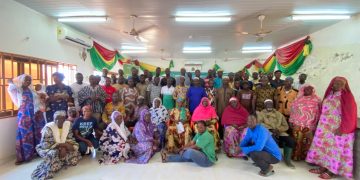
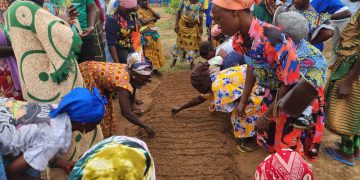

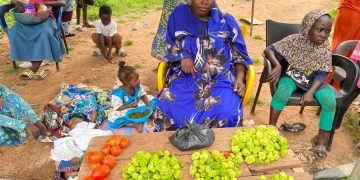
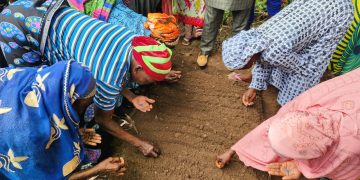





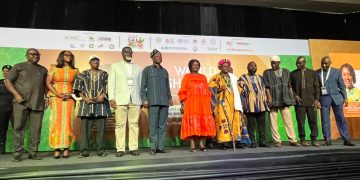























In a landmark move to reclaim the narrative of African food security, a new pan-African initiative was officially launched at the University of Ghana on April 30, 2026. The Africa Regional Collaborative for Agriculture, Nutrition and Health (ANH-ARC) arrives at a critical juncture, aiming to bridge the gap between academic research and real-world policy to build food systems that are healthier, more equitable, and climate-resilient.
The ANH-ARC serves as a regional science–policy platform, designed to synthesize high-quality evidence into actionable financing and policy options. Unlike previous fragmented approaches, this collaborative places gender equity and climate resilience at the heart of its mission.

The initiative is a powerhouse of African expertise, co-led by three premier institutions: The University of Ghana (Ghana), The Policy Studies Institute (Ethiopia), and the Stellenbosch University (South Africa)
As the African node of the global ANH Academy, the collaborative is supported by the London School of Hygiene & Tropical Medicine, Tufts University, and the University of Sheffield, with funding from UK International Development and the Bill & Melinda Gates Foundation.
The urgency of the initiative stems from the “intersecting challenges” currently suffocating African food systems, including skyrocketing food prices, rapid urbanization, and the escalating climate crisis. While research exists, its application remains uneven across the continent.

Professor Amos Laar, Principal Investigator at the University of Ghana, noted that decision-making has historically been too disjointed. “Agriculture, nutrition, and health can no longer operate in silos,” Laar emphasized. “Evidence must deliberately connect them to inform policy-relevant decisions grounded in African lived realities.”
The collaborative recognizes that data alone isn’t enough; it requires the right economic and political machinery to thrive.
Dr. Alebel Weldesilassie (Policy Studies Institute) highlighted that transformation requires “coherent financing strategies” to ensure that affordable, nutritious food is accessible to all.
Prof. Kennedy Dzama (Stellenbosch University) added that the ultimate success of the program hinges on “strengthening governance systems and accountability,” ensuring that knowledge is actually translated into a sustained, large-scale impact.
By fostering an African community of experts, the ANH-ARC intends to ensure that the future of African diets and health is shaped by rigorous science and coordinated regional action.

