



















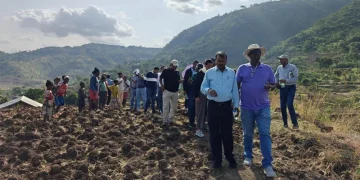

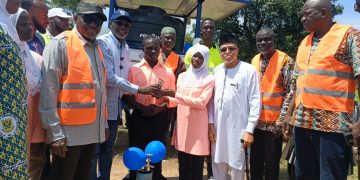













The Ghana Gold Board (GoldBod) has signed a Memorandum of Understanding (MoU) with the Ghana Army Engineers Regiment and the Forestry Commission to reclaim and restore degraded sections of the Tano Nimri Forest Reserve destroyed by illegal mining activities.
The initiative, under GoldBod’s National Reclamation and Environmental Restoration Programme, will begin with the restoration of an initial 50 acres of the forest reserve.
Mr Sammy Gyamfi, the Chief Executive Officer of GoldBod, described the project as the institution’s first major land reclamation intervention since its establishment.
He said GoldBod, established under Act 1140 of 2025, was mandated not only to regulate gold trading and maximise benefits from Ghana’s gold resources, but also to promote sustainable mining practices and environmental stewardship.
Mr Gyamfi noted that land reclamation and environmental restoration formed an integral part of GoldBod’s mandate and reflected its commitment to reversing the damage caused by illegal mining.
Following joint assessments by GoldBod, the Forestry Commission and the Ministry of Lands and Natural Resources, the Tano Nimri Forest Reserve was selected as the first project site due to the extensive destruction caused by illegal mining activities.
“The rich vegetation we once had has been completely destroyed by the activities of illegal miners, and we believe this is the right place to begin our restoration efforts,” he said.
Under the agreement, the Ghana Army Engineers Regiment, through the Ministry of Defence, will undertake civil engineering works, including pit filling, grading, land reshaping, compaction and site stabilisation.
The Forestry Commission will supervise the restoration process and lead the afforestation component to restore vegetation cover.
Mr Gyamfi disclosed that GoldBod would invest approximately GH¢27.9 million in the engineering works and an additional GH¢7.2 million over a 10-year period to support afforestation and maintenance activities.
He described the initiative as a pilot project that could be replicated in other degraded mining areas across the country.
Explaining the choice of the military as a partner, Mr Gyamfi cited its discipline, professionalism and integrity, noting that some private contractors engaged for similar works in the past had instead participated in illegal mining activities.
“When we decided to undertake this programme, we wanted a partner whose integrity and professionalism were unquestionable. That is why we chose the Ghana Armed Forces,” he said.
Mr Ernest Brogya Genfi, Deputy Minister of Defence, said the fight against illegal mining required both preventive and restorative measures.
While law enforcement operations remained necessary to curb further environmental degradation, he said restoring already damaged lands was equally important in reclaiming ecosystems and returning them to productive use.
“If we focus only on prevention, the lands already destroyed will remain degraded,” he said.
Mr Genfi assured GoldBod and the public that the Ghana Armed Forces would execute the reclamation works professionally and in accordance with established standards and regulations.
Mr Hugh C.A. Brown, Chief Executive Officer of the Forestry Commission, commended GoldBod for responding promptly to the Commission’s call for support to restore degraded forest reserves.
He said GoldBod was the first institution to move from discussions to implementation within about two and a half months.
Mr Brown expressed confidence in the partnership, citing the military’s engineering expertise and capacity to deliver the project effectively.
He disclosed that a survey conducted up to the end of 2024 showed that approximately 8,700 hectares of forest reserves had been degraded by illegal mining, adding that the figure was expected to exceed 9,000 hectares after accounting for destruction recorded in 2025.
He appealed to institutions and development partners to support restoration efforts, stressing that no single organisation could address the challenge alone.
Mr Brown said the initiative represented a significant shift from merely arresting illegal miners and confiscating excavators to actively restoring degraded lands and forest reserves.

