


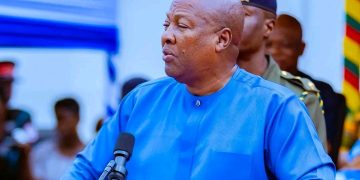

President John Dramani Mahama has called for a Ghana-European Union (EU) partnership that is based on investments rather than aid.
He also emphasized the need for a partnership in which innovation rather than inertia and shared prosperity rather than an unequal opportunity rule.
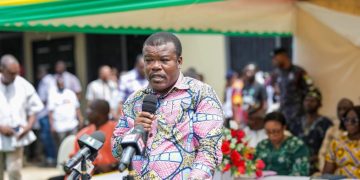
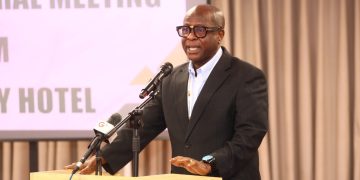
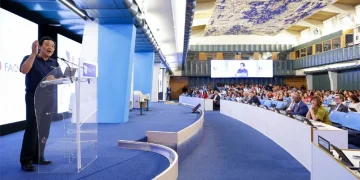
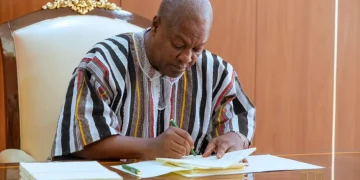
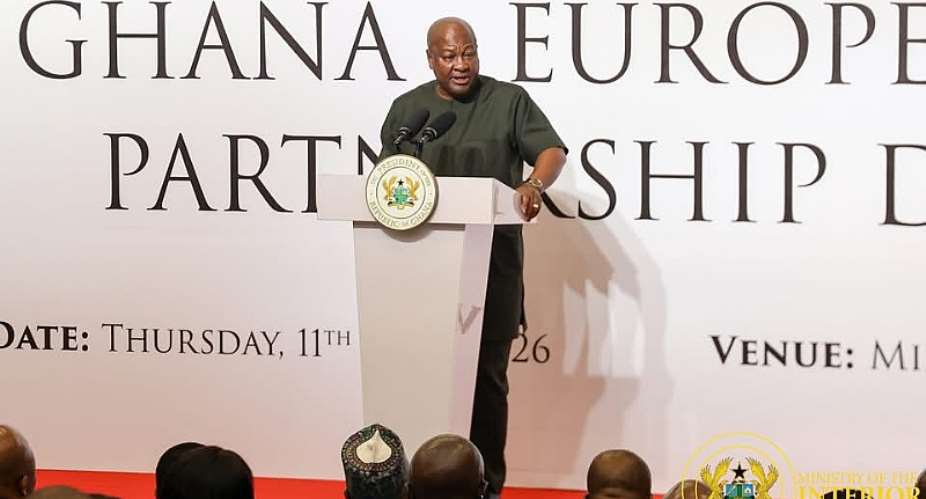
“As Ghana and Europe look ahead, our task is clear. We must build the partnership that reflects the realities of the 21st century. A partnership that is founded on mutual respect rather than dependency,” President Mahama stated, as he opened the 2026 Ghana-EU Partnership Dialogue Meeting at the Ministry of Foreign Affairs, in Accra.
The Ghana-EU Partnership Dialogue is a formal, annual Summit between the Government of Ghana and the EU to strengthen economic cooperation, regional security, and sustainable development.
It provides a direct platform for high-level officials to address shared challenges and align on mutual policies.
This year’s Dialogue marks the golden jubilee of the Ghana-EU Partnership.
President Mahama said Ghana believes that migration when managed properly could be a powerful force for development.
“Our focus should therefore be on expanding legal pathways, strengthening scale partnerships and creating opportunities that enable young people to realize their aspirations and contribute meaningfully to our economists,” the President said.
He added: “So, we look forward to continuing cooperation that promotes safe, orderly and mutually beneficial mobility.”
The President said more than half of Ghana’s population was under 30 years of age; and identifying “this young population is one of our greatest assets,” called on Ghana and Europe and alike toe effectively equip them the skills, education opportunities and resources needed to thrive in their rapidly changing world.
President Mahama said: “We therefore welcome ongoing collaboration in education, entrepreneurship, innovation, global mobility, vocational training and gender equality,” the President intimated.
“When our young people succeed, our partnerships succeed. The future we seek is one in which Ghana emerges as a leading industrial, digital and logistical hub in Africa with Europe remaining a trusted, strategic partner in that transformation.”
The President urged the participants to use the Dialogue not merely to review their cooperation but also to redefine its ambition.
“Let us commit to building a partnership that creates jobs for young people, opportunities for our businesses, security for our citizens, and prosperity for our future generations,” he stated.
He added: “Together Ghana and the European Union can demonstrate that principal partnership remains among the most powerful tools for shaping a more peaceful process and sustainable world.”
He encouraged the participants to remember that the future of Ghana-EU relations would ultimately be measured by the opportunities it creates, the prosperity it builds and the lives they transform together.
On his part, Mr Rune Skinnebach, the European Union Ambassador to Ghana, said the EU as Ghana’s largest trading partner, leading source of foreign direct investment and principal development partner, looked forward to further deepening its engagement with Ghana’s key Ministries and dialogue such as the Ghana-EU Partnership Dialogue’s providing maximum platform to advance that objective.
“But even the best of partners do not agree 100 per cent on everything all the time. Although we collectively abstained in New York on the resolution led by Ghana on the Trans-Atlantic Trafficking of enslaved Africans, I also insist on congratulating Ghana on the successful adoption by the United Nations General Assembly,” the Ambassador said.
He said he was taking the opportunity to reconfirm their readiness to engage constructively on these important issues at next week’s high-level conference and to address the enduring legacies of slavery through dialogue, cooperation and concrete action.
Mr Samuel Okudzeto Ablakwa, Ghana’s Foreign Affairs Minister, said there was no doubt that these were exciting times in the Ghana-EU relations.
He said during the year under review, Ghana became the first African country to formalize a security and defence partnership with the EU.
Ghana also became the first African country to secure a sustainable legal timber certification under the Forest Law Enforcement, Governance and Trade (FLEGT) licensing scheme, the Minister announced.

